

Text: Luiz Paulo Juttel / Ascom – ISD
Images: Ariane Mondo / Ascom – ISD
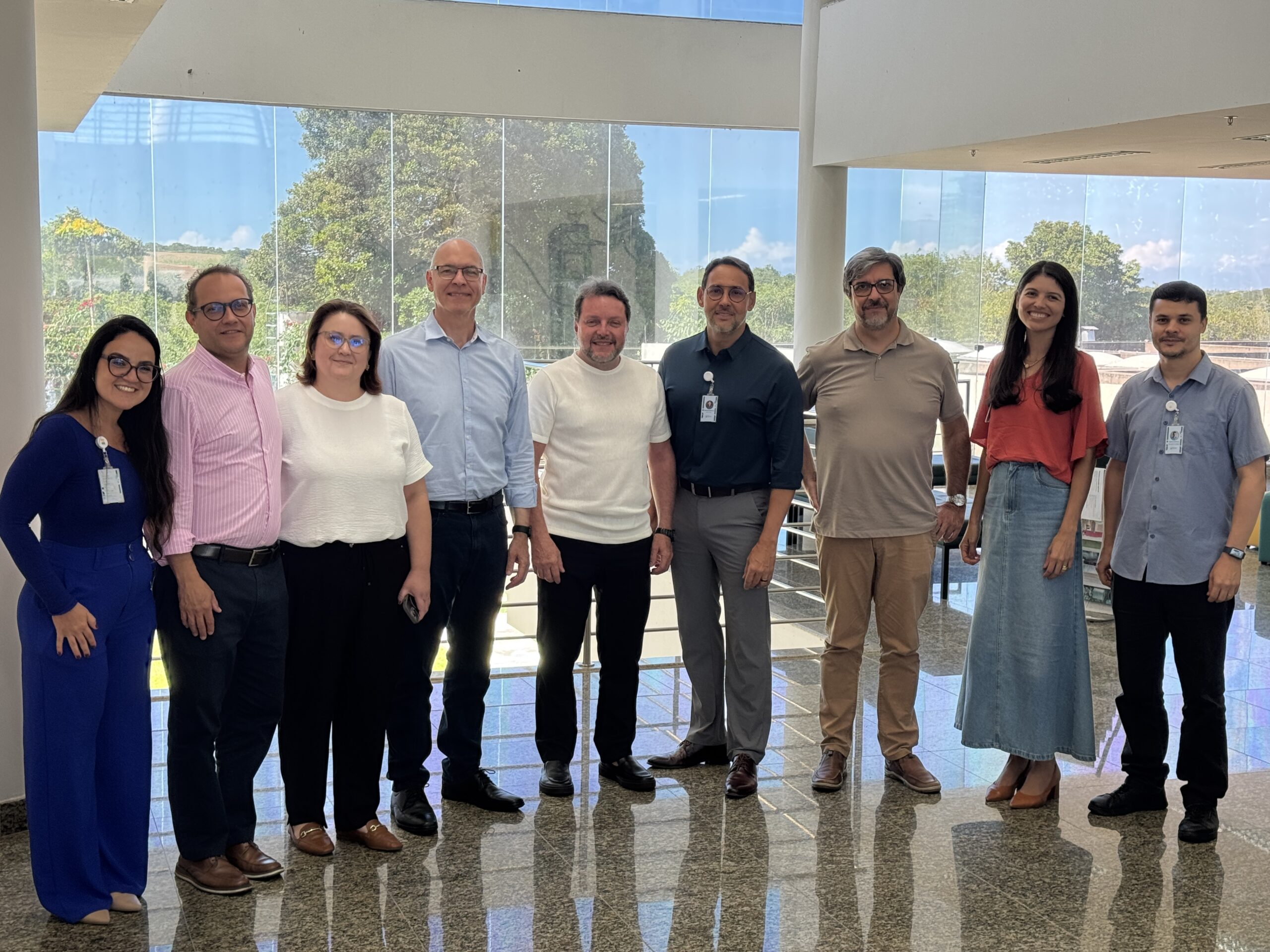
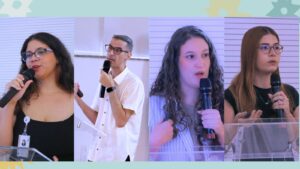
Bringing music to deaf people through tactile stimuli. This is the main objective of the Auris Project, developed by a team of researchers from the Federal University of Paraíba (UFPB). Last Wednesday, January 11, the coordinators of the initiative were at Edmond and Lilly Safra International Institute of Neuroscience (IIN-ELS), in Macaíba-RN, to present the project to students of the Postgraduate course in Neuroengineering and to expand partnerships with the Institution.
Felipe Alves Araújo, an undergraduate student and member of the project, explained that Auris was based on scientific studies from the last 15 years that showed that tactile stimuli, especially those associated with low frequencies, can simulate the sense of hearing. This knowledge motivated the UFPB team to create a special chair, with a set of symmetrical speakers on the back of the person sitting in it (simulating stereo audio) and a subwoofer below.
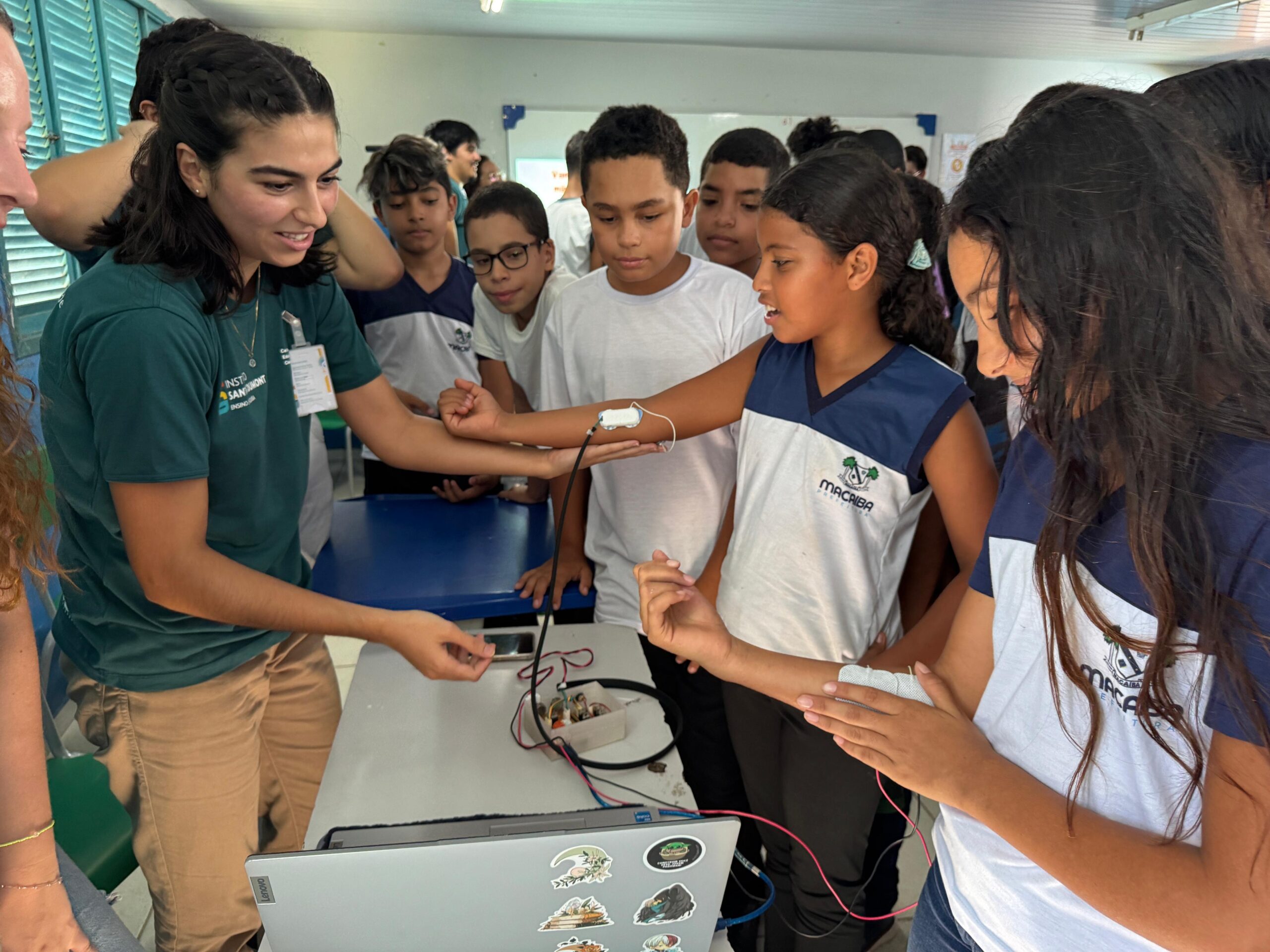
“The vibration of the speakers in the chair transmits the harmony and rhythm of the songs. The sensation of melody, such as a guitar solo for example, is simulated through a bracelet with several mini-motors that vibrate the tones and semitones of the songs,” explains Araújo. The researchers also developed an interface capable of converting songs into files that synchronize the speakers with the vibration motors of the bracelet.

Mission: to translate the emotion of music for the hearing impaired
Scientists from the Auris Project are seeking to assess the brain activity of experimental participants and optimize the system so that, in the future, people with hearing impairments will experience emotions similar to those of individuals with normal hearing when listening to a certain song. In the current stage of the study, researchers are using electroencephalography to analyze brain waves in the theta, alpha and beta ranges and identify which brain areas are activated by the vibrations of the Auris chair and wristband. This data is compared to individuals with normal hearing who listen to the same song that the system plays.
Recent results show that at least one of the brain areas activated during the experiments is also activated by those who hear. Furthermore, individuals who have become deaf over the course of their lives have an easier time correlating the pulses with the rhythm of the music than people who have never heard.
Some future improvements are planned for the system. Among them, the combination of the vibrations of the chair and the bracelet with a digital avatar that will dance to the rhythm of the music and transmit the lyrics in sign language. The research is being developed at the Digital Video Applications Laboratory (LAVID) at UFPB.