


On the Proteger platform, a protective measures counter developed by the Court of Justice of Rio Grande do Norte (TJRN), alarming data: between the months of January and June 2022, an average of 8 protective measures were granted per day in RN. According to the State Secretariat for Public Security and Social Defense (Sesed/RN), the number of feminicides registered in the state increased by 12.5% compared to the same period in 2021, rising from 8 to 9 cases. In light of Purple August, a month that seeks to draw attention to violence against women, experts emphasize that mobilization must go beyond awareness, aiming to strengthen the care and attention network to combat violence against women, which must have several professionals trained to deal with cases, which often involve physical and psychological abuse and are practiced within the home.
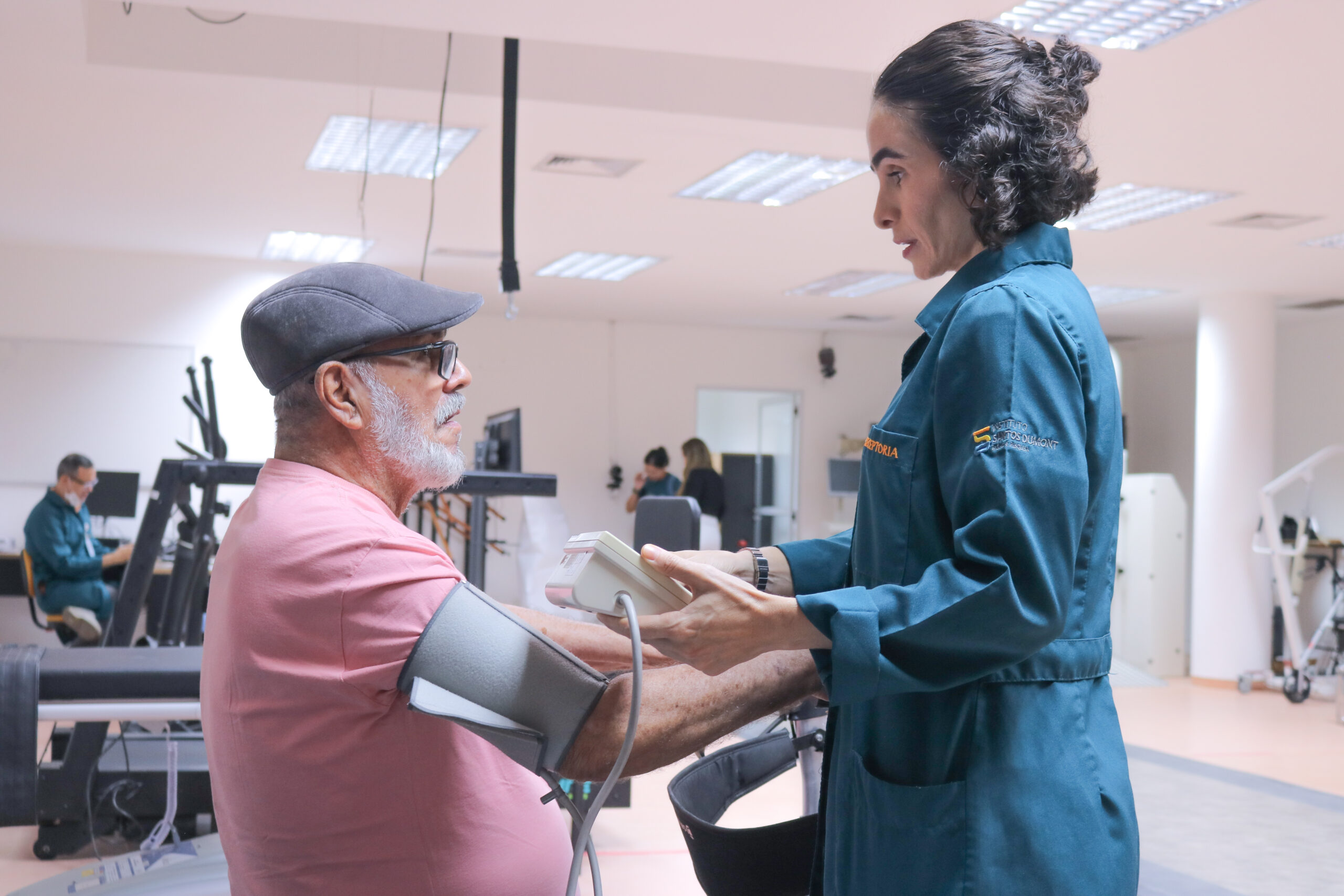
Renata Rocha, a social worker at the Santos Dumont Institute (ISD) in Macaíba, says that records of domestic and sexual violence are still below the reality, in which victims are often reluctant to report the crime. However, this scenario has gradually improved over the last few years, with the strengthening of the Maria da Penha Law and the incorporation of new measures into the legislation, which aim to ensure the speedy issuance of protective measures. “The first step is to remove the person in a situation of violence from the aggressor, and that is where the importance of the Maria da Penha Law comes in, which guarantees this possibility to women,” says Renata Rocha.
This year, Purple August celebrates the 16th anniversary of the Maria da Penha Law, a law passed in 2006 that represented a significant change in the way domestic violence crimes are dealt with in Brazil, making penalties for this type of crime more severe. In 2019, an addition to the law established a 48-hour deadline for referring the victim to a judicial assistance agency. In 2022, it was determined that emergency protective measures must be immediately registered in a database, guaranteeing instant access by public security and social assistance agencies. The changes seek a common goal: to facilitate the victim's access to specialized support channels.
According to Renata Rocha, it is possible to receive help directly from health services and hospitals, without the need to report the incident or file a police report. This support takes place within a network of care established on multiple fronts. The intention is for women to have complete safety and care when reporting cases of aggression.
“Hospital units provide emergency care, and the patient is referred to social and psychological services, where psychosocial care is provided. Any patient who has experienced violence is a priority,” emphasizes the preceptor. According to Renata Rocha, it is important for women to be aware that they do not necessarily need to go to a police station to seek help in the face of domestic violence, but can also seek help from the various health services available in their city.
“When the victim arrives at the service, we inform them that the case will be forwarded to the Specialized Social Assistance Reference Center (CREAS), which is precisely a service within the assistance policy. We also inform the Specialized Women’s Assistance Police Station (DEAM), as it is a case of rights violation. If the victim does not want to appear [at DEAM], we make a social report, also notifying the prosecutor’s office, if necessary. In these cases, the victim is assisted by a multidisciplinary team,” reinforces Renata.
The multidisciplinary care solution exists for a multifaceted problem. Violence against women can be physical, psychological, direct or indirect, in large or small acts that create insecurity in the victim.
Therefore, the collaboration of several professionals is essential to embrace all the difficulties of the victim, being part of what Renata Rocha considers a standard flow within this support network, which involves psychologists, gynecologists, pediatricians, in cases of children and adolescents, infectologists and social workers, in addition to the legal support also offered in the network.
“We know that this is a multifaceted form of violence. Care is provided by a specialized service, because it involves both the physical and psychological aspects. The hospital unit provides initial care, but it is important that the person in a situation of violence goes through the network,” he adds.
Aggression in social life
When we talk about violence, our thoughts rarely involve the figure of loved ones, protective figures who we see every day. But just as aggression can come from a stranger, a neighbor or someone we rarely see, it often comes from someone in our own family.
In many cases, when the abuse comes from within the home, the aggressor infers financial and emotional dependence, aspects that end up further aggravating the victim's capacity for autonomy and integrity. Therefore, the role of psychological care is very important, given the difficulty of breaking away from the situation of aggression, related to these points of dependence.
In these cases, it is important to closely observe changes in the behavior of potential victims, especially children and adolescents. Characteristics such as depression and isolation, withdrawal, showing repulsion or disgust towards one's own body, not liking closeness or touch, are some that, according to Renata, can be observed in a scenario like this.
As the social worker reinforces, domestic violence within the family is very common, and in addition to provoking these reactions, it gives rise to what is called the Wall of Silence.
“For the Wall of Silence to be broken, there needs to be a desire to empower oneself, to escape this situation of silenced voices, which is not easy. So professionals have a very important role: this process of spreading the word that services exist, that women have support, that confidentiality exists and that complaints can be made anonymously. Encouraging women to seek the enforcement of their rights, with policies that aim at this, be it Disque 100, Dial 180, CREAS, or DEAM,” she explains.
How to report
The 2022 Purple August campaign follows the theme “A tool to fight for a life free from violence”. Below, we list the service and reporting channels, as well as some of the agencies responsible for the care and support network for women victims of violence.
In an emergency, call 180
DEAM Natal Zona Sul (Monday to Friday, 8am to 6pm)
(84) 3232-2530
DEAM Natal North Zone (Monday to Friday, 8am to 6pm)
(84) 98135-6792
DEAM Natal hotline (Monday to Friday, 8am to 6pm and 24 hours on weekends)
(84) 3232-1547 / (84) 3232-6291 / (84) 98135-6538
DEAM Parnamirim (Monday to Friday, from 8am to 6pm)
(84) 3644-6407 | (84) 98123-4115
DEAM Caicó (Monday to Friday, from 8am to 6pm)
(84) 3421-6040
DEAM Mossoró (Monday to Friday, from 8am to 6pm)
(84) 3315-3536
Text: Naomi Lamarck / Ascom – ISD
Photograph: Ascom – ISD
Communication Office
comunicacao@isd.org.br
(84) 99416-1880
Santos Dumont Institute (ISD)
It is a Social Organization linked to the Ministry of Education (MEC) and includes the Edmond and Lily Safra International Institute of Neurosciences and the Anita Garibaldi Health Education and Research Center, both in Macaíba. ISD's mission is to promote education for life, forming citizens through integrated teaching, research and extension actions, in addition to contributing to a fairer and more humane transformation of Brazilian social reality.