
ISD research professor receives outstanding award in the area of neurosciences

Posted in May 22, 2024

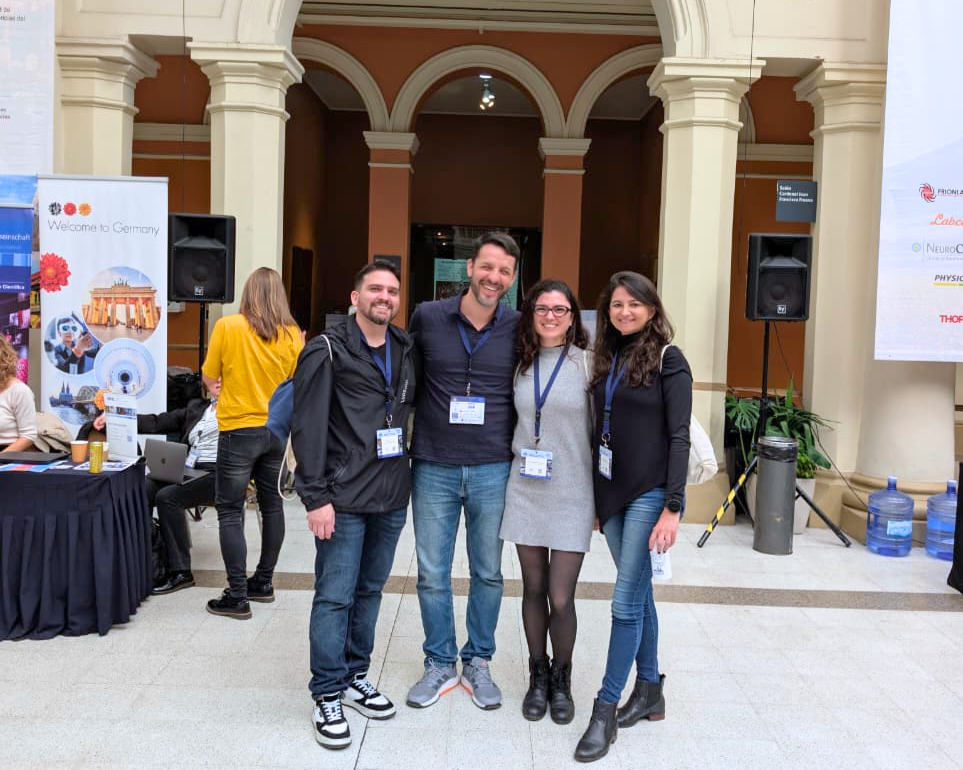
Research professor at the Santos Dumont Institute (ISD), Andressa Radiske, was awarded the first “Diversity in Neuroscience (Next) Award” from the Alzheimer's Association International Conference (AAIC). The award aims to recognize early-career researchers who have made notable contributions to the field of neuroscience.

The award ceremony took place during the Brazilian hub of the global event AAIC Neuroscience Next, held simultaneously by the association in several countries, with the aim of supporting and highlighting the next generation of researchers and clinical professionals in the areas of Alzheimer's and dementia. In Brazil, the event took place in Porto Alegre/RS. 

On this occasion, Andressa was able to share her work with students, postdoctoral researchers and early-career professionals working in the fields of cognitive, computational, behavioral neuroscience and other research areas. For the researcher, recognitions like these are fundamental for Brazilian scientists who develop their scientific careers in Brazil.

“It means that the work we do here, despite all the adversities, can be at the same level of quality as that developed in countries where research conditions are more favorable. This award also highlights the importance of diversity for the advancement of science and I hope that the recognition I received will serve as an incentive for other female researchers who also conduct their research here in Brazil,” she says. 

A biomedical scientist by training and a PhD in Biomedical Gerontology, Andressa Radiske developed postdoctoral research at the Brain Institute of the Federal University of Rio Grande do Norte (ICe/UFRN), the scientist studied molecular and electrophysiological mechanisms involved in the formation, modification and persistence of aversive memories motivated by fear, which are related to issues such as phobias and traumas, and this is the area she continues to study at the ISD.

Meet the researcher

Andressa Radiske holds a Bachelor's degree in Biomedicine, a Master's degree in Medicine and Health Sciences with an emphasis on Neuroscience, and a PhD in Biomedical Gerontology from the Pontifical Catholic University of Rio Grande do Sul (PUC-RS). She conducted postdoctoral research at the Memory Research Laboratory of the Federal University of Rio Grande do Norte (UFRN) and works as a research professor at the Santos Dumont Institute (ISD), in Macaíba (RN).

Their studies aim to characterize or identify how aversive memories can be susceptible to pharmacological treatments, expanding the possibilities of therapeutic targets so that, combined with psychotherapies, they can lead to the treatment of traumas and phobias. 

Previously, Radiske also won the Early Career Award 2022 from the International Brain Research Organization (IBRO), an award given to young scientists who are independently starting their careers as researchers.


About ISD

The Santos Dumont Institute (ISD) is a Social Organization linked to the Ministry of Education (MEC) and includes the Edmond and Lily Safra International Neuroscience Institute and the Anita Garibaldi Center for Health Education and Research, both in Macaíba. ISD's mission is to promote education for life, forming citizens through integrated teaching, research and extension actions, in addition to contributing to a fairer and more humane transformation of Brazilian social reality.
Communication Office
comunicacao@isd.org.br
(84) 99416-1880

Share this news

Recommended

More news

ISD research professor receives outstanding award in the area of neurosciences

Research professor at the Santos Dumont Institute (ISD), Andressa Radiske, was awarded the first “Diversity in Neuroscience (Next) Award” from the Alzheimer's Association International Conference (AAIC). The award aims to recognize early-career researchers who have made notable contributions to the field of neuroscience.

The award ceremony took place during the Brazilian hub of the global event AAIC Neuroscience Next, held simultaneously by the association in several countries, with the aim of supporting and highlighting the next generation of researchers and clinical professionals in the areas of Alzheimer's and dementia. In Brazil, the event took place in Porto Alegre/RS. 

On this occasion, Andressa was able to share her work with students, postdoctoral researchers and early-career professionals working in the fields of cognitive, computational, behavioral neuroscience and other research areas. For the researcher, recognitions like these are fundamental for Brazilian scientists who develop their scientific careers in Brazil.

“It means that the work we do here, despite all the adversities, can be at the same level of quality as that developed in countries where research conditions are more favorable. This award also highlights the importance of diversity for the advancement of science and I hope that the recognition I received will serve as an incentive for other female researchers who also conduct their research here in Brazil,” she says. 

A biomedical scientist by training and a PhD in Biomedical Gerontology, Andressa Radiske developed postdoctoral research at the Brain Institute of the Federal University of Rio Grande do Norte (ICe/UFRN), the scientist studied molecular and electrophysiological mechanisms involved in the formation, modification and persistence of aversive memories motivated by fear, which are related to issues such as phobias and traumas, and this is the area she continues to study at the ISD.

Meet the researcher

Andressa Radiske holds a Bachelor's degree in Biomedicine, a Master's degree in Medicine and Health Sciences with an emphasis on Neuroscience, and a PhD in Biomedical Gerontology from the Pontifical Catholic University of Rio Grande do Sul (PUC-RS). She conducted postdoctoral research at the Memory Research Laboratory of the Federal University of Rio Grande do Norte (UFRN) and works as a research professor at the Santos Dumont Institute (ISD), in Macaíba (RN).

Their studies aim to characterize or identify how aversive memories can be susceptible to pharmacological treatments, expanding the possibilities of therapeutic targets so that, combined with psychotherapies, they can lead to the treatment of traumas and phobias. 

Previously, Radiske also won the Early Career Award 2022 from the International Brain Research Organization (IBRO), an award given to young scientists who are independently starting their careers as researchers.


About ISD

The Santos Dumont Institute (ISD) is a Social Organization linked to the Ministry of Education (MEC) and includes the Edmond and Lily Safra International Neuroscience Institute and the Anita Garibaldi Center for Health Education and Research, both in Macaíba. ISD's mission is to promote education for life, forming citizens through integrated teaching, research and extension actions, in addition to contributing to a fairer and more humane transformation of Brazilian social reality.
Communication Office
comunicacao@isd.org.br
(84) 99416-1880

Share this news