

Informações sobre o programa - Clique para expandir
Objective
The Interdisciplinary Program for Scientific, Technological and Innovation Initiation aims to encourage young people in higher education and elementary education in activities, methodologies, knowledge and practices related to technological, innovation, personal, professional development and critical-reflective thinking.
How to participate
There are two ways to participate in the Interdisciplinary Scientific Initiation Program, depending on the available vacancies:
- Voluntary Initiation without receiving monthly grants; and
- Initiation with scholarships based on availability and not cumulative with other types of scholarships from CNPq, CAPES, or any other national or international agencies that promote education, research, technological development, and innovation, or similar institutions. Except for assistance, maintenance, or permanent scholarships.
In both forms, students must go through the following steps to enter:
- Check for available spots for voluntary or stipended internships.
- Get in touch with an advisor for the Interdisciplinary Scientific Initiation Program Regarding your interest in the research area and the project, to align expectations and plans.
- Complete the registration for the call for applications or the selection form.
- Participate in the selection process (interview, test, and other criteria according to the current announcement).
- Select candidates according to the number of available positions (volunteer or with scholarship).
- Initiate scientific initiation activity
Scholarship validity
Grants are awarded for up to 12 months, subject to availability in the PIBIC, PIBITI, and PIBIC-EM programs, or individual funding announcements. Grants are announced annually, and a new application is required to be considered for a second round. Grants are not automatically renewed.
Loss of scholarship
The scholarship is discontinued when there is a loss of ties to the undergraduate program or school, course suspension, receipt of another scholarship from any funding agency, employment relationship, lack of interest or performance decline in the project, or an unapproved report. The scholarship cannot be combined with other grants from CNPq, CAPES, or any other national or international agencies that promote education and research, technological development and innovation, or similar institutions. The exception is assistance, maintenance, or permanence scholarships.
Considering the interdisciplinary nature of this Scientific Initiation Program, we value and encourage in-person experiences to foster social and scientific interaction in an interdisciplinary research environment with diverse researchers, professors, professionals, and students.
Cancellation of scholarship
The scholarship cancellation must be made by the 5th of the current month by sending an email to the academic secretariat by the scholarship holder or supervisor with the appropriate justifications.
Scholarship reimbursement
In the event of non-compliance with the obligations of the scholarship award term, the following will be followed: RN-019/2015 with the Guidelines for Reimbursement:
1.1. The amount due will be the sum of the resources spent by CNPq in the payment of aid, as well as scholarships in the country and abroad, considering monthly fees, installation assistance, health insurance, travel assistance, air tickets, school fees and other benefits provided for in the specific rules for the scholarship modalities, corrected in accordance with the legislation applicable to debts with the Federal Government.
1.2. The refund of the amount due, calculated as indicated in the previous item, may be paid in installments as provided in the CNPq Credit Installment Manual.
1.3. The refund in question, if related to a scholarship abroad, may be made in the same currency used by CNPq for the scholarship payment. The total amount of expenses must be converted to Brazilian Reais, adjusted as per item 1.1 of this rule, and then converted back to the payment currency.
Workload
Minimum workload of 16 hours per week for higher education students and 8 hours per week for elementary school students.
Loss of ties with the Scientific Initiation Program
The voluntary or scholarship-based scientific initiation link may be canceled in cases of non-compliance with:
1) Intellectual Property Policy. Establishes guidelines and procedures for obtaining and managing intellectual property rights based on the knowledge generated at the ISD. Its purpose is to make the results of its activities available for the broader benefit of society.
2) code of Conduct. It defines the principles that should guide the behavior of ISD professionals, promoting appropriate conduct, in addition to preventing, detecting, and holding accountable bad behavior within the organization.
3) Laboratory Usage Rules
4) Laboratory Standard Operating Procedures.
5) Good Laboratory Practices
6) Ethics in the Use of Animals
7) Ethics in Research on Human Beings
Open positions* - Volunteer Scientific Initiation
Job Identification Code: ISD_IC_002
Advisor: Fabricio Lima Brazil
Research area: neuromodulation
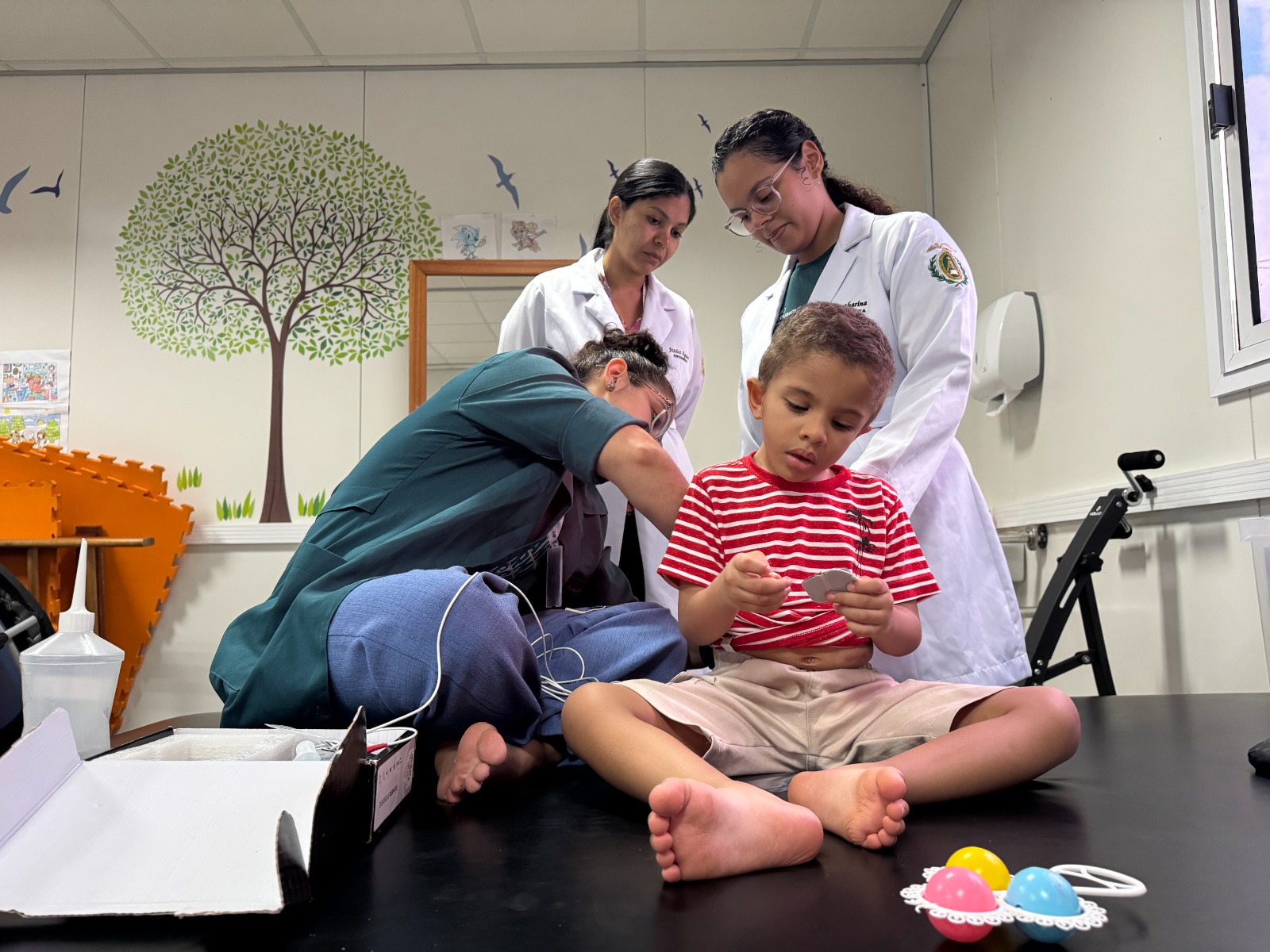
Project: Electrical stimulation in autism (ASD)
Requirement: Undergraduate student in Speech Therapy
Vacancies: 1
Job Identification Code: ISD_IC_003
Advisor: Fabricio Lima Brazil
Research area: Brain-machine interface (BMI)
Project: Lower limb rehabilitation with ICM
Requirement: Undergraduate student in Physiotherapy, Physical Education, or health-related field.
Vacancies: 1
Identification Codeor of the vacancy: ISD_IC_004
Advisor: Denis Delisle Rodriguez
Research area: Brain-machine interface (BMI)
Project: Development of a system for the diagnosis of Autism Spectrum Disorder and Attention Deficit Hyperactivity Disorder.
Requirement: Students pursuing degrees in Electrical Engineering and Biomedical Engineering.
Vacancies: 1
Job Identification Code: ISD_IC_008
Advisor: Andressa Radiske
Research area: Cognition
Project: Behavioral analysis of fear in animal models using computational tools.
Requirement: Interest in data analysis, technology, and animal behavior, as well as a willingness to learn new computational tools applied to scientific research (such as behavioral tracking software and data analysis).
Vacancies: 1
Job Identification Code: ISD_IC_012
Advisor: Caroline Cunha do Espirito Santo
Research area: neuromodulation
Project: Medical image processing methods for the diagnosis of laryngeal tremor in Parkinson's disease and for feature extraction from histological images and voiding patterns of rodents.
Requirement: Students enrolled in biomedical engineering, computer science, or related fields are eligible. Participants must have time available to attend activities in person.
Vacancies: 1
Job Identification Code: ISD_IC_013
Advisor: Fernando da Silva Fiorin
Research area: neuromodulation
Project: Spinal cord stimulation in rats as a therapy for seizures.
Requirement: Students enrolled in physical education programs or other health or biological sciences programs are eligible. It is mandatory to have time available to participate in the activities in person.
Vacancies: 1
Job Identification Code: ISD_IC_015
Advisor: André Felipe Oliveira de Azevedo Dantas
Research area: Neuroengineering and health
Project: Construction of devices for neurorehabilitation.
Requirement: Knowledge and/or interest in electronics – Electronics Technician, Electrotechnical Technician, Computer Engineer, Electrical Engineer, Telecommunications Engineer;
Vacancies: 1
*The positions listed above are unpaid.