

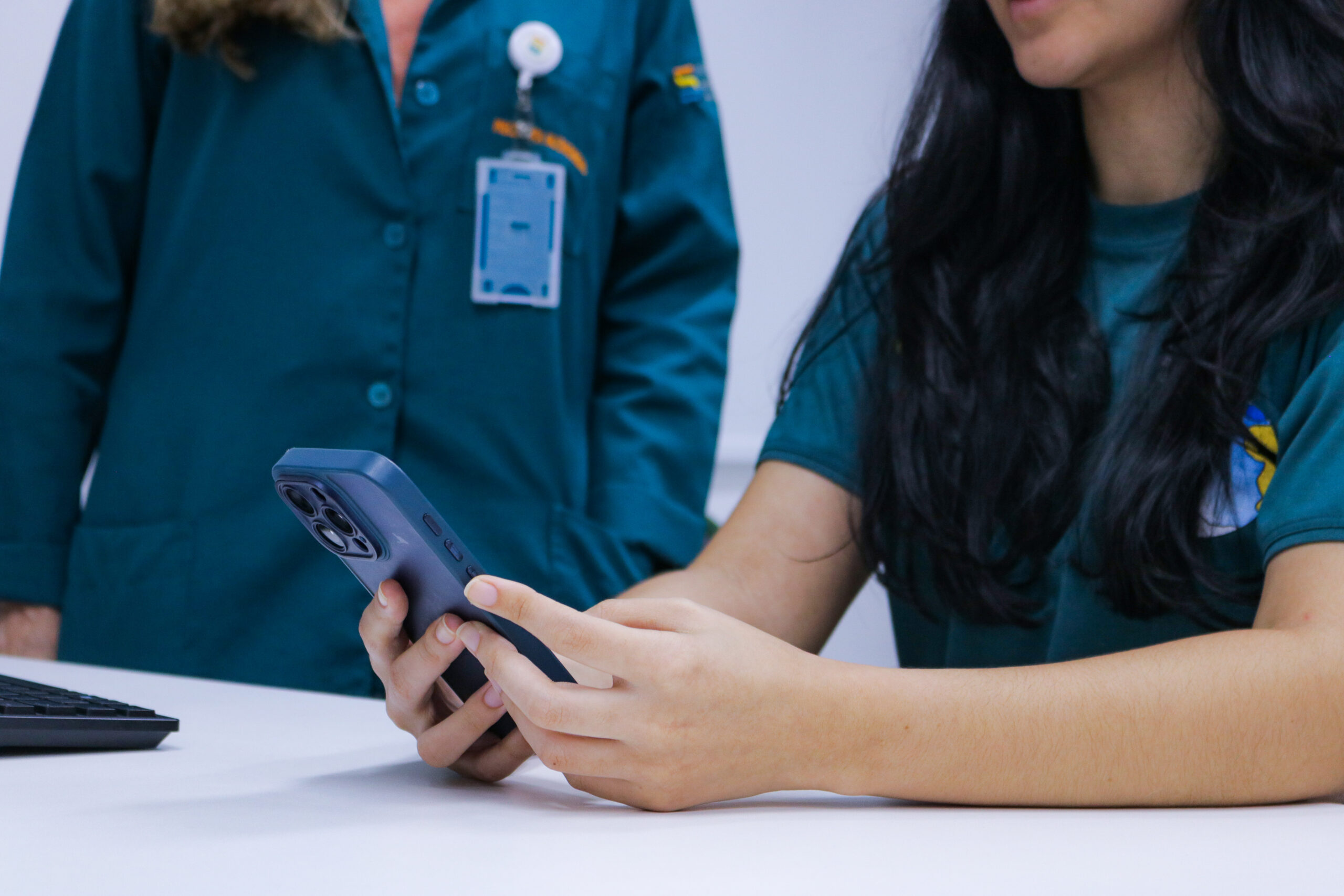
The recent ban on the use of cell phones in the classroom by the Federal Government has generated debates about the impacts of this measure on school routines. According to Law 15.100/2025, enacted in January, the ban aims to “safeguard the mental, physical and psychological health of children and adolescents”. However, the legislation allows exceptions for educational purposes and ensures the use of these devices for accessibility, inclusion, health conditions or to guarantee fundamental rights.
According to Juliana Magro, a preceptor at the Santos Dumont Institute (ISD), a cell phone is not just a means of communication, but also a means of accessing information and learning. According to the expert, “these tools are, in many cases, the only way for students with disabilities to access or produce information, in addition to serving as an important accessibility tool in the school environment.” She emphasizes that the appropriate use of technology can enhance the teaching and learning process, making the classroom more accessible and inclusive.
One example cited by Juliana is the 'Dosvox' system, a free software developed by researchers at the Federal University of Rio de Janeiro (UFRJ), which allows blind students to use computers through a voice synthesizer. “There, we can, among many other things, work on various activities that contribute to the literacy of blind children, but its visual interface also allows all children to use it. With good planning, the teacher can use this tool including all students with or without disabilities,” she says.
However, caution is needed to avoid excessive or inappropriate use. Students with disabilities are also susceptible to distractions and the harm caused by excessive cell phone use. “Anything in excess can be harmful,” warns Juliana. For this reason, the educator emphasizes the importance of schools establishing clear rules and promoting appropriate mediation for the use of these devices.
Furthermore, family involvement is essential to ensure that screen time is balanced inside and outside of school, respecting its function as an accessibility and learning tool. The ISD professional emphasizes that, “through cell phones, students with disabilities can see the world, using various applications, programs, digital documents and other interfaces that enable them to read, write, communicate and learn”.
Therefore, as provided for by law, the prohibition of indiscriminate use of cell phones in schools should not prevent technology from continuing to be an ally in the inclusion of people with disabilities. With planning, control and adequate mediation, smartphones can be an important resource for ensuring accessibility and providing equal opportunities in the school environment.
Guides guide the use of cell phones at school
The Ministry of Education (MEC) has made two practical guides available that provide guidance on the balanced and conscious use of cell phones in schools. According to the MEC, the materials aim to raise awareness about the responsible use of digital devices and present strategies and guidelines to support the implementation of the new legislation, in addition to practical guidance on the challenges, opportunities and strategies for the conscious use of cell phones in the school environment.
The materials were published in a digital collection on the topic in platform MEC RED. One is aimed at schools across the country, and the other, at education networks. The focus of the documents is the pedagogical use of cell phones in the classroom.
About ISD
The Santos Dumont Institute (ISD) is a Social Organization linked to the Ministry of Education (MEC) and includes the Edmond and Lily Safra International Neuroscience Institute and the Anita Garibaldi Center for Health Education and Research, both in Macaíba. ISD's mission is to promote education for life, forming citizens through integrated teaching, research and extension actions, in addition to contributing to a fairer and more humane transformation of Brazilian social reality.