

At 31 years old, Ediclecio Rodrigues had to rebuild his life after being shot during a robbery at his workplace, where he worked as a security guard. He suffered a Spinal Cord Injury (SCI), which resulted in the loss of motor function and sensation below the trunk and in the lower limbs.
LME affects motor functions, muscle control, and sensitivity, and is also associated with changes in the ability to store and eliminate urine, requiring continuous monitoring and care during rehabilitation.
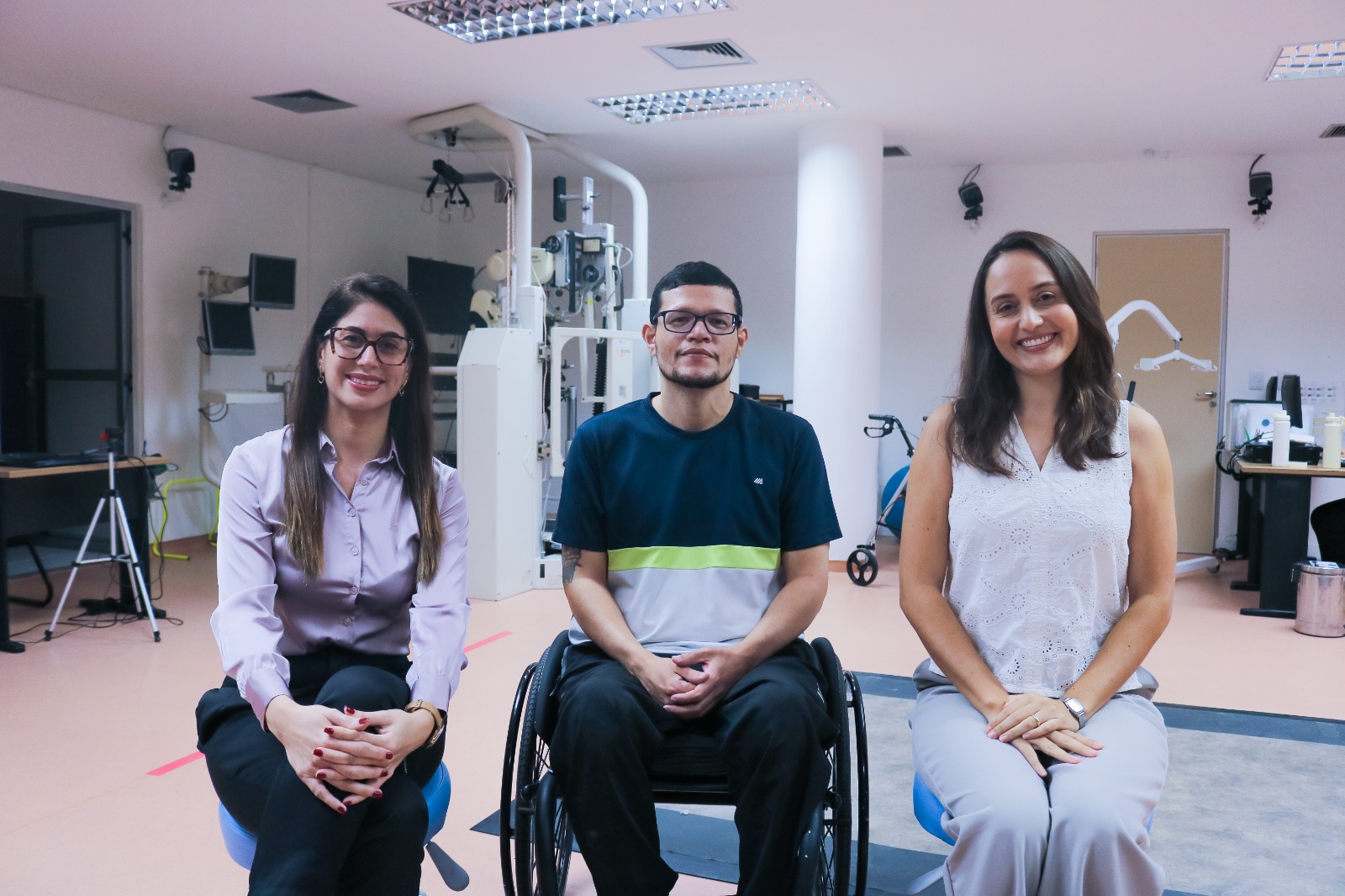
In an effort to mitigate the effects of his injury, Ediclecio volunteered for a clinical research study at the Santos Dumont Institute (ISD), a place he already frequented as a user of the Specialized Rehabilitation Center (CER ISD).
The study, conducted by physiotherapist Ericka Serafini and research professor Caroline Cunha do Espírito Santo, aimed to evaluate bladder function in people diagnosed with Spinal Cord Injury after an intervention using Brain-Computer Interface (BCI), a technology in which the user controls the computer through brain signals, while the information displayed on the screen acts as feedback on their brain performance.
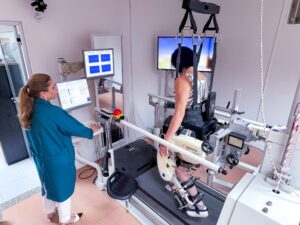
To develop the research, the scientists used a type of intermittent coherence training (ICC) specific to the context of passive training with the Lokomat. While the lower limbs of the study participant perform the movement of walking on a treadmill with the aid of the exoskeleton, the individual concentrates on performing the activity called motor imagery, that is, imagining their own walking.
The study results show that, after 24 sessions of this intervention, patients experienced improved urinary incontinence symptoms; that is, they reduced the frequency and amount of urine loss. Furthermore, they developed the ability to store urine and eliminate it completely when necessary. This improvement decreases the number of complications arising from neurogenic bladder, a common diagnosis in cases of spinal cord injury.
For Ediclecio, the improvement in bladder control was felt both during the rehabilitation process at CER ISD and during his participation in the research. He reports that, before participating in the research, he could retain urine for three hours before needing a catheter for emptying; after one month, this time increased to five hours, providing a better quality of life and reducing embarrassment.
"For wheelchair users, the issue of urine leakage, whether you like it or not, can be a bit embarrassing in certain places if you don't have a catheter inserted when you need it. So this part of the bladder was the most noticeable, preventing those embarrassing situations," the user reports.
Study suggests new possibilities for clinical improvement.
The ISD study, which was part of physiotherapist Ericka Serafini's master's thesis in Neuroengineering, focuses on issues that are still little explored in the neuroscience literature in Brazil. The study's results indicate the possibility of clinical improvement for patients with neurogenic bladder through the use of a brain-machine interface combined with robotic gait training.
“When we started seeing these gains, we found few studies on the subject that provided quantitative clinical results and validated scales to measure how much this paradigm actually works. Therefore, we came to believe that the patients' improvement came precisely from the combination of ICC and training with Lokomat,” emphasizes Ericka.
According to researcher Caroline Cunha, who supervised the study, the dynamics of using ICC with Lokomat stimulates the activation of brain areas responsible for motor activity. “We identified a preclinical study that demonstrates a connection between the primary motor cortex, the area of the brain responsible for voluntary movement and activated during motor imagery, which is the target of the interface, and the bladder. These findings indicate that modulation of this cortical area may be relevant to bladder function, including in the context of other neuromodulation strategies,” she explains.
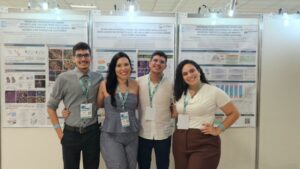
The research was published as an article in the international journal Scientific Reports, authored by Ericka Serafini, Cristian Guerrero-Mendez, Cristian Blanco-Diaz, Fernando da Silva Fiorin, Thayse Albuquerque, and the ISD research professors André Dantas, Denis Delisle-Rodriguez, and Caroline Cunha do Espírito-Santo. Access is available through the Nature publisher's website at the following link: https://www.nature.com/articles/s41598-025-18277-3.
About ISD
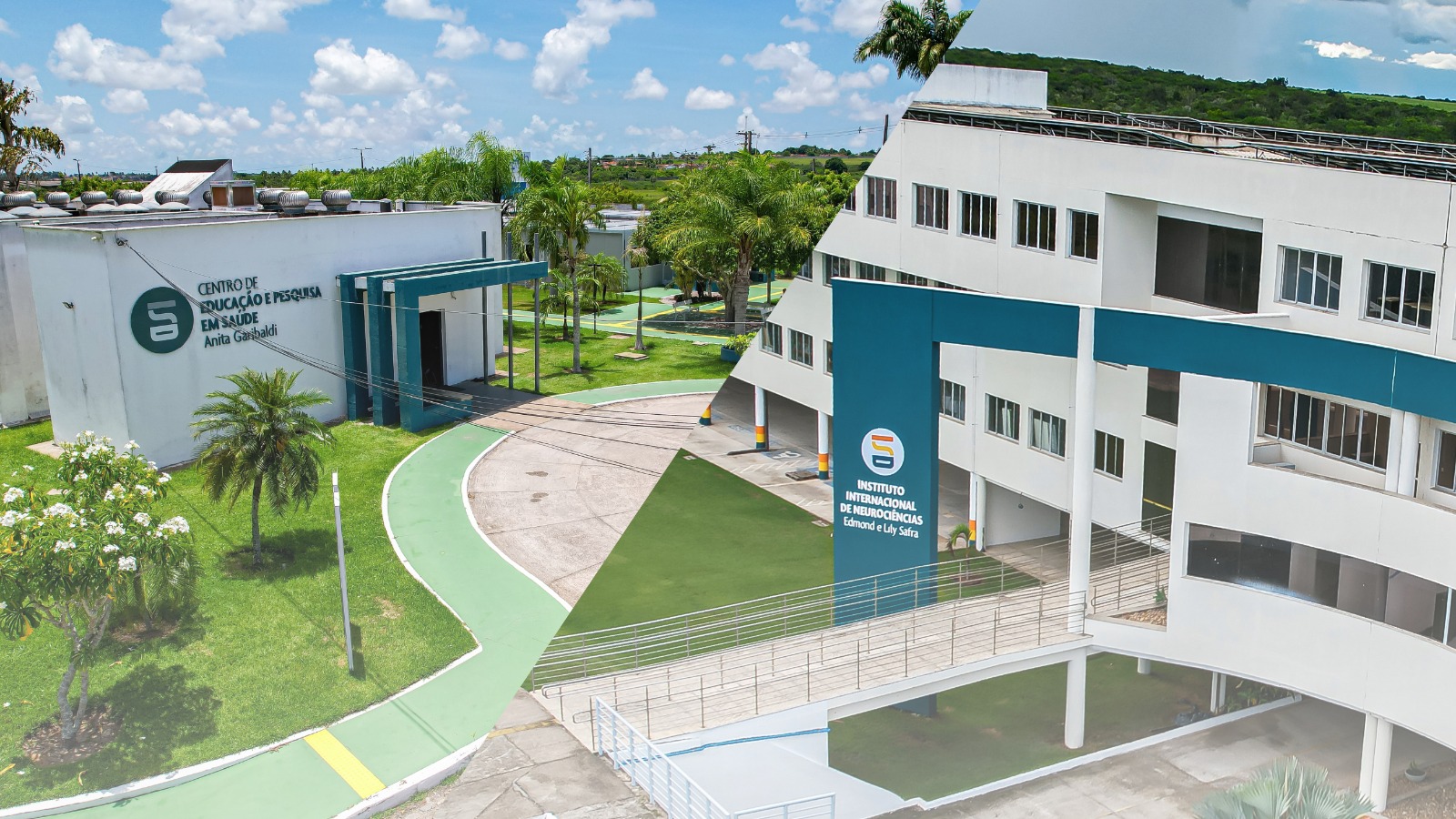
The Santos Dumont Institute (ISD) is a Social Organization of the Federal Executive Branch, supervised by the Ministry of Education, with the intervention of the Ministry of Sport. It encompasses the Edmond and Lily Safra International Institute of Neuroscience and the Anita Garibaldi Center for Education and Research in Health, both located in Macaíba. The ISD's mission is to promote education for life, forming citizens through integrated teaching, research, and outreach activities, as well as contributing to a more just and humane transformation of Brazilian social reality.