

IIN-ELS symposium points out paths for neuroengineering in Brazil
29/11/2016
Text and photos: Luiz Paulo Juttel – Ascom ISD
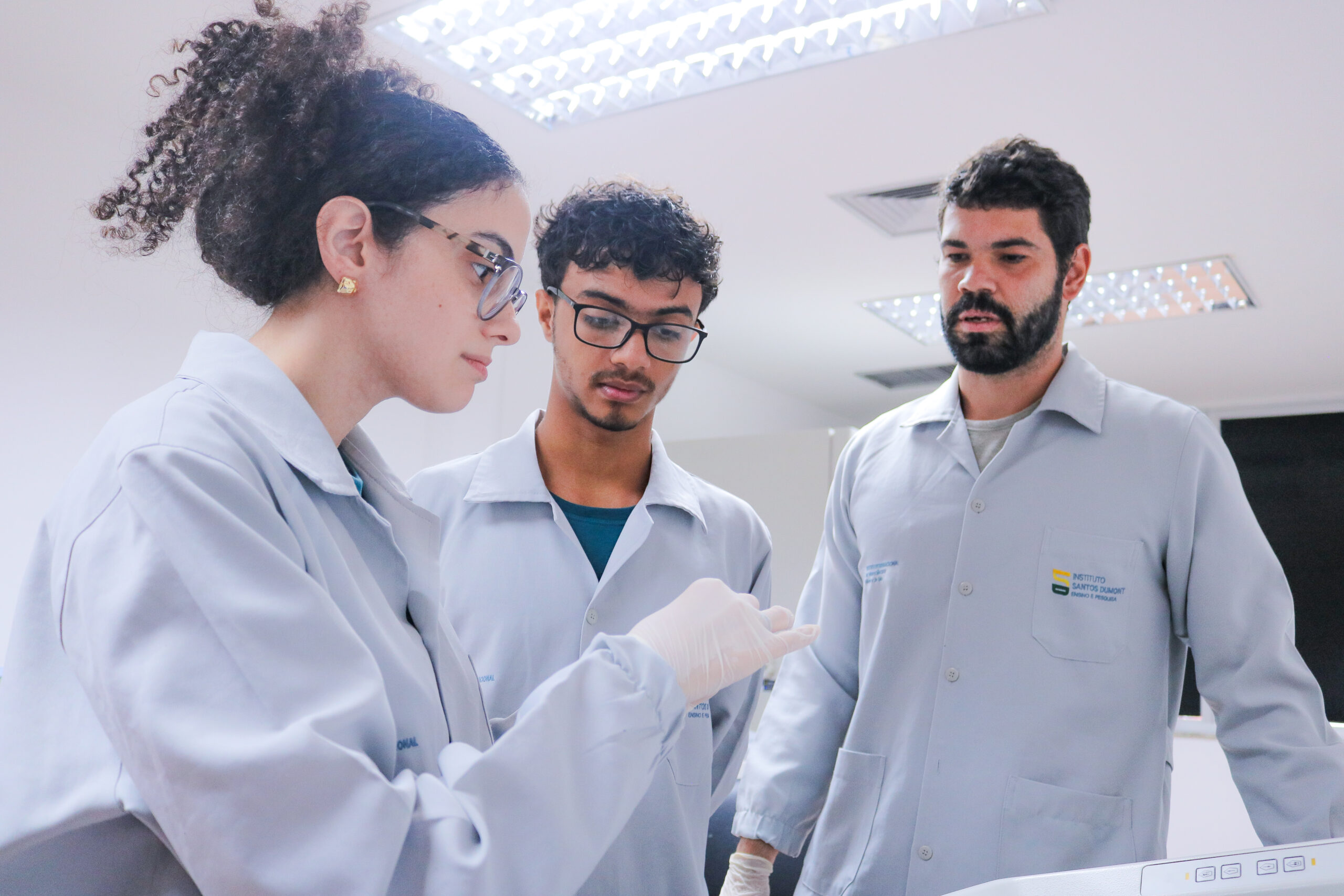
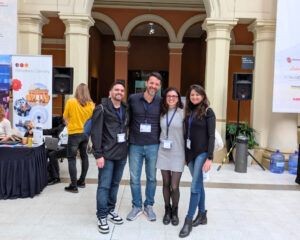
O Edmond and Lily Safra International Institute of Neuroscience (IIN-ELS) promoted on November 24th and 25th the III Symposium on Neuroengineering. The event was held in the Auditorium of the Jundiaí Agricultural School (EAJ – UFRN), in Macaíba-RN, and featured lectures, discussions and practical sessions. Neuroengineering is a strategic and interdisciplinary field that combines resources from neuroscience and engineering. Its applications cover topics such as the development of prosthetics, brain-machine interfaces and the improvement of neuromodulation technologies, with therapeutic potential for neurological diseases.
The first day of the event covered key topics for professionals who wish to specialize in neuroengineering. Starting with the IIN-ELS Research Coordinator, Edgard Morya, who addressed neuroengineering in the context of assistive and rehabilitation technologies. He presented strategic initiatives from the US and Europe in neuroscience and assistive technologies with high social and economic impact. This reinforces the importance of investing in cutting-edge research in the area of neuroscience and neuroengineering.
Morya also showed the audience the main scientific research developed in recent years and the countless possibilities for new scientific studies, training of the professional of the future and clinical applications that can be developed in the neuroengineering course.
Cities increasingly connected
Another speaker at the event was Augusto Venâncio, from the Federal University of Rio Grande do Norte (UFRN). He spoke about smart cities and the Internet of Things (IoT). Venâncio showed, for example, that in 2010 there were 12.5 billion devices connected to the Internet, compared to 6.8 billion people on the planet. Optimistic studies indicate that there will be around 200 billion connected devices by 2020. “Until recently, a device had a name and a single function; nowadays it does several things, tells you what to do or provides information about your health,” explains Venâncio.

Augusto Venâncio brought to the Symposium Professor Álvaro de Oliveira, coordinator of the actions that integrate Natal into the Smart and Human Cities project. Both commented that this initiative encompasses, among other things, the development of applications and prototypes to support citizens and entities in strategic areas, such as public safety, tourism, public and private transportation, education, smart buildings, pollution, essential services (water, energy, gas), etc. More information can be found at: http://smartmetropolis.imd.ufrn.br/
New treatments for Parkinson's disease and depression
On the second day of the event, lectures addressed studies and treatments for Parkinson's and depression, as well as the relationship between physical exercise and the evolution of the human brain. Functional neurosurgeon Neuton Magalhães, from the Maurício de Nassau University Center (Uninassau), explored neuromodulation to understand and alleviate the symptoms of Parkinson's disease. This disease, currently incurable, affects more than 10 million people worldwide (about 21% of the world's population).

Magalhães demonstrated the benefits of implanting a deep brain stimulator to stabilize tremors, involuntary movements and other symptoms of Parkinson's in patients who do not respond well to medication (Levodopa). A study with a few dozen patients showed that 83% of them reduced their medication after the implant, while the others stabilized it. The researcher also presented a video of a 37-year-old patient who had suffered from juvenile Parkinson's for 13 years and was taking high doses of medication. After the implant, he recovered fine movements and was able to run around the hospital ward. Variations of this treatment are being tested in other diseases such as chronic pain, depression and obsessive compulsive disorder.
In the case of depression, Elaine Gavioli, a professor at UFRN, spoke about research into new drugs that promise a faster response and fewer side effects than current antidepressants. Many of the drugs used today take weeks to show a positive therapeutic response, in addition to possibly causing gastric discomfort, sexual impotence, loss of libido, increased anxiety, cardiovascular changes, among other side effects. Added to this is the fact that 10 to 201% of patients do not respond to any antidepressant currently on the market.
The brain and physical exercise
Another outstanding presentation was by Eduardo Fontes, also a professor at UFRN. He showed that, as humans began to move more, their limbs and brains became larger. This process allowed our species to gain exceptional motor performance.

The researcher also commented on work developed by his group, which investigated physiological changes in the brain during physical exercise. They discovered that strenuous exercise leads to the deactivation of the prefrontal cortex, an area responsible for cognitive control. Depression, anxiety and stress lead to hyperactivity of the prefrontal cortex. Reducing activity in this region possibly helps to tolerate negative sensations. In addition, physical exercise improves cognitive functions such as memory and academic performance.
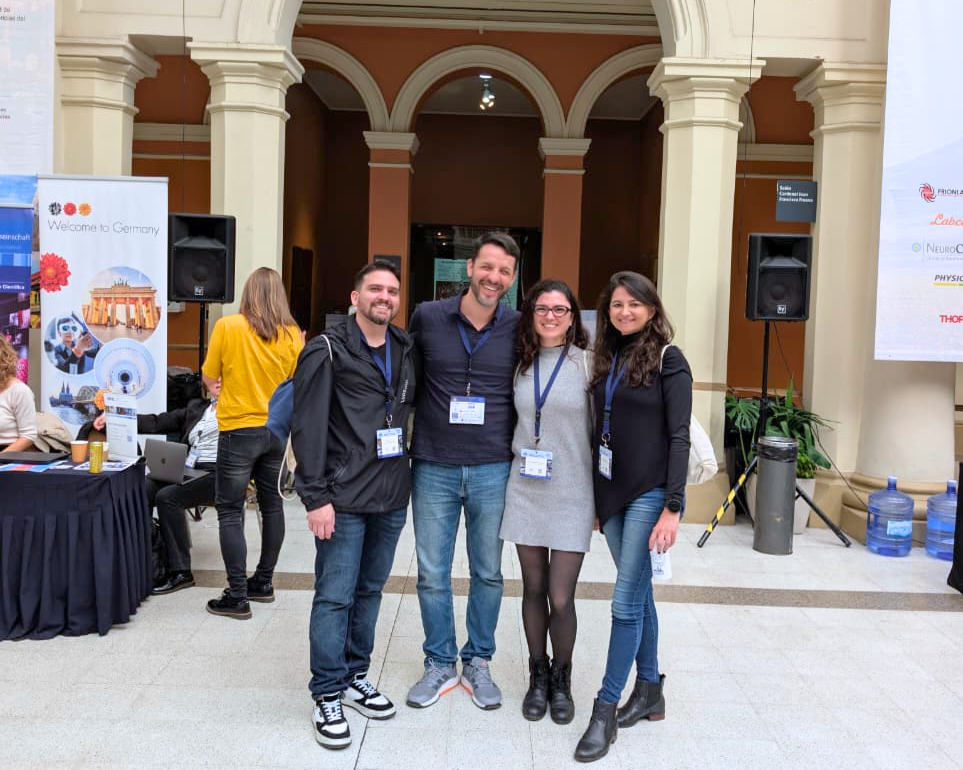
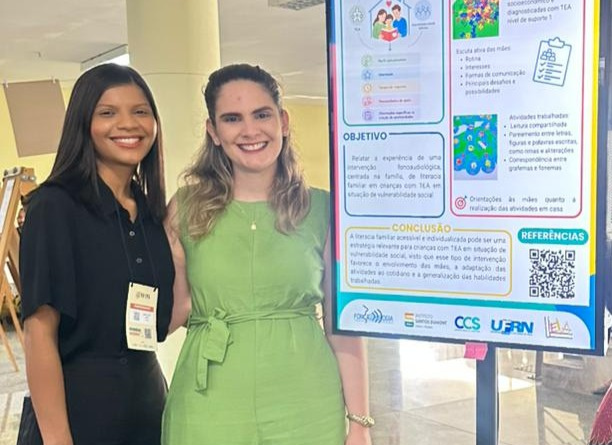
Professionals from several states in Brazil came to Macaíba to participate in the 3rd Neuroengineering Symposium. This is the case of Eddy Krueger, a professor at the State University of Londrina, in Paraná, who works in the Neural Engineering and Rehabilitation research area. He was impressed with the structure and content offered. “What surprised me most was the didactic way in which complex subjects were addressed. The speakers presented information that was accessible not only to researchers, but also to undergraduate and graduate students,” commented Krueger. In addition to the lectures and roundtables, a poster session and three mini-courses were held on the development of orthoses and prostheses, confocal microscopy, and electroencephalography of the brain-machine interface.
The Neuroengineering Symposium has been held annually by IIN-ELS since 2014. The Institute is located in Macaíba-RN and offers the only Master's degree in Neuroengineering in Brazil, certified by the Coordination for the Improvement of Higher Education Personnel (CAPES). The selection process for the IIN-ELS Master's degree is open and applications are accepted until January 11, 2017. More information at: https://institutosantosdumont.org.br/instituto-internacional-neurociencias/.