
"Violence against women is everyone's problem", says ISD preceptor in a class on public policies aimed at gender violence

Posted in May 29, 2021
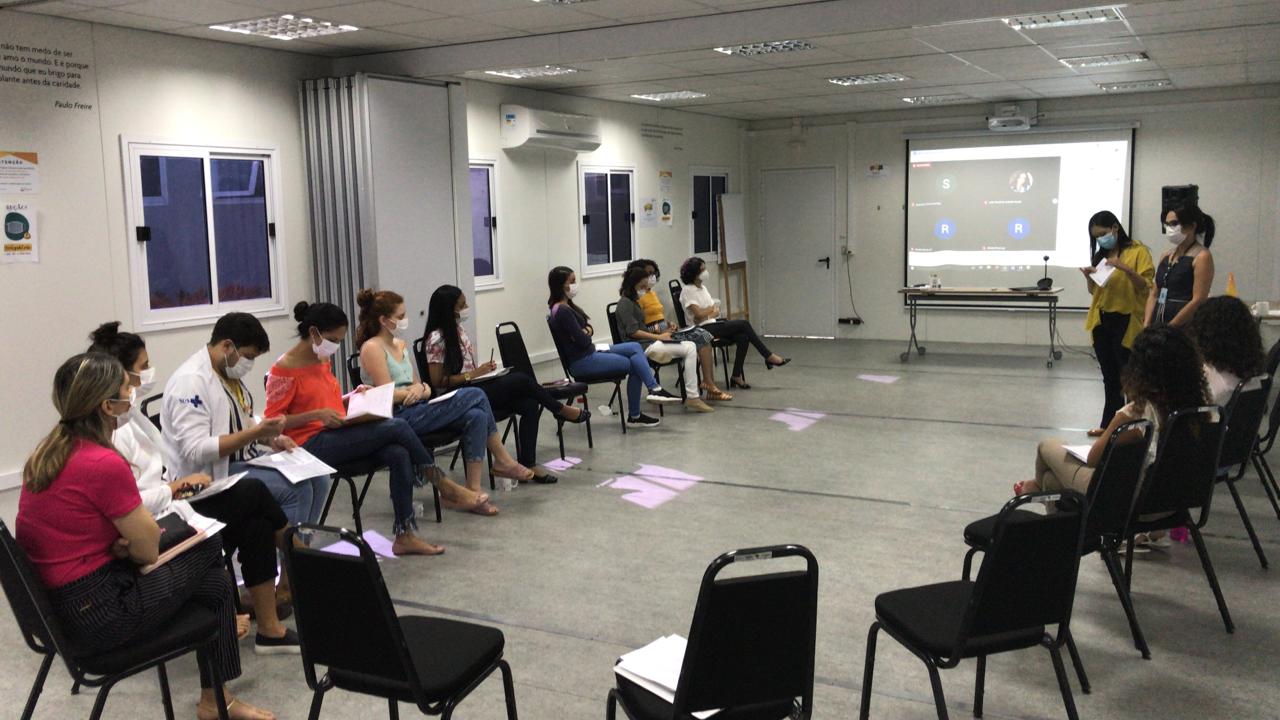
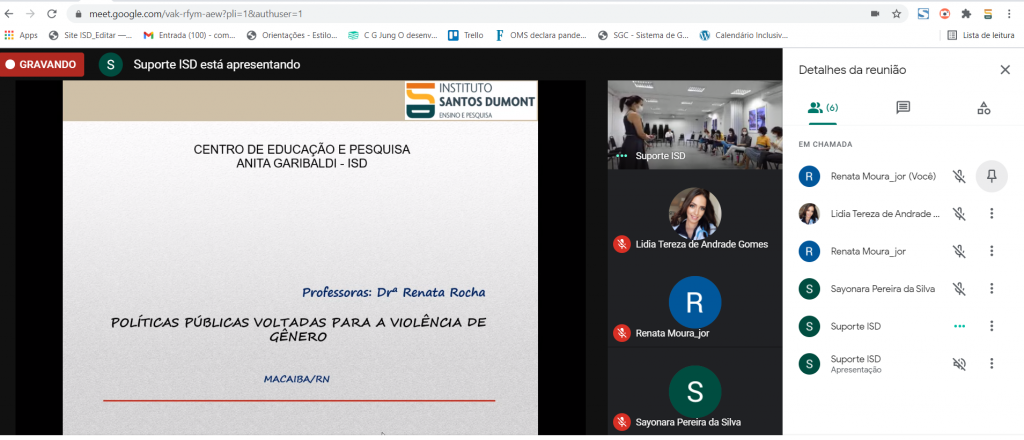
The class was taught last Wednesday (26) as part of the ISD's Global Citizenship Education discipline: Students from the Institute's postgraduate programs participate in person or remotely

Inequality, silencing, denial of rights, loneliness, pain, insecurity. These words emerged as a response to the question “What is gender violence for you?”, during a class taught this week by the multidisciplinary social worker preceptor at the Santos Dumont Institute (ISD), Renata Rocha, for the subject Education for Global Citizenship, at the Institute. 

The discipline is offered to students of ISD's postgraduate programs and, in this class, held on Wednesday (26), the theme was “Public policies aimed at gender violence”.

Renata Rocha holds a PhD in Educational Sciences from the University of Porto and a post-doctorate in Social Sciences from the Federal University of Rio Grande do Norte (UFRN). She has been researching issues related to violence for approximately 19 years.

“Historically, society has normalized women being inferiorized, violated and victimized, this is based on patriarchal dominance, which is the social standard, in which men always have more power and reason,” said the tutor in front of students from the Multiprofessional Residency in Health Care for People with Disabilities and the Master's in Neuroengineering at ISD.

According to Renata, the violence against women is openly permitted and even encouraged in many spaces. 

Physical, moral, sexual and psychological violence. Several types of violence end up affecting women's lives at some point in their lives, she warned. 
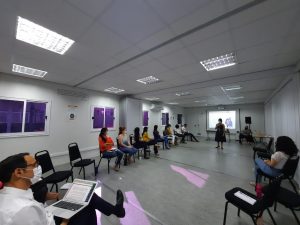
 

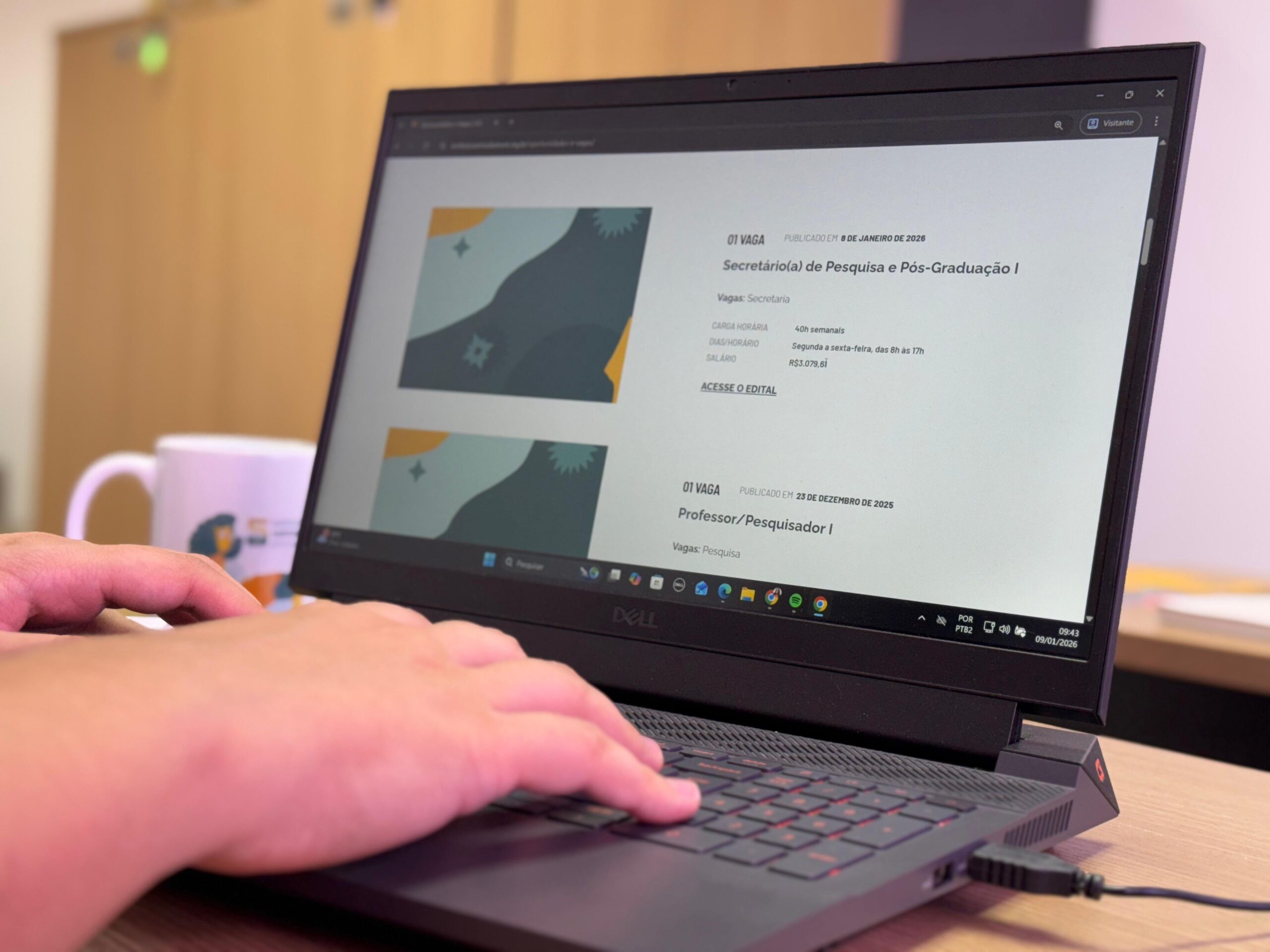
The subject Education for Global Citizenship is taught by the professor-researcher and general director of ISD, Reginaldo Freitas Júnior (who appears with the computer in the photo), and receives guests for exhibitions on various themes | Photo: Giovanni Sampaio

HOW TO IDENTIFY GENDER-BASED VIOLENCE?

Social isolation, psychological disorders, a very controlling partner, physical injuries, suicide attempts and unexplained pain are some of the signs that can alert you to the occurrence of gender-based violence. These signs need to be observed not only in the body – caused by physical violence – but also in behavior. 

For Renata, health professionals, regardless of their area of expertise, need to be alert to signs of violence. “Violence against women is everyone’s problem. And we, as health professionals, have an important role in providing care, prevention and addressing this type of violence that affects the lives of thousands of women and girls every day. We need to understand that in many cases, we will be dealing with silenced voices, so we need to have qualified and specialized listening,” says the social worker. 

The ideal, according to the preceptor, is for prevention to happen and guarantee a life without violence, but post-violence care ends up being more frequent and needs to be based on diagnosing the situation, treating the consequences and preventing new episodes of violence, that is, it is necessary to break the cycle of abuse. 

“Multidisciplinary support is absolutely necessary to help these victims. Social services, psychology, nursing and other areas, depending on each case, can work together to help the victim escape the cycle of violence. This is a difficult process, especially when we live in a reality where most of the perpetrators are within the family or emotional circle, but it is not impossible,” says Renata Rocha. 
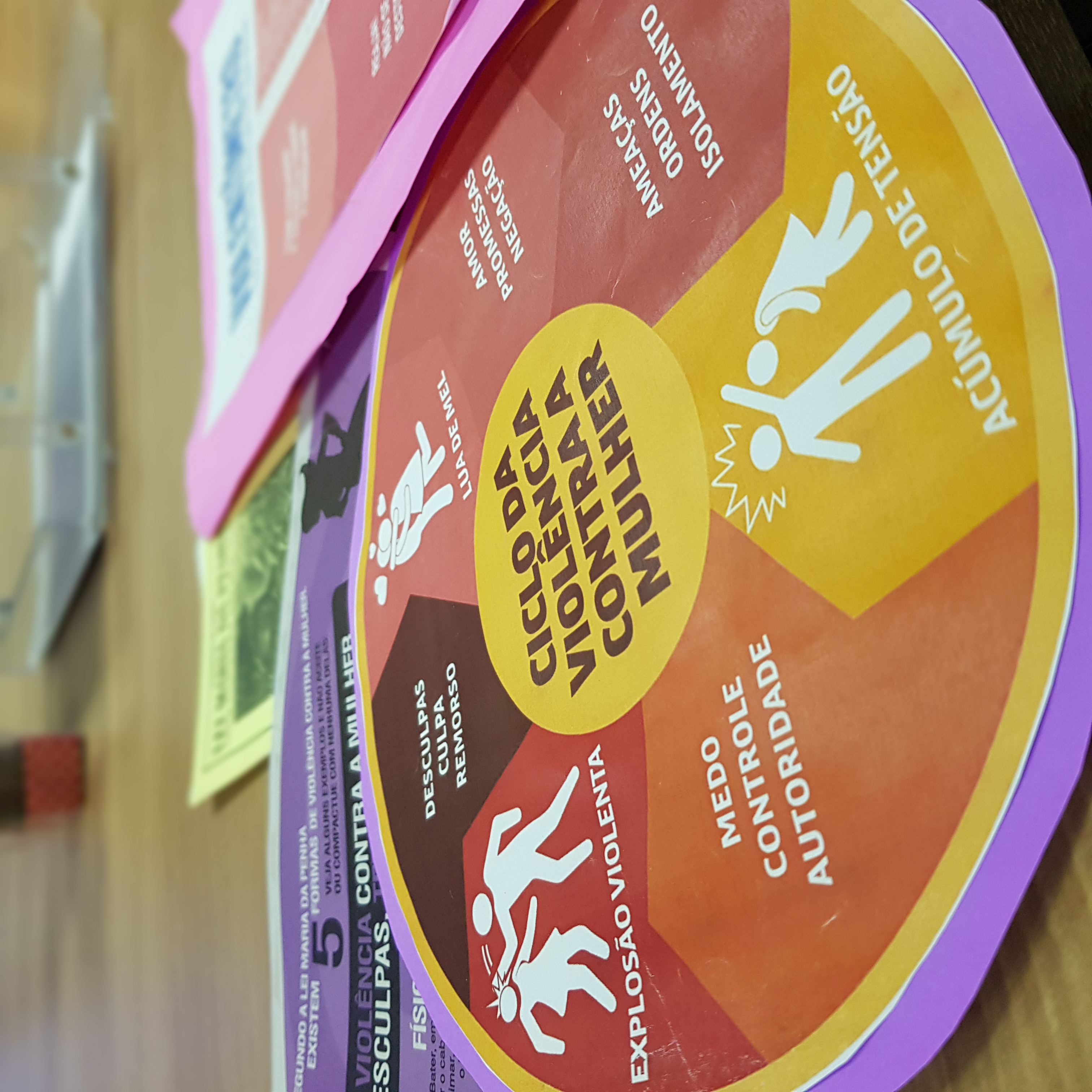
“Social services, psychology, nursing and other areas, depending on each case, can work together and help this victim to escape the cycle of violence,” said Renata Rocha during the class | Photo: Renata Moura

ATTITUDES

For Reginaldo Freitas Júnior, ISD’s general director and professor in charge of the Global Citizenship Education discipline, there are attitudes, information and conducts that every health professional involved in the care network for people in situations of violence should know. “Public policies, concepts, paths, the urgency of that care, respect for each victim’s process, are some examples of what we, who are subject to this demand on a daily basis, need to be aware of. We must also remember that we are in a reality of providing health care to people with disabilities and that women with disabilities are in a situation of double vulnerability,” he said. 

Among the attitudes that are the responsibility of professionals in the care network for people in situations of violence, there are also “respect for individuality, use of clear and understandable language, explanation of procedures and reassurance of the patient, providing security”, adds social worker Renata Rocha. 

DATA 

Violence against women is a social indicator with alarming data. According to information from the Maria da Penha Institute released in 2020, it is estimated that every two seconds a woman is a victim of physical or verbal violence in Brazil.

The most recent data – also released in 2020 – on feminicides in the country comes from the Brazilian Public Security Forum and shows that in 2018, 1,206 women were murdered. The deaths, however, were recorded as feminicide, that is, when the victim dies because of her gender.

In Rio Grande do Norte, the most recent data from the State Department of Public Health (SESAP/RN) show that the pandemic has led to an increase in the occurrence of cases of domestic violence. In the first half of 2020 alone, there was an increase of 31% in reported cases, compared to the same period in 2019. In total, 2014 women raped in their homes, by family members or partners. 

Click on the post below, from @isdnarede – ISD’s Instagram profile – to read the testimony of a woman who was a victim of violence.


View this photo on Instagram


A post shared by Instituto Santos Dumont (@isdnarede)

SDG 

According to the Sustainable Development Goals (SDGs), gender equality is not only a fundamental human right, but also the necessary foundation for building a peaceful, prosperous and sustainable world. The effort to achieve SDG 5 is transversal to the entire 2030 Agenda and indicates that gender equality has multiplier effects on sustainable development.

The objective regarding gender equality aims to ensure better living conditions for women and girls, not only in the areas of health, education and work, but especially in combating discrimination and violence based on gender and promoting empowerment, so that they can act emphatically in promoting sustainable development, through participation in politics, the economy, and in various areas of decision-making.

The SDGs include global goals that are at the heart of the Santos Dumont Institute's work, such as quality education, health and well-being, innovation, empowerment of women and girls and building an anti-racist society. 
Text: Kamila Tuenia – Journalism Intern / Ascom – ISD

Supervision and text editing: Renata Moura – Journalist / Ascom – ISD

Communication Office
comunicacao@isd.org.br
(84) 99416-1880

Santos Dumont Institute (ISD)

It is a Social Organization linked to the Ministry of Education (MEC) and includes the Edmond and Lily Safra International Institute of Neurosciences and the Anita Garibaldi Health Education and Research Center, both in Macaíba. ISD's mission is to promote education for life, forming citizens through integrated teaching, research and extension actions, in addition to contributing to a fairer and more humane transformation of Brazilian social reality.

Communication Office
comunicacao@isd.org.br
(84) 99416-1880

Share this news

Recommended

More news

"Violence against women is everyone's problem", says ISD preceptor in a class on public policies aimed at gender violence

The class was taught last Wednesday (26) as part of the ISD's Global Citizenship Education discipline: Students from the Institute's postgraduate programs participate in person or remotely

Inequality, silencing, denial of rights, loneliness, pain, insecurity. These words emerged as a response to the question “What is gender violence for you?”, during a class taught this week by the multidisciplinary social worker preceptor at the Santos Dumont Institute (ISD), Renata Rocha, for the subject Education for Global Citizenship, at the Institute. 

The discipline is offered to students of ISD's postgraduate programs and, in this class, held on Wednesday (26), the theme was “Public policies aimed at gender violence”.

Renata Rocha holds a PhD in Educational Sciences from the University of Porto and a post-doctorate in Social Sciences from the Federal University of Rio Grande do Norte (UFRN). She has been researching issues related to violence for approximately 19 years.

“Historically, society has normalized women being inferiorized, violated and victimized, this is based on patriarchal dominance, which is the social standard, in which men always have more power and reason,” said the tutor in front of students from the Multiprofessional Residency in Health Care for People with Disabilities and the Master's in Neuroengineering at ISD.

According to Renata, the violence against women is openly permitted and even encouraged in many spaces. 

Physical, moral, sexual and psychological violence. Several types of violence end up affecting women's lives at some point in their lives, she warned. 


The subject Education for Global Citizenship is taught by the professor-researcher and general director of ISD, Reginaldo Freitas Júnior (who appears with the computer in the photo), and receives guests for exhibitions on various themes | Photo: Giovanni Sampaio

HOW TO IDENTIFY GENDER-BASED VIOLENCE?

Social isolation, psychological disorders, a very controlling partner, physical injuries, suicide attempts and unexplained pain are some of the signs that can alert you to the occurrence of gender-based violence. These signs need to be observed not only in the body – caused by physical violence – but also in behavior. 

For Renata, health professionals, regardless of their area of expertise, need to be alert to signs of violence. “Violence against women is everyone’s problem. And we, as health professionals, have an important role in providing care, prevention and addressing this type of violence that affects the lives of thousands of women and girls every day. We need to understand that in many cases, we will be dealing with silenced voices, so we need to have qualified and specialized listening,” says the social worker. 

The ideal, according to the preceptor, is for prevention to happen and guarantee a life without violence, but post-violence care ends up being more frequent and needs to be based on diagnosing the situation, treating the consequences and preventing new episodes of violence, that is, it is necessary to break the cycle of abuse. 

“Multidisciplinary support is absolutely necessary to help these victims. Social services, psychology, nursing and other areas, depending on each case, can work together to help the victim escape the cycle of violence. This is a difficult process, especially when we live in a reality where most of the perpetrators are within the family or emotional circle, but it is not impossible,” says Renata Rocha. 

“Social services, psychology, nursing and other areas, depending on each case, can work together and help this victim to escape the cycle of violence,” said Renata Rocha during the class | Photo: Renata Moura

ATTITUDES

For Reginaldo Freitas Júnior, ISD’s general director and professor in charge of the Global Citizenship Education discipline, there are attitudes, information and conducts that every health professional involved in the care network for people in situations of violence should know. “Public policies, concepts, paths, the urgency of that care, respect for each victim’s process, are some examples of what we, who are subject to this demand on a daily basis, need to be aware of. We must also remember that we are in a reality of providing health care to people with disabilities and that women with disabilities are in a situation of double vulnerability,” he said. 

Among the attitudes that are the responsibility of professionals in the care network for people in situations of violence, there are also “respect for individuality, use of clear and understandable language, explanation of procedures and reassurance of the patient, providing security”, adds social worker Renata Rocha. 

DATA 

Violence against women is a social indicator with alarming data. According to information from the Maria da Penha Institute released in 2020, it is estimated that every two seconds a woman is a victim of physical or verbal violence in Brazil.

The most recent data – also released in 2020 – on feminicides in the country comes from the Brazilian Public Security Forum and shows that in 2018, 1,206 women were murdered. The deaths, however, were recorded as feminicide, that is, when the victim dies because of her gender.

In Rio Grande do Norte, the most recent data from the State Department of Public Health (SESAP/RN) show that the pandemic has led to an increase in the occurrence of cases of domestic violence. In the first half of 2020 alone, there was an increase of 31% in reported cases, compared to the same period in 2019. In total, 2014 women raped in their homes, by family members or partners. 

Click on the post below, from @isdnarede – ISD’s Instagram profile – to read the testimony of a woman who was a victim of violence.


View this photo on Instagram


A post shared by Instituto Santos Dumont (@isdnarede)

SDG 

According to the Sustainable Development Goals (SDGs), gender equality is not only a fundamental human right, but also the necessary foundation for building a peaceful, prosperous and sustainable world. The effort to achieve SDG 5 is transversal to the entire 2030 Agenda and indicates that gender equality has multiplier effects on sustainable development.

The objective regarding gender equality aims to ensure better living conditions for women and girls, not only in the areas of health, education and work, but especially in combating discrimination and violence based on gender and promoting empowerment, so that they can act emphatically in promoting sustainable development, through participation in politics, the economy, and in various areas of decision-making.

The SDGs include global goals that are at the heart of the Santos Dumont Institute's work, such as quality education, health and well-being, innovation, empowerment of women and girls and building an anti-racist society. 
Text: Kamila Tuenia – Journalism Intern / Ascom – ISD

Supervision and text editing: Renata Moura – Journalist / Ascom – ISD

Communication Office
comunicacao@isd.org.br
(84) 99416-1880

Santos Dumont Institute (ISD)

It is a Social Organization linked to the Ministry of Education (MEC) and includes the Edmond and Lily Safra International Institute of Neurosciences and the Anita Garibaldi Health Education and Research Center, both in Macaíba. ISD's mission is to promote education for life, forming citizens through integrated teaching, research and extension actions, in addition to contributing to a fairer and more humane transformation of Brazilian social reality.

Communication Office
comunicacao@isd.org.br
(84) 99416-1880

Share this news