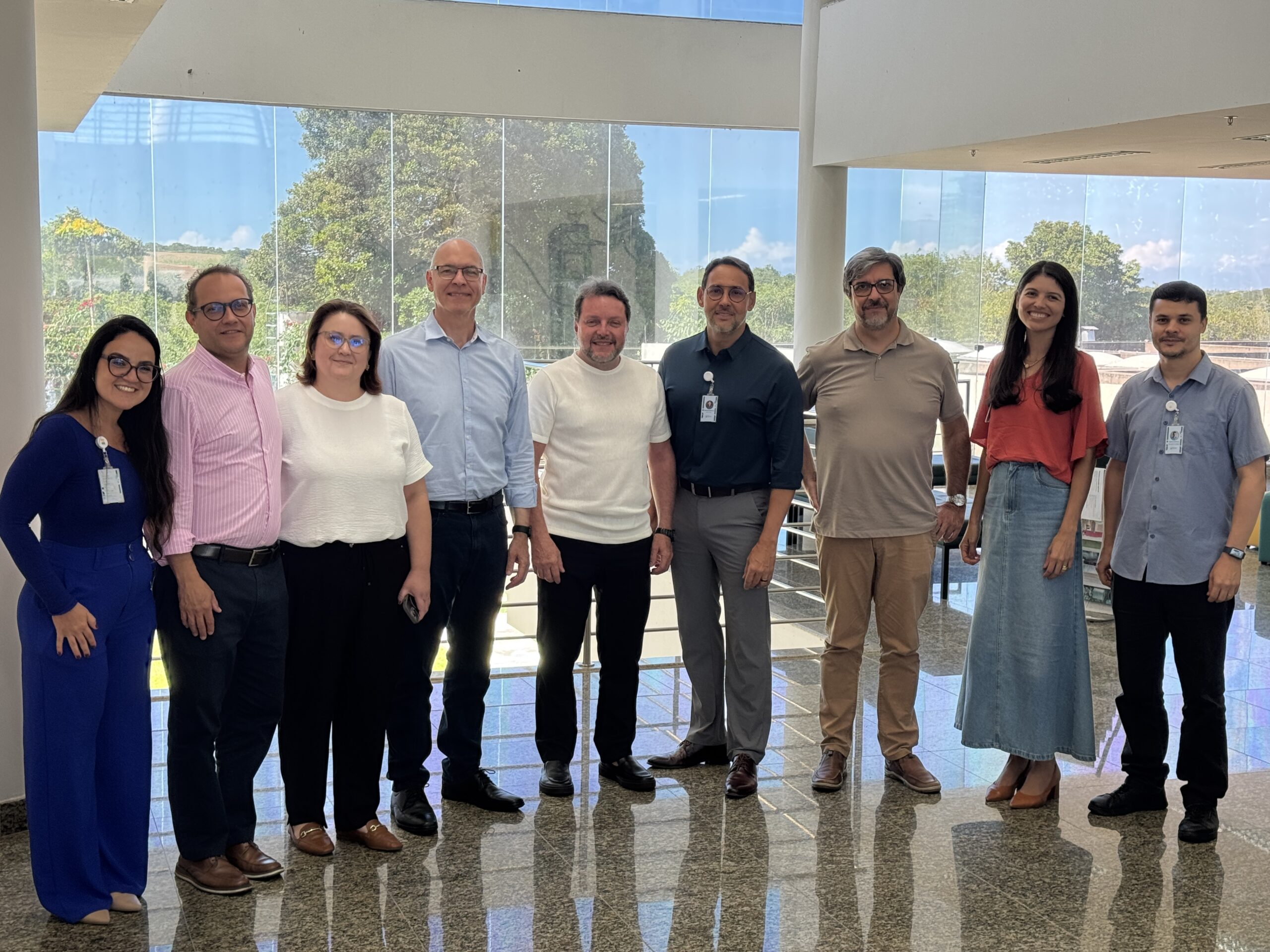


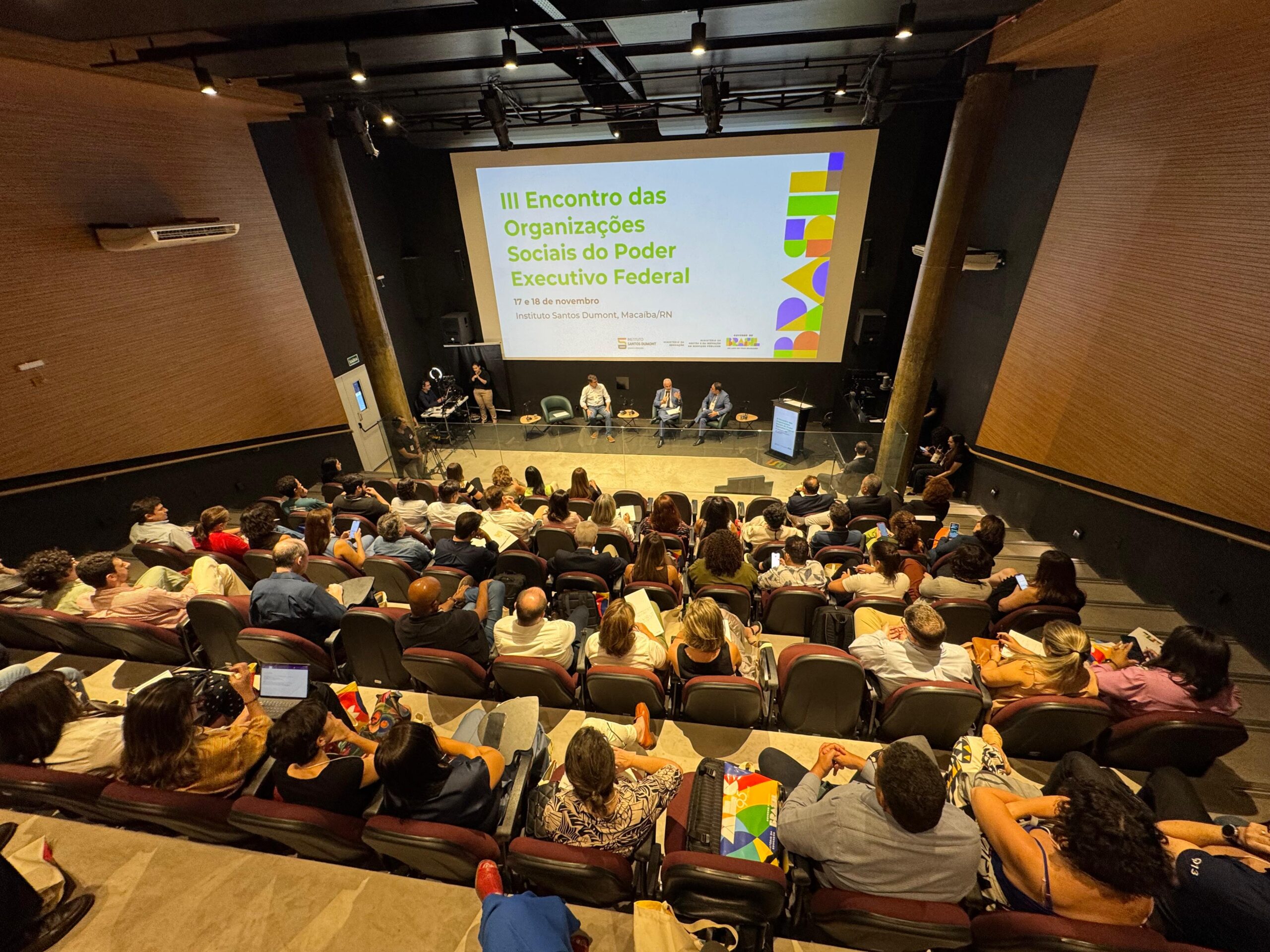
The III Meeting of Social Organizations of the Federal Executive Branch, promoted by the Ministry of Management and Innovation in Public Services (MGI) in partnership with the Santos Dumont Institute (ISD), which is hosting the event at the Institute's headquarters in Macaíba, Rio Grande do Norte, began this Monday (17).
The meeting brings together participants from across the country with the goal of discussing the partnership model with Social Organizations (OS), promoting the exchange of experiences and reflections on the advances, challenges, and perspectives of this format.
The program was inaugurated by an opening panel composed of Marcus David, Secretary of Higher Education of the Ministry of Education (SESU/MEC), Roberto Pojo, Secretary of Management and Innovation of the MGI, and Reginaldo Freitas Júnior, Director-General of the ISD, with initial remarks on the topic.
The participants of the opening panel also conducted a dialogue in interview format with the former Minister of Finance, Luiz Carlos Bresser-Pereira, the mastermind behind the Law of Social Organizations, which laid the foundation for the model in 1998.
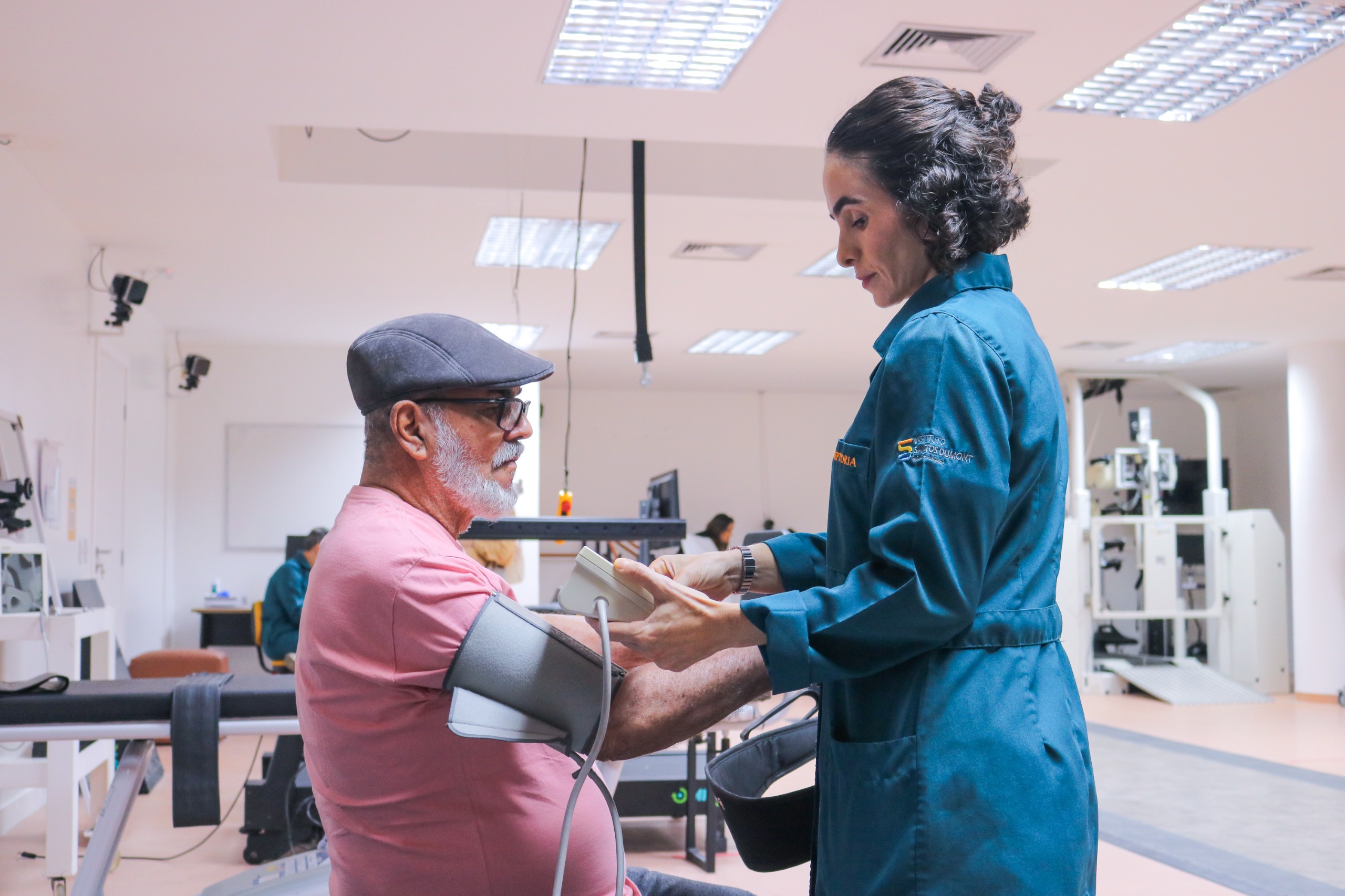
Furthermore, the afternoon was marked by a cultural presentation from the ISD Choir, a group composed of users of the services of the Institute's Specialized Rehabilitation Center (CER ISD), who presented singing and interpretations of regional songs.
“Holding this meeting here, within the walls of a Social Organization, reinforces the idea that the vocation is to serve public policies and that the Social Organization model is one of the most powerful tools to transform the lives of the population,” says the event's master of ceremonies and general coordinator of the MGI management model, Eduardo Pastore.
Inaugural debates
The program for the first day of the event included two panels that fostered dialogue and the exchange of knowledge among those present.
The first panel, moderated by Eduardo Frare, planning advisor at ISD, featured Laerte Cleto, Project Manager at the Secretariat of Management and Innovation of the Ministry of Science, Technology and Innovation (SEGES/MGI), and Andrei Polejack, Director of Research and Innovation at the National Institute for Oceanographic Research (INPO), an organization linked to the Ministry of Science, Technology and Innovation (MCTI).
The central theme of the panel, "Overview of the Model," was to discuss how Social Organizations (OS) are strategic for the implementation of public policies.
The second and final panel of the day, "Performance Indicators," was moderated by Marcus David (SESU/MEC), with panelists Reginaldo Freitas Júnior (ISD) and Maria Beatriz Bonacelli, President of the Monitoring and Evaluation Committee of the Management Contract of the National Center for Research in Energy and Materials (CNPEM), an organization linked to the MCTI.
“The Social Organizations model has great potential to reach its full potential, and for that potential to materialize, convergence between organizations is essential. Federal Social Organizations occupy areas considered strategic for national development, and it is this space that has allowed this model to strengthen,” says the Director-General of ISD, Reginaldo Freitas Jr.
About ISD
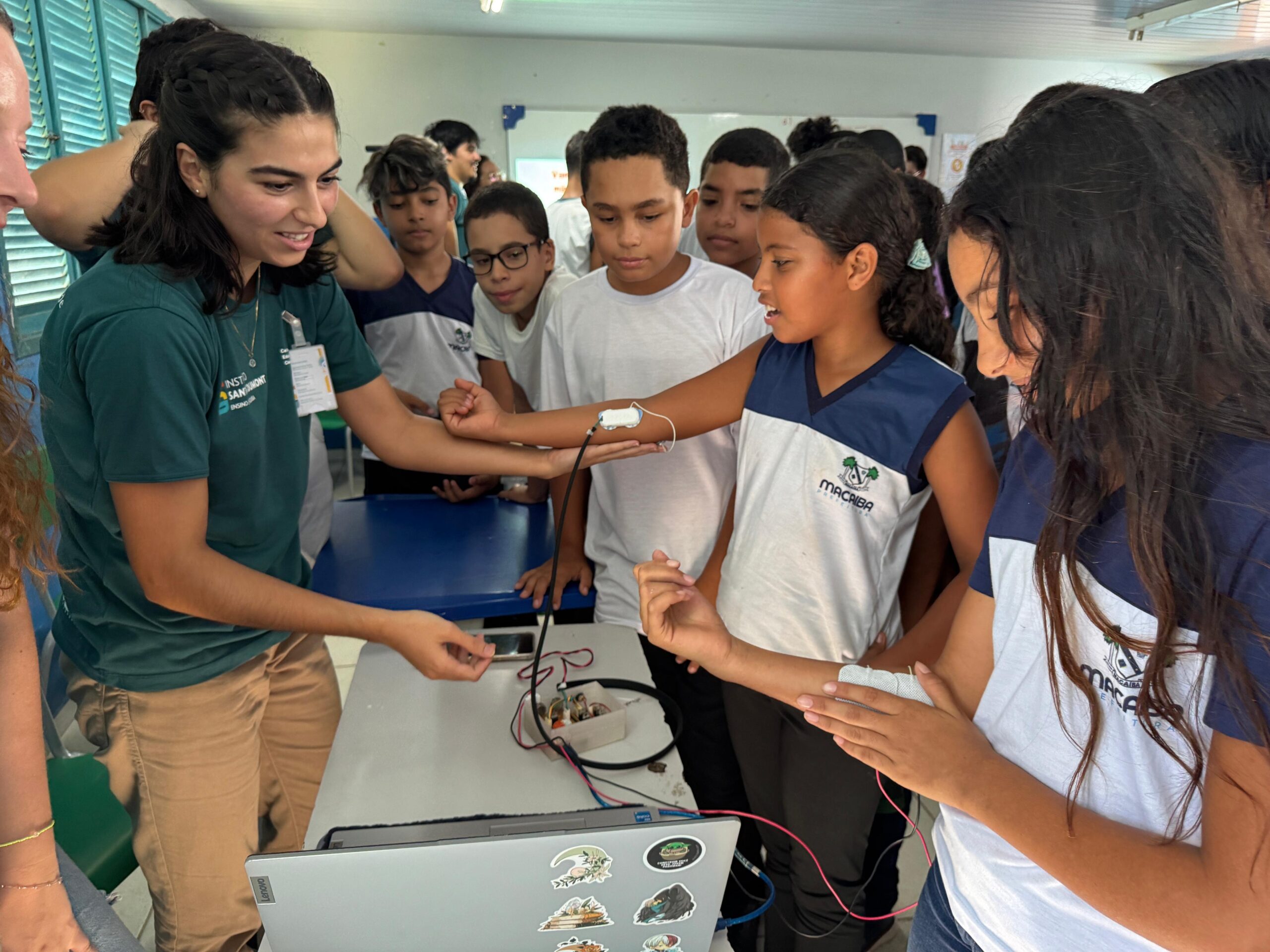
The Santos Dumont Institute is a Social Organization linked to the Ministry of Education (MEC) and includes the Edmond and Lily Safra International Neuroscience Institute and the Anita Garibaldi Health Education and Research Center, both in Macaíba. ISD's mission is to promote education for life, forming citizens through integrated teaching, research and extension actions, in addition to contributing to a fairer and more humane transformation of Brazilian social reality.