

One of the most memorable moments after birth is the newborn's first breastfeed, when the bond between mother and child begins to grow even stronger outside the womb. Breast milk is the richest food that can be offered, and does not need to be supplemented with teas, water or other items until the baby is six months old. However, thousands of mothers around the world are discouraged from breastfeeding because they believe they produce little or low-quality milk. May 21, the date commemorating World Breastfeeding Day, draws attention to the risks involved in the indiscriminate use of infant formulas as a complete replacement for breast milk. Despite the numerous benefits, in Brazil, Exclusive Breastfeeding (EBF) is not prevalent among children under 6 months of age.
The most recent data published by the Ministry of Health through the National Study of Child Feeding and Nutrition (ENANI-2019) indicate that, in Brazil, 96.2% of children under two years of age were ever breastfed, and 62.4% were breastfed in the first hour of life. The prevalence of Exclusive Breastfeeding (EBF) in children under 6 months was 45.8% in Brazil, with the highest prevalence in the South region (54.3%), followed by the Southeast (49.1%), Central-West (46.5%), North (40.3%) and Northeast (39.0%) regions, with no statistically significant differences between the regions. The prevalence of continued breastfeeding in the first year of life (among children aged 12 to 23 months) in Brazil was 43.6%, being more prevalent in the Northeast region (51.8%), followed by the North (49.1%), Central-West (43.9%), Southeast (38%) and South (37.8%) regions. The median duration of EBF was 3.0 months and that of breastfeeding was 15.9 months.
The Study also points out that “the prevalence of EBF and continued breastfeeding in the first year of life, although significant, is still below that recommended by the WHO (World Health Organization), and a large proportion of children used pacifiers or received food through bottles, which can harm the continuity of breastfeeding”.
“Breast milk eliminates the need for chemical formulas. In addition to keeping the newborn satisfied, breastfeeding creates an even stronger bond between mother and child. If there are difficulties in the breastfeeding process, formula can be used as a backup, a backup plan for the problem. However, breast milk should always be prioritized,” emphasizes Thaíse Lopes, gynecologist and obstetrician at the Santos Dumont Institute (ISD).
According to the International Network for the Defense of the Right to Breastfeed (in English: International Baby Food Action Network – IBFAN), “breastfeeding is complex and requires the construction of a strong support network. Many women report successive acts of violence – many of them influenced by experiences of failure – carried out by family members and friends, possibly unintentional, who discourage and condemn this practice”.
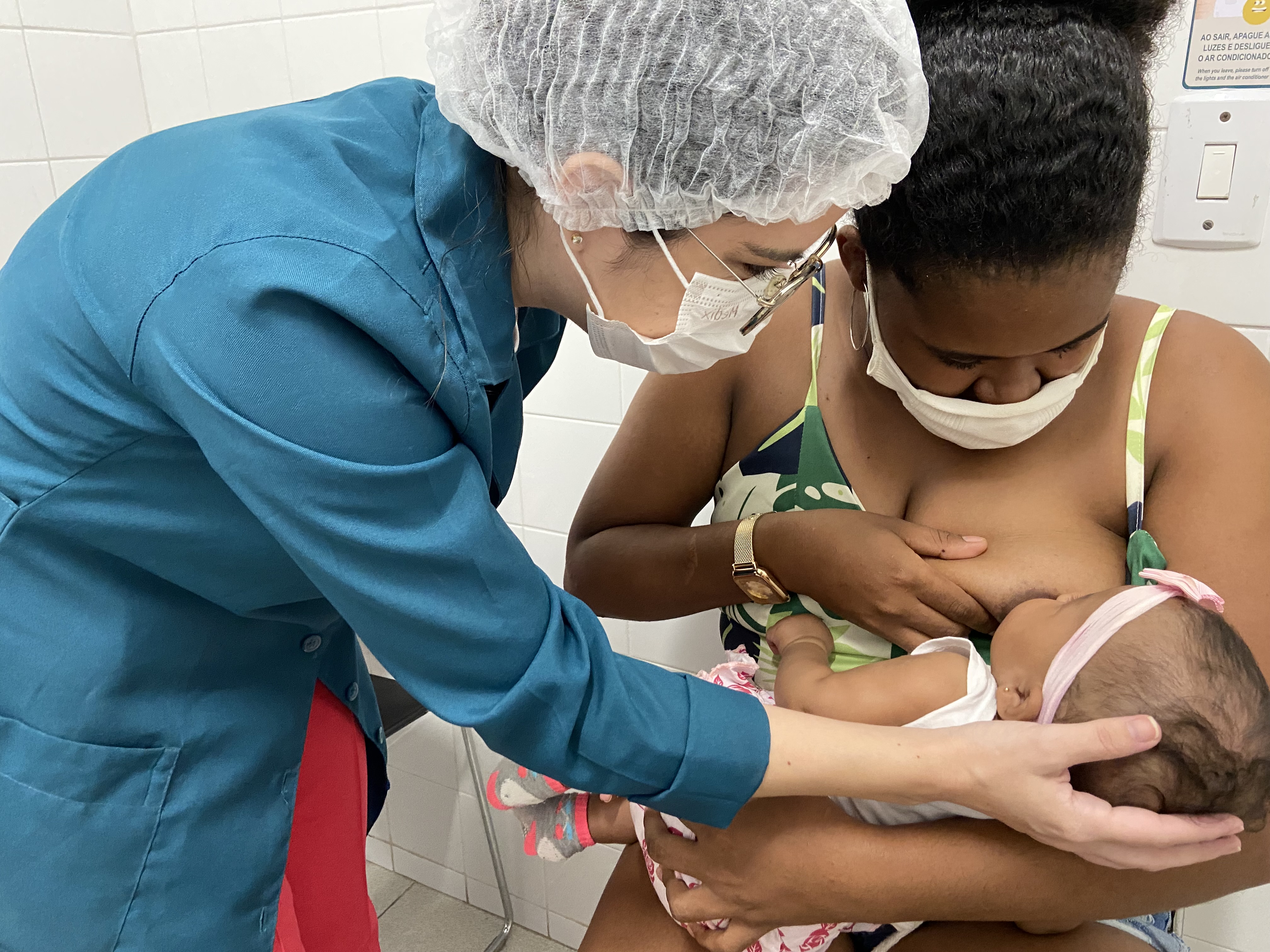
ISD nurse preceptor Monise Ponte, a specialist in maternal and child health, emphasizes that this reality can change with a postpartum consultation, which should take place immediately after birth. Returning for an early postpartum consultation can help the mother correct common breastfeeding mistakes, such as the best latch and position for the baby to ensure effective breastfeeding. The first consultation should take place up to the tenth day of the child's life, but this is not always possible due to postpartum conditions, access to health services and scheduling conflicts with the professional who accompanied the pregnant woman during prenatal care.
“We have women with great potential for milk production, with good latching on by the baby. The introduction of infant formulas occurs more, in my opinion, for cultural reasons. Many mothers introduce starchy foods early, and the lack of guidance further harms the baby’s healthy diet. In addition to the cultural issue, there is a lack of access to postpartum consultations in most of the network linked to the Unified Health System,” she points out.
IBFAN condemns the early use of infant formulas, nipples, pacifiers and baby bottles, with questionable criteria and the disregard by the companies that produce these items for the International Code of Marketing of Infant Foods, which is 41 years old this year. “Disregard for this Code and Law No. 11,265/2006 – NBCAL (Brazilian Standard for the Marketing of Food for Infants and Young Children, Nipples, Pacifiers and Baby Bottles) also results in the practice of the most serious violence against breastfeeding”, points out the entity.
“The Code and NBCAL contain a set of standards as a way of regulating the marketing practices of breast milk substitute industries. They seek to guarantee the provision of safe and adequate nutrition to infants, through the protection and promotion of breastfeeding and ensuring the appropriate use of substitutes, when these are necessary, based on adequate information and through appropriate marketing and distribution”, he adds.
Concerned about abusive marketing actions related to the supply of infant formulas as a substitute for breastfeeding, at the World Health Assemblies, from 1981 onwards, reports of concern from ministers and civil society, particularly the IBFAN, began to be heard. Thus, the health authorities of the member countries of the World Health Organization (WHO) began to regulate the advertising of commercial practices, of products that compete with breastfeeding.
Human Milk Bank
The Human Milk Bank at the Januário Cicco Maternity School (MEJC) is in need of donations. The daily requirement for the care of premature babies at MEJC is around 12 liters. The institution currently has around 50% of this demand in stock.
The MEJC Human Milk Bank also processes and analyzes milk destined for private health units in Rio Grande do Norte.
In 2021, 2,756 liters were collected from 1,500 female donors. In total, there were around 2,000 home visits to collect milk.
The MEJC Human Milk Bank is a reference in Rio Grande do Norte, being responsible for quality control and distribution of breast milk for approximately 80% of newborns at risk in the state of Rio Grande do Norte.
Text: Ricardo Araújo / Ascom – ISD
Photograph: Ricardo Araújo / Ascom – ISD
Communication Office
comunicacao@isd.org.br
(84) 99416-1880
Santos Dumont Institute (ISD)
It is a Social Organization linked to the Ministry of Education (MEC) and includes the Edmond and Lily Safra International Institute of Neurosciences and the Anita Garibaldi Health Education and Research Center, both in Macaíba. ISD's mission is to promote education for life, forming citizens through integrated teaching, research and extension actions, in addition to contributing to a fairer and more humane transformation of Brazilian social reality.