Member of the multidisciplinary team of Santos Dumont Institute (ISD) still at the time of his graduation in psychology, Samantha Maranhão is now celebrating an important step in his professional career: he defended his doctorate on December 18, 2018 and, by his choice, this moment was held at Anita Garibaldi Health Education and Research Center (CEPS), in Macaíba (RN): “We inaugurated a service that is now a reference in the state for autism, as a result of this work here, so it didn't make sense to hold the defense at UFRN, because this work was all built here at CEPS, from start to finish”, she stated at the end of the defense.
The now Doctor refers to the Multidisciplinary Autism Spectrum Disorder Care Service (SEMEA), multidisciplinary and interdisciplinary care offered by CEPS since 2016 to children and adolescents from Macaíba and the metropolitan region of Natal (RN) who have characteristics of Autistic Spectrum Disorder (ASD).
His thesis, constructed over 4 years of research, is entitled “Autism Spectrum Disorder: From assessment to historical-cultural neuropsychological intervention” and was developed within the scope of the Postgraduate Program in Psychology at the Federal University of Rio Grande do Norte (UFRN). Samantha’s thesis was supervised by Professor Isabel Hazin (Postgraduate Program in Psychology at UFRN) and the members of the evaluation board were Professors Mary Aparecida Dias (Department of Physical Education at UFRN), Nara Cortes Andrade (Department of Psychology of the Catholic University of Salvador), Pompeii Villachan Lyra (Department of Education of the Federal Rural University of Pernambuco) and Reginaldo Freitas Junior (UFRN Department of Obstetrics and Gynecology/ISD General Director).
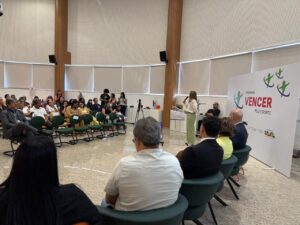
Evaluation panel for the doctorate defended by Samantha at CEPS Anita Garibaldi, in Macaíba (RN). Photo: Lílian Lisboa
According to the neuropsychologist, the work was approached in the area of neuropsychological assessment and intervention, providing detailed knowledge of the patients' clinical condition, both to contribute to diagnostic confirmation and to assist the team's intervention. Samantha comments that during her research, the relevance of interdisciplinarity in this area became very clear: “It is important to think of a rehabilitation service focused on this group of people, applied and interconnected with the basic health and education network, as there is rich knowledge that we can share with society”, she says. The neuropsychologist explains that in this way it is possible to help systematize knowledge about ASD so that there is more organization in clinical practices in other areas.
“The doctoral work is a mix of my clinical and scientific work. The great contribution that remains after this process is scientific knowledge applied to reality, because science is always included in my practice, everything is very connected”, says Samantha. The thesis will generate scientific publications based on the contributions of the evaluation committee and possibly some scientific dissemination material in accessible language, so that the non-specialist public has more information about autism.
Samantha Maranhão with a SEMEA patient and a practitioner of Equotherapy Potiguar, during the closing of the first class (2018).
Professional and academic trajectories growing side by side
Samantha is currently the Coordinator of Health Education Activities at the Anita Garibaldi Center for Health Education and Research (CEPS) and fondly remembers her internship days. She was the first intern in the neuropsychology department at CEPS, in 2011, at a time when there was no such service. After two years away, during which she dedicated herself to her master's degree, Samantha went through a selection process at ISD and returned to the Institute as a multidisciplinary preceptor: “I wanted to work here,” recalls the neuropsychologist.
She recalls that what made her successful in the selection process at the Institute was the fact that, at the time, she was already enrolled in a PhD program at UFRN, at the exact time when the ISD was looking for professionals with more academic profiles. It was also a perfect coincidence, because at that time the institution was starting a clinic in the area of autism. “SEMEA emerged in the field of research and it was SEMEA that encouraged the existence of this service. It is even exciting, because I finished my PhD saying that my professional trajectory is intertwined with that of a researcher, a person, and the Institution, because I feel that I have grown together with the ISD and with these children with ASD who are assisted here, who have made me improve as a professional and researcher”, concludes Samantha.
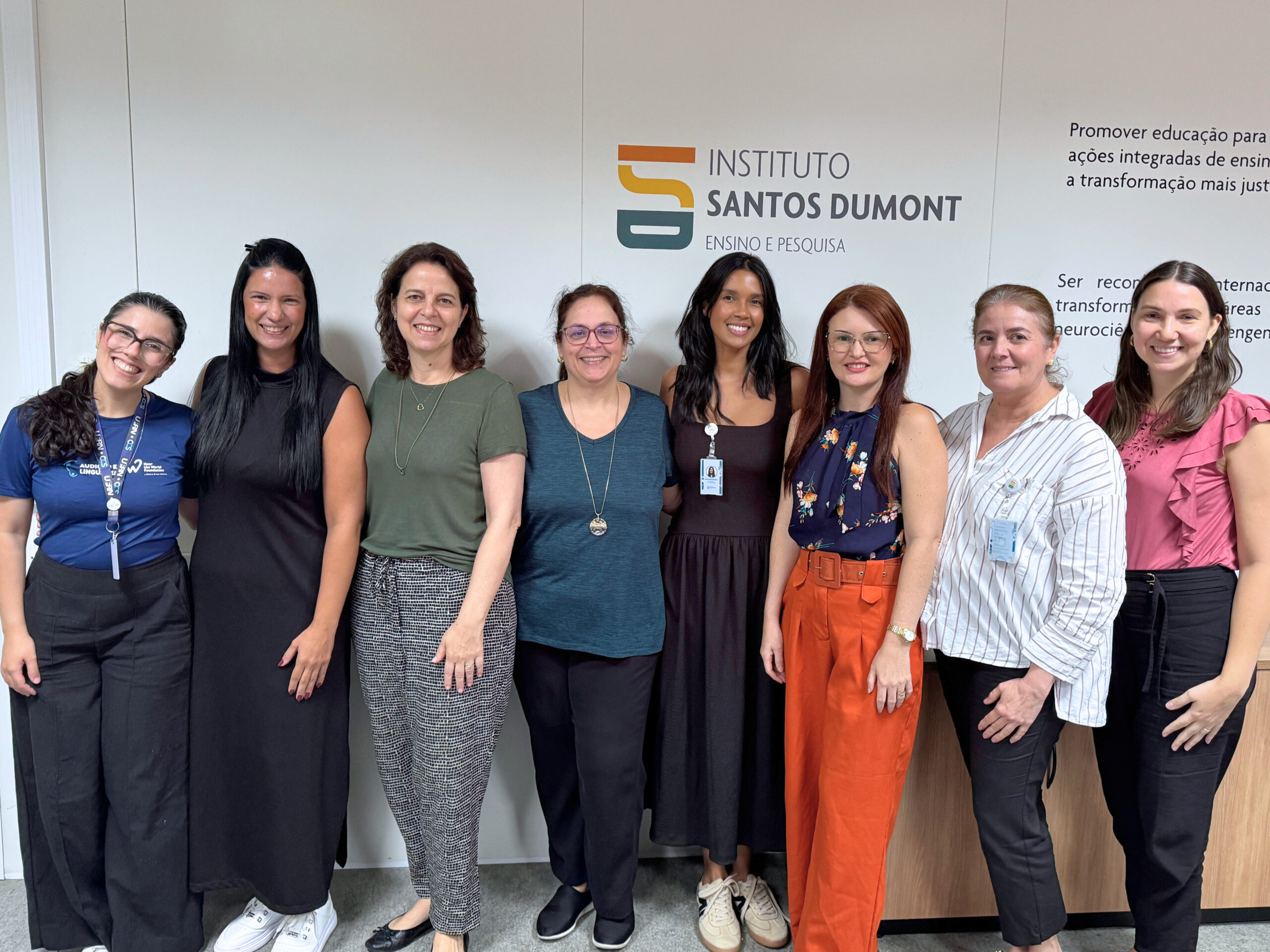
Part of the SEMEA team, during training on autism for basic education teachers (2018).
Text and photos: Ariane Mondo / Ascom – ISD
Communication Office comunicacao@isd.org.br (84) 99416-1880
Santos Dumont Institute (ISD)
Social organization that maintains ties with the Ministry of Education (MEC) and whose mission is to promote education for life, forming citizens through integrated teaching, research and extension actions and to contribute to a fairer and more humane transformation of the Brazilian social reality.
Communication Office comunicacao@isd.org.br (84) 99416-1880
Member of the multidisciplinary team of Santos Dumont Institute (ISD) still at the time of his graduation in psychology, Samantha Maranhão is now celebrating an important step in his professional career: he defended his doctorate on December 18, 2018 and, by his choice, this moment was held at Anita Garibaldi Health Education and Research Center (CEPS), in Macaíba (RN): “We inaugurated a service that is now a reference in the state for autism, as a result of this work here, so it didn't make sense to hold the defense at UFRN, because this work was all built here at CEPS, from start to finish”, she stated at the end of the defense.
The now Doctor refers to the Multidisciplinary Autism Spectrum Disorder Care Service (SEMEA), multidisciplinary and interdisciplinary care offered by CEPS since 2016 to children and adolescents from Macaíba and the metropolitan region of Natal (RN) who have characteristics of Autistic Spectrum Disorder (ASD).
His thesis, constructed over 4 years of research, is entitled “Autism Spectrum Disorder: From assessment to historical-cultural neuropsychological intervention” and was developed within the scope of the Postgraduate Program in Psychology at the Federal University of Rio Grande do Norte (UFRN). Samantha’s thesis was supervised by Professor Isabel Hazin (Postgraduate Program in Psychology at UFRN) and the members of the evaluation board were Professors Mary Aparecida Dias (Department of Physical Education at UFRN), Nara Cortes Andrade (Department of Psychology of the Catholic University of Salvador), Pompeii Villachan Lyra (Department of Education of the Federal Rural University of Pernambuco) and Reginaldo Freitas Junior (UFRN Department of Obstetrics and Gynecology/ISD General Director).
Evaluation panel for the doctorate defended by Samantha at CEPS Anita Garibaldi, in Macaíba (RN). Photo: Lílian Lisboa
According to the neuropsychologist, the work was approached in the area of neuropsychological assessment and intervention, providing detailed knowledge of the patients' clinical condition, both to contribute to diagnostic confirmation and to assist the team's intervention. Samantha comments that during her research, the relevance of interdisciplinarity in this area became very clear: “It is important to think of a rehabilitation service focused on this group of people, applied and interconnected with the basic health and education network, as there is rich knowledge that we can share with society”, she says. The neuropsychologist explains that in this way it is possible to help systematize knowledge about ASD so that there is more organization in clinical practices in other areas.
“The doctoral work is a mix of my clinical and scientific work. The great contribution that remains after this process is scientific knowledge applied to reality, because science is always included in my practice, everything is very connected”, says Samantha. The thesis will generate scientific publications based on the contributions of the evaluation committee and possibly some scientific dissemination material in accessible language, so that the non-specialist public has more information about autism.
Samantha Maranhão with a SEMEA patient and a practitioner of Equotherapy Potiguar, during the closing of the first class (2018).
Professional and academic trajectories growing side by side
Samantha is currently the Coordinator of Health Education Activities at the Anita Garibaldi Center for Health Education and Research (CEPS) and fondly remembers her internship days. She was the first intern in the neuropsychology department at CEPS, in 2011, at a time when there was no such service. After two years away, during which she dedicated herself to her master's degree, Samantha went through a selection process at ISD and returned to the Institute as a multidisciplinary preceptor: “I wanted to work here,” recalls the neuropsychologist.
She recalls that what made her successful in the selection process at the Institute was the fact that, at the time, she was already enrolled in a PhD program at UFRN, at the exact time when the ISD was looking for professionals with more academic profiles. It was also a perfect coincidence, because at that time the institution was starting a clinic in the area of autism. “SEMEA emerged in the field of research and it was SEMEA that encouraged the existence of this service. It is even exciting, because I finished my PhD saying that my professional trajectory is intertwined with that of a researcher, a person, and the Institution, because I feel that I have grown together with the ISD and with these children with ASD who are assisted here, who have made me improve as a professional and researcher”, concludes Samantha.
Part of the SEMEA team, during training on autism for basic education teachers (2018).
Text and photos: Ariane Mondo / Ascom – ISD
Communication Office comunicacao@isd.org.br (84) 99416-1880
Santos Dumont Institute (ISD)
Social organization that maintains ties with the Ministry of Education (MEC) and whose mission is to promote education for life, forming citizens through integrated teaching, research and extension actions and to contribute to a fairer and more humane transformation of the Brazilian social reality.
Communication Office comunicacao@isd.org.br (84) 99416-1880