


Contractions, dilation, breastfeeding, cramps, reflux and feeding. Questions like these, which are among the main doubts and insecurities of women between the end of pregnancy and the first days after birth, have been answered since Friday (19) in an integrated way in Center for Health Education and Research Anita Garibaldi, from the Santos Dumont Institute (ISD), in the areas of pediatrics and gynecology and obstetrics.
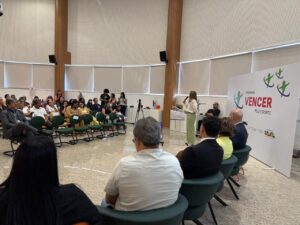
In practice, the integration means that preceptors and residents of these specialties – who previously attended to users separately to clarify doubts and provide other information – will now work together, every Friday, to guide them on common issues during this period, and provide tips and instructions. The action began on the morning of last Friday, with around 10 users, including pregnant women and postpartum women (women in the postpartum period), who were waiting for care at the Center.
“With the pandemic, especially, we noticed that mothers and babies were taking a long time to arrive for pediatric care,” said Anita’s pediatric medical preceptor, Sabrinna Machado, when explaining to mothers the reasons for the care becoming integrated.
Necessary guidelines to improve the quality of life of mothers and babies, tips that can facilitate the adaptation of this family with the new member, and which include everything from the best positions for breastfeeding, how to avoid colic and reflux to positions that can favor development are among those that can be complemented by pediatrics, the doctor exemplified.
At Anita/ISD, new mothers are monitored for around three years, from gynecology and obstetrics to pediatrics – after the baby is born.
For the obstetrician and gynecologist preceptor, Francisco Cavalcanti, many women arrive at maternity hospitals with questions about having a baby, and correct information can help to reassure them. “Labor, natural birth, cesarean section, dilation, contractions, all of these topics are covered during prenatal care, but they start to raise questions again at the end of pregnancy, so it is important to provide guidance and provide all possible information about what will happen with the arrival of this baby and the necessary care in the postpartum period,” he said.

Multidisciplinary performance
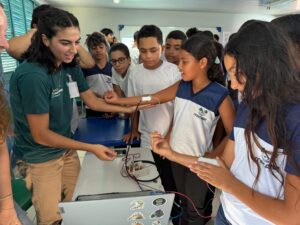
Students of Federal University of Rio Grande do Norte (UFRN) who are doing their medical residency at ISD also participated in the action with preceptors and users. They highlighted multidisciplinary practice as an important aspect for professional training.
“I think this multidisciplinary monitoring is essential because obstetrics does not solve everything, just as pediatrics does not either, and physiotherapy can also help in some cases, so this integrated practice helps both our training and the mothers and babies”, said Ana Paula, who is doing a medical residency in gynecology and obstetrics.
According to the neuropsychologist and coordinator of health education activities at ISD, Samantha Maranhão, the initiative represents an integration between residencies in the gynecology and pediatrics modalities, important for professional training.
“This integration is necessary, but unusual in medical training. (Obstetrics and Gynecology and Pediatrics) These are areas that are worked on separately, but users benefit greatly when they work together, because it gives them an idea of continuity of care, which is important both during pregnancy and in the postpartum period. Students benefit because they can understand the role of each other’s areas in the conduct of pregnant women. and the clinical reasoning that each area uses”, he explains.
The importance of integration is also highlighted by Karina Andrade, a resident in the area of pediatrics and one of the participants in the conversation with users on Friday. “It is important to learn to work together with other areas to better guide the patient. At this time, together with them, we can disseminate knowledge collectively and answer questions that may be shared by many mothers,” she says.
Doubts
Among the approximately 10 women waiting for care at Anita on Friday, the moment was one of attention and also an opportunity to clarify doubts. “Are there foods that I should not eat when breastfeeding?”
The correct diet to follow after giving birth was one of the questions that arose among mothers during the conversation, considering that breastfeeding is normally the source of food and nutrition for babies in the first six months.
The question was answered by the pediatrics preceptor, Sabrinna Machado. “There is no specific restriction or forbidden food, but you need to keep in mind that what you eat 'passes' to the baby through the milk and therefore you need to maintain a healthy diet. It is also important to observe whether the child has frequent reflux when you eat a specific food and then, yes, stop that food from the diet and see if there is any improvement in the baby”, said the doctor.
Residency at ISD
The Santos Dumont Institute is a reference in teaching, research and extension in maternal and child health, people with disabilities, neuroscience and neuroengineering.
The Institute has its own program of Multiprofessional Residency in Health Care for Persons with Disabilities and, in Rio Grande do Norte, it maintains 11 agreements with Medical Residency Programs (Gynecology and Obstetrics MEJC, Gynecology and Obstetrics HUAB, Neuropediatrics HUOL, Pediatrics HUOL, and Pediatrics HUAB) and Multiprofessional (Maternal-Child EMCM, Maternal-Child HUAB, Child Health HUOL and Neonatology MEJC) linked to UFRN.

In 2020, the Institute also signed an agreement with the Varela Santiago Children's Hospital (HIVS), with which it began to work with 100% of the pediatric medical residency programs existing in the state and with the Medical Residency in Infectology, at the Giselda Trigueiro Hospital, a reference in the area.
In maternal and child health, the teaching-learning process at ISD takes place through high-risk prenatal care, assistance to pregnant women with HIV/AIDS, fetal medicine, pediatrics, child neurology, child physiotherapy and women's health, care for Autism Spectrum Disorder, infectology in pregnancy, nursing in women's and children's health, psychology, ultrasound and electroencephalography.