

Recovering motor functions, alleviating epileptic seizures and diagnosing silent neurodegenerative diseases. These points may not be immediately attributed to the advancement of mechanical devices, robotics and artificial intelligence (AI), themes that have been occupying space in people's imagination and daily lives. However, an invention by researchers from Rio Grande do Norte shows that these technologies are gradually becoming a viable alternative for improving health and from the quality of life.
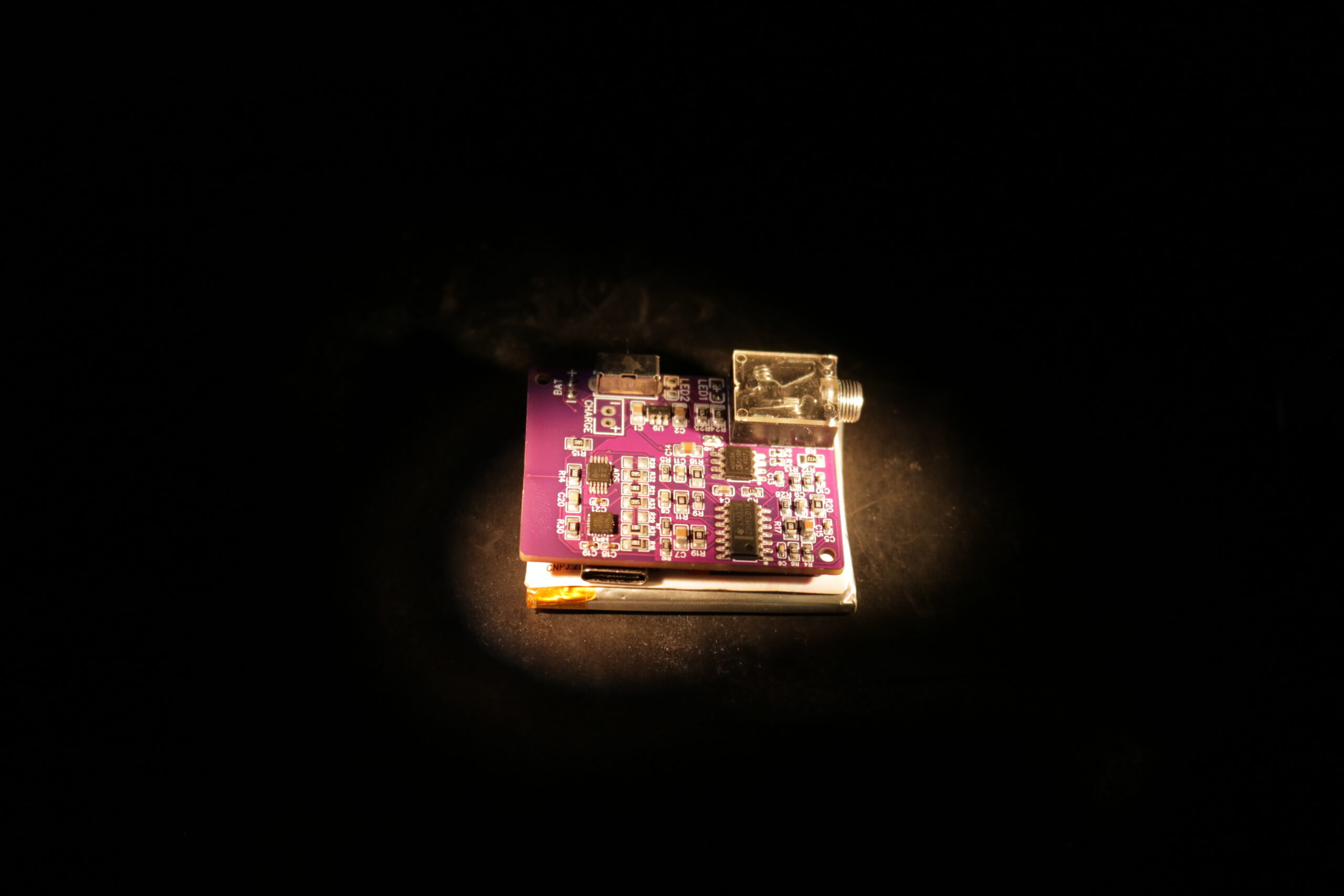
A team of scientists from the Santos Dumont Institute (ISD) and the Federal University of Rio Grande do Norte (UFRN) have developed a system that, combined with a compact and low-cost device, is capable of improving the early identification of Amyotrophic Lateral Sclerosis (ALS), a neurodegenerative condition whose diagnosis can take 3 to 5 years. Through a system that collects and analyzes neuromuscular data, the proposal aims to identify biological markers that may accentuate the presence of the disease, such as levels of muscle fatigue.
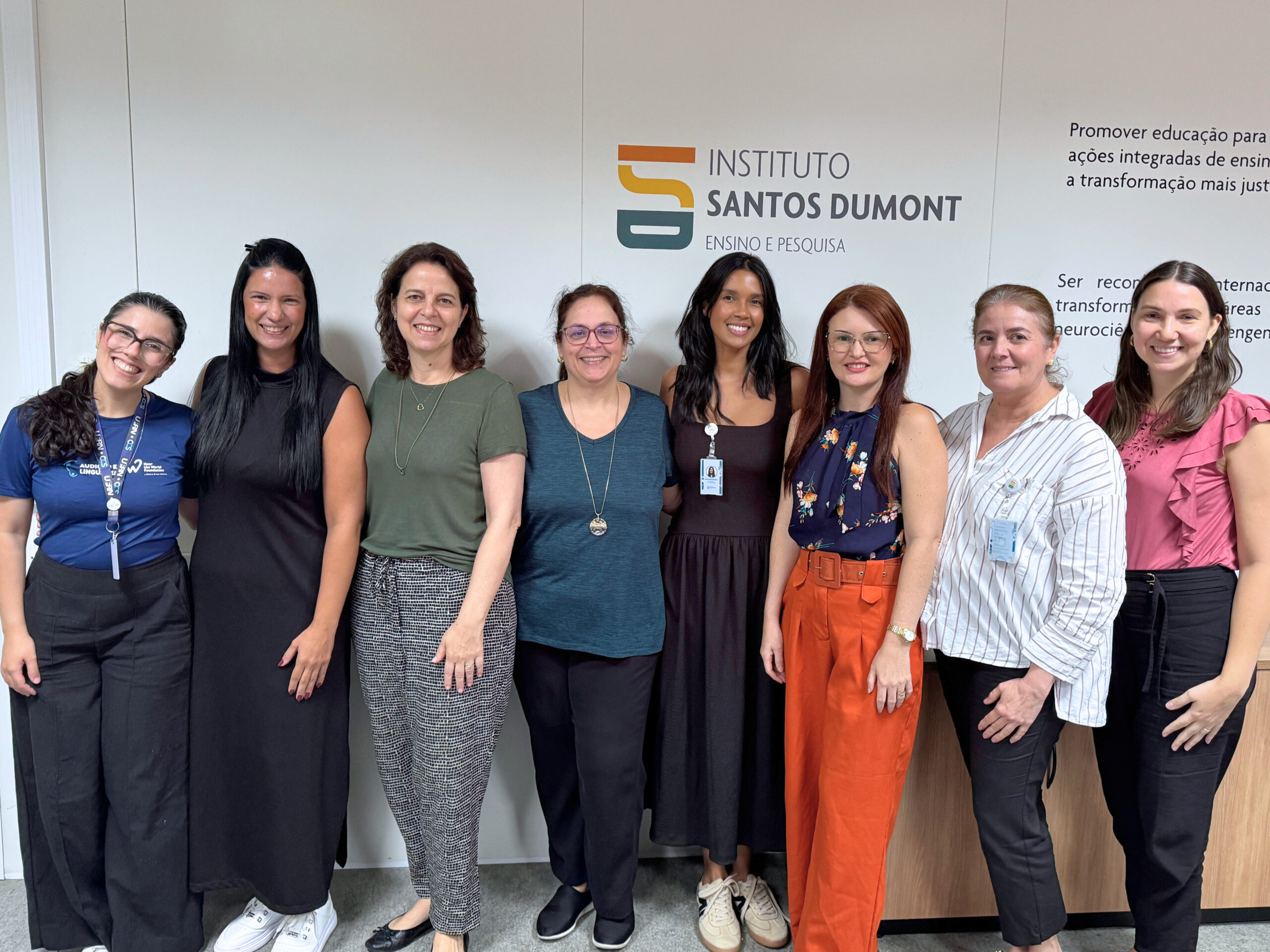
The idea for the device came from the dissertation of Ana Paula Fernandes, a physiotherapist who is finishing her master's degree at UFRN. She used the ISD's laboratory infrastructure to develop and test the technology, with the collaboration of the Institute's research and development support technician, Luiz Bertucci, and professors André Dantas, Denis Delisle and Gabriel Vasiljevic.
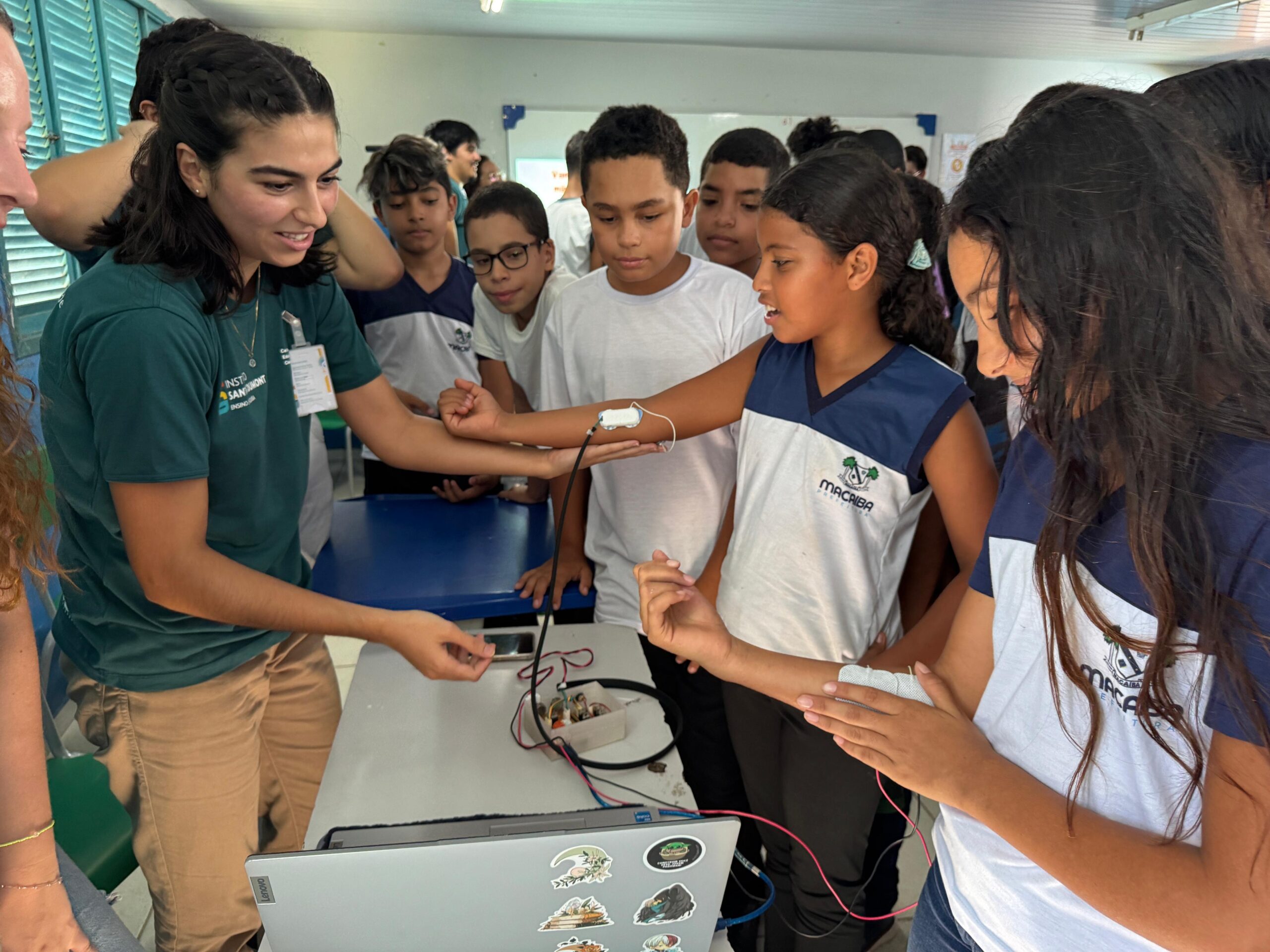
The equipment exemplifies the multidisciplinary and interdisciplinary work of the Institute, which, from its facilities in Macaíba, Rio Grande do Norte, offers solutions for rehabilitation through neuroscience and neuroengineering. The core of the project is that this analysis takes place through a device designed to be portable and low-cost, designed for free clinical distribution in the Unified Health System (SUS).
To this end, in addition to the prototyping, development and testing process, there is a concern about access to the device. Research technician Luiz Bertucci, who is also a neuroengineer trained by the institution, emphasizes that new health technologies are constantly emerging. For him, being able to replicate them in a simple and accessible way is essential so that more agents can validate their effectiveness and expand their impact.
“Our focus was to develop a device that would be accessible through the SUS. Therefore, the technological choices and production costs were designed based on the reality of patients and healthcare professionals. Accessible devices have the advantage of reaching a larger audience, allowing more researchers to explore their functionalities and, more importantly, allowing the population to have access,” says Bertucci.
Before reaching the general public, technologies like this pass through the labs of several laboratories, incorporating techniques from robotics, computing, engineering and artificial intelligence (AI). Research professor Gabriel Vasiljevic, one of those involved in the creation of the device that identifies ALS early, explains that AI is particularly interesting for devices applied to health.
According to Vasiljevic, AI is an interesting tool for showing patterns that humans cannot easily identify. In the case of assistive technologies, he points out, one of the advantages of AI is its ability to adapt to each individual in a personalized way, with the most appropriate patterns and parameters for each one.
“For this specific work, for example, AI was used to identify patterns that allow ALS to be detected in its early stages, based on the data collected. More generally, AI has been used to try to identify patterns in various types of conditions to help with diagnosis and treatment, such as cancer and Parkinson's, and even disorders such as ASD,” explains Vasiljevic.
According to the professor and computer scientist, AI can still make mistakes and still requires constant human supervision. The goal of using this technology in healthcare is not to replace healthcare professionals, the researcher emphasizes, but to help them make decisions with the help of computers, which can analyze a very large amount of data in a few seconds.
“With the advancement of science and technology in the coming years, it will be possible to create increasingly personalized treatments for each patient and optimize their quality of life based on their specific conditions,” concludes the scientist.
A multi and interdisciplinary work
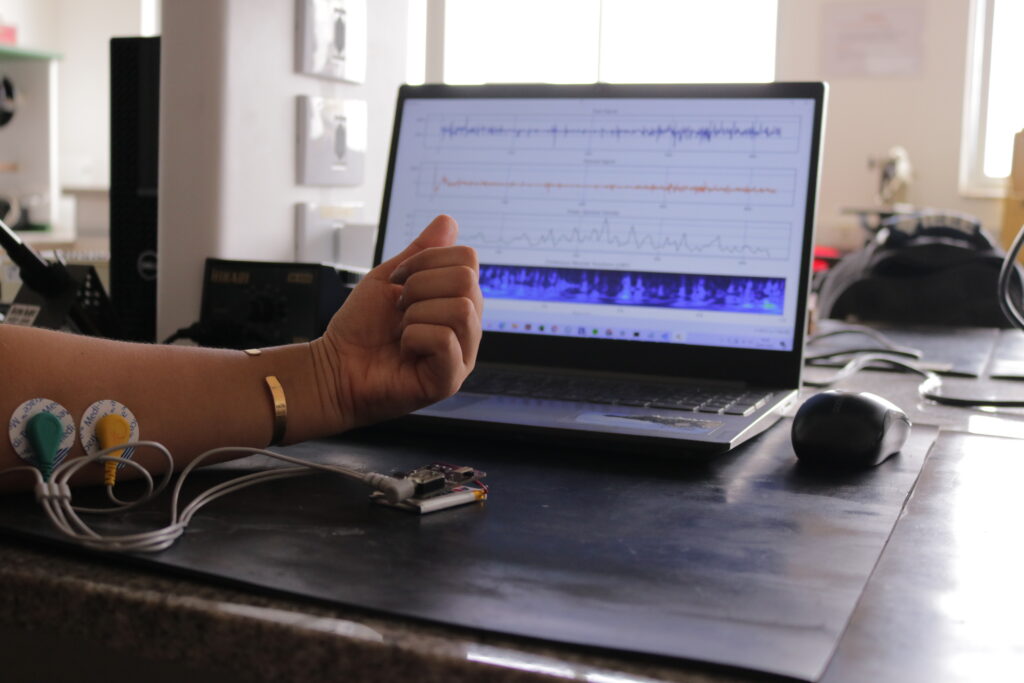
Even though she had no contact with engineering during her training, master's student Ana Paula Fernandes saw the possibility of combining research on the laboratory bench with clinical application and practice through the ISD open laboratory program, which establishes partnerships with researchers from all over Brazil for collaborative development.
“I believe that without the support of engineering and computing professionals, this system would not have reached its current level of technological maturity. The collaboration between UFRN and ISD has resulted in an interdisciplinary team that not only understands the needs of patients, but also identifies the best approaches for developing the system,” says Ana Paula Fernandes.
According to Luiz Bertucci, this collaboration is one of the keys to ensuring that healthcare technology leaves the laboratory and reaches the population in a comprehensive and accessible manner. “Having the right infrastructure and tools to facilitate the creation, improvement and validation of devices can make the process more efficient and cost-effective. Furthermore, strategic partnerships with research institutions can help optimize resources and accelerate the development of accessible solutions,” concludes the neuroengineer.
About ISD