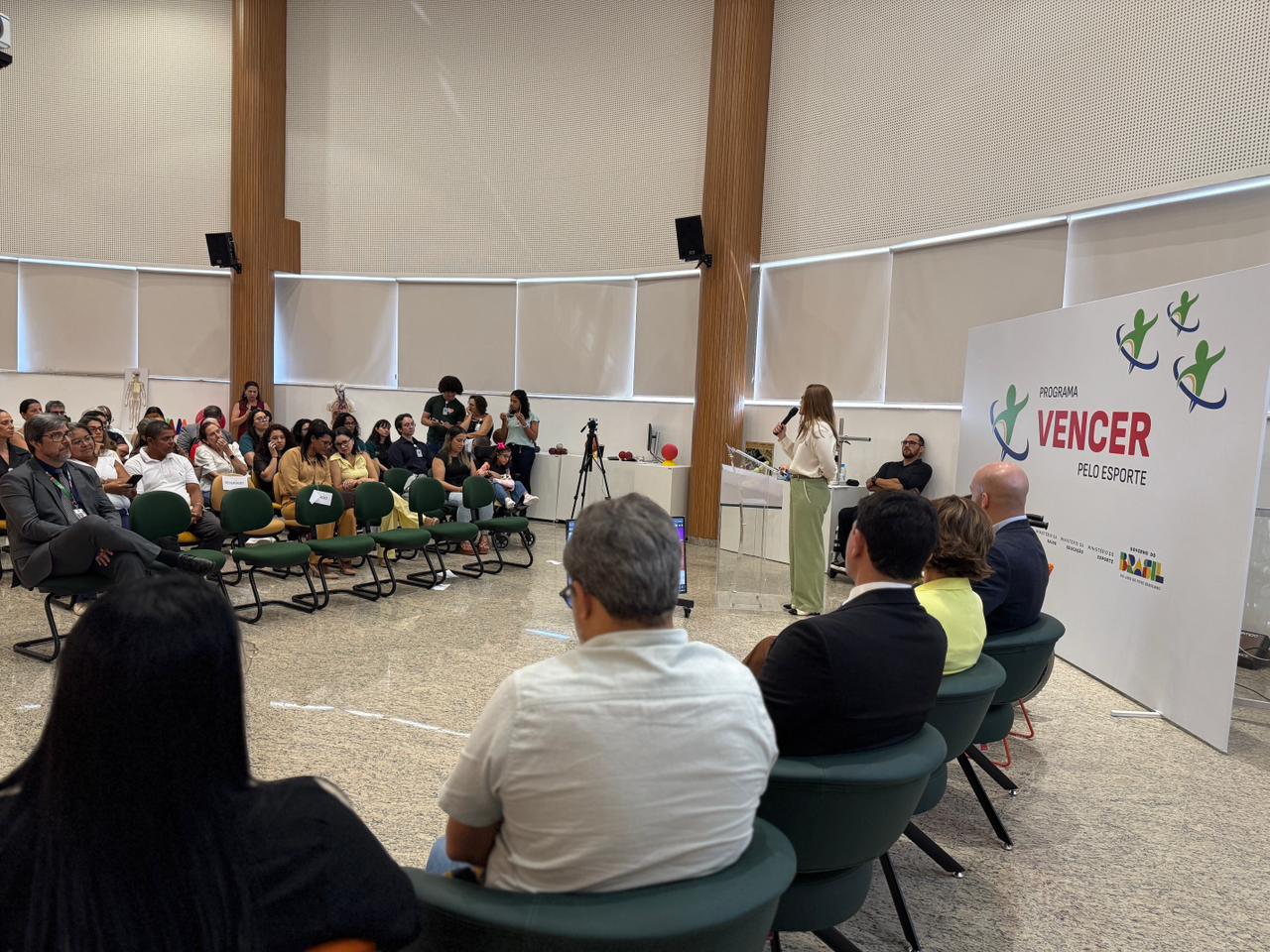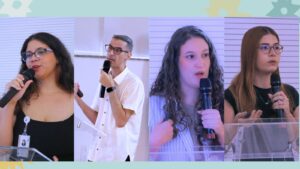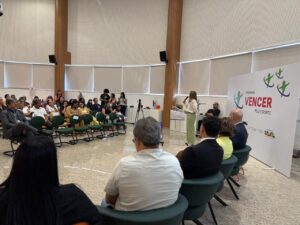


On May 29th the Public Prosecutor's Office of the State of Rio Grande do Norte (MPRN) held in Natal (RN), the public hearing to close the Born with Dignity Project, started in 2011, developed through the Operational Support Center for Public Health Defense Prosecutors (Caop Saúde) and which aimed to promote institutional articulation to strengthen the assistance actions offered by the state network of women's and children's health care and helping to reduce maternal and neonatal mortality indicators.
Several authorities, especially from the areas of Law and Health, were present at the event to analyze and discuss the scenario found at the time it was implemented and the advances obtained with the project since then.
The Director of Teaching and Research of the Santos Dumont Institute (ISD), Reginaldo Freitas Junior, was one of the guests at the event's debate table and on the occasion he delved into one of the themes worked on in the institutional project “Preventable maternal mortality from a human rights perspective”, which is developed by ISD within the scope of Education for Social and Community Action Program (PISD5): “The Birth with Dignity Project is a concrete example of how the articulation of different sectors of society can produce more effective results in a shorter period of time. The project was very successful in provoking joint actions, involving everything from universities to health departments. The promoters took ownership of the reality of our health system and this was fundamental to the project. ISD believes that this articulation between the multiple social actors involved in the same issue, even if in very different aspects, is capable of yielding good results”, observes Reginaldo.
According to him, the current phase of the project is coming to an end, but it is not exhausted, because the challenge of preventable maternal mortality still persists: “We have resolved some of the important structural issues, but others remain absolutely current, such as, for example, the lack of connection between the pregnant woman, since prenatal care, and a reference service for childbirth and the guarantee of assistance in this service”, analyzes the obstetrician and professor at UFRN.
The Promoter Iara Maria Albuquerque, coordinator of Caop Saúde, agrees that the project is coming to an end, but the work of the MPRN will not stop: “We have several actions that are underway and CAOP Saúde will provide support, but within a regular routine. We have our specific support through an internal manager on our intranet and we can receive requests to make visits to the interior, but for this project the expectation now is more to clarify doubts”, she states.
Need to articulate more social actors
Reginaldo believes that the Birth with Dignity project makes it clear that it is essential for more members of society to get involved in this issue: “The ISD has a role to play in helping to transform this reality. There is a need to mobilize more social actors to reduce preventable maternal mortality, so action in education and training of health professionals must be included in this. This type of debate must be integrated into the spheres in which citizenship is discussed, starting in elementary school II, for example. There is a need to develop continuing education strategies that are effective in transforming attitudes and promoting good obstetric care practices based on the best scientific evidence available. This is very important. We at the Santos Dumont Institute can help with this,” concludes Freitas Júnior.
Numbers from the Born with Dignity Project
The Nascer com Dignidade Project began in February 2011 and ended in May 2017, having gained the support of 59 Public Prosecutors' Offices, covering 143 cities in Rio Grande do Norte.
More information and data on the Born with Dignity Project HERE.
::::::::::::::::::::::::
The Santos Dumont Institute (ISD) is a Social Organization that maintains links with the Ministry of Education (MEC), and whose mission is to promote education for life, forming citizens through integrated teaching, research and extension actions and contributing to the fairer and more humane transformation of Brazilian social reality.