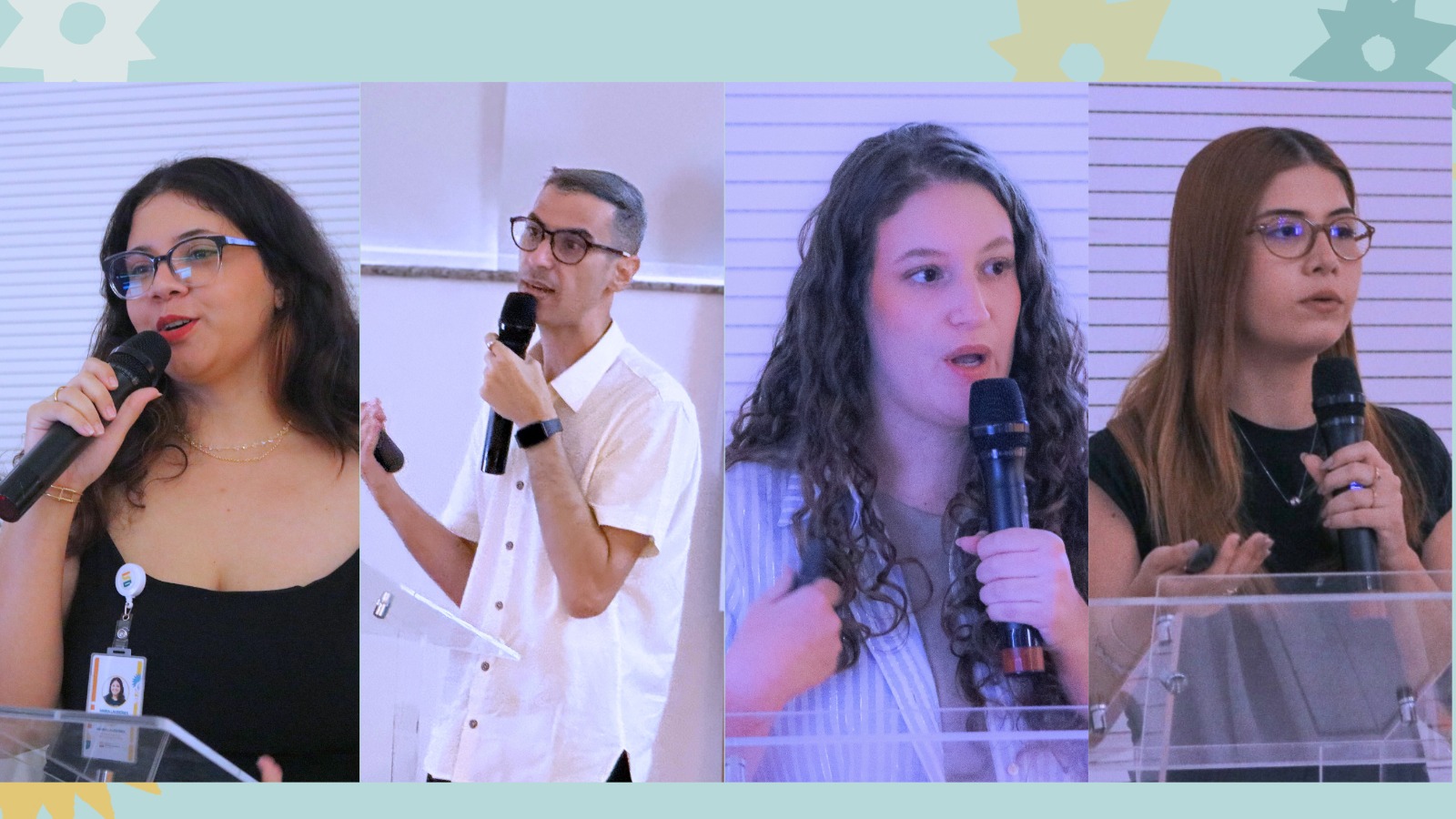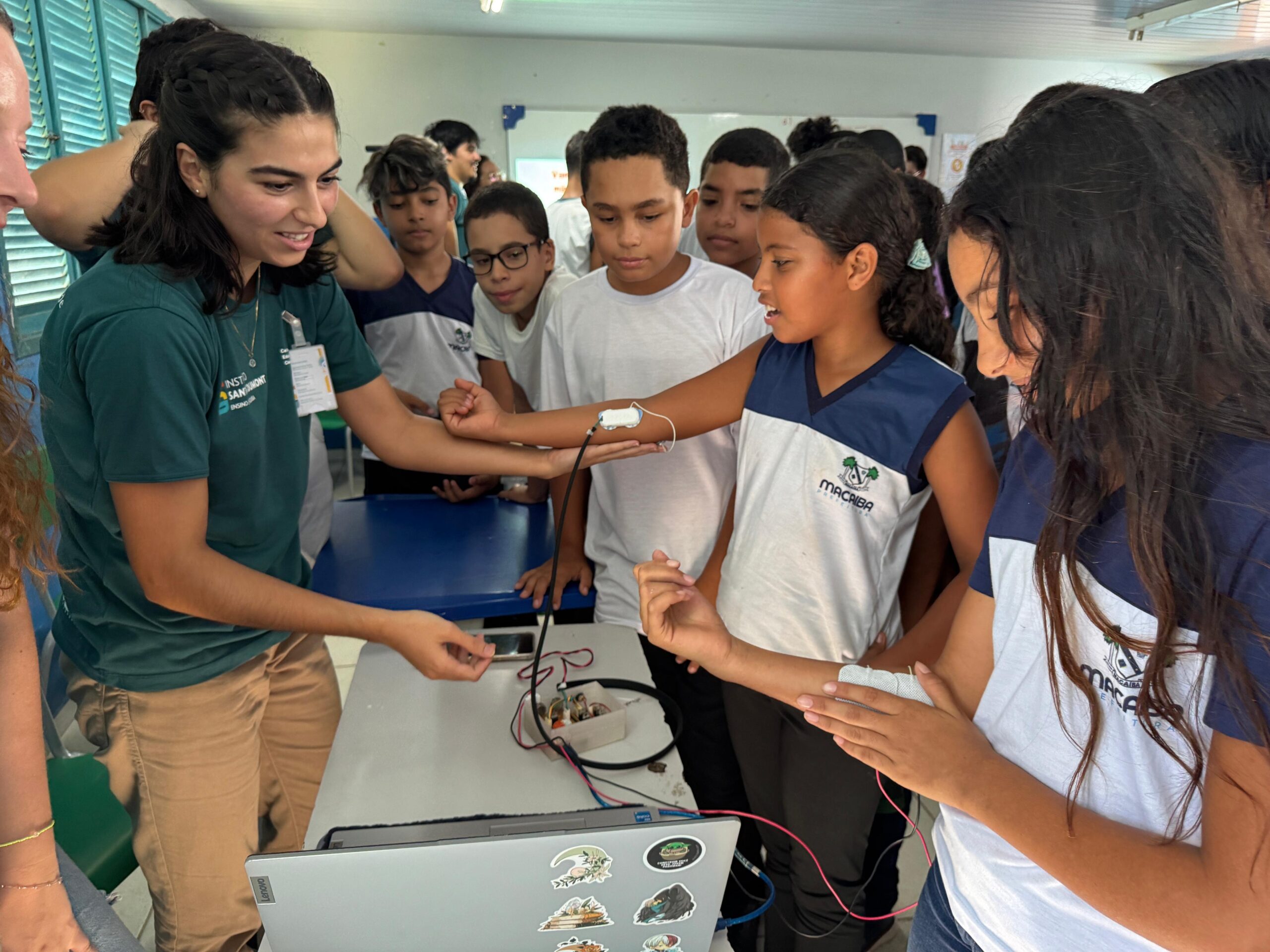



Have you ever imagined integrating neuroscience and computing methods to learn more about how the nervous system works and develop solutions for the limitations and dysfunctions associated with it? This is the daily life of Neuroengineering students, a scientific field that combines aspects of Biological Sciences, Health Sciences, Engineering and Computing. Rio Grande do Norte has the first and only postgraduate course in the area recognized by the Ministry of Education (MEC), based at the Santos Dumont Institute (ISD), in Macaíba. With the aim of disseminating the research area to students who are still in their undergraduate studies, ISD promotes, in partnership with the Instituto Metrópole Digital (IMD) of the Federal University of Rio Grande do Norte (UFRN), lectures to present the area of research for interested students and researchers. The event will take place on April 12th, in the IMD Auditorium, and will include the issuance of additional hours certificates for participants.
The event will take place at two times: Morning 5-6 (from 10:50 am to 12:30 pm) and Afternoon 5-6 (from 4:50 pm to 6:30 pm), and will be attended by the professor-researcher and Coordinator of the Master's Degree in Neuroengineering at ISD, Abner Rodrigues Neto , which develops studies in the area of Computer Science with an emphasis on Artificial Intelligence, Signal Processing and Time Series Analysis applied to Neuroengineering; and professor-researcher André Dantas who mainly studies Signal Processing, PID, Predictive, Fuzzy, Adaptive and Intelligent Control Systems also applied to Neuroengineering.
Professor of the Bachelor's degree in Information Technology at UFRN and one of the organizers of the event, Renan Moioli highlights that the progress of Neuroscience is directly linked to computing.”The progress of computing, in particular artificial intelligence, goes hand in hand with the progress in Neuroscience. A greater understanding of brain mechanisms contributes to the development of new technologies, such as brain-machine interfaces, but also therapies, such as neuromodulation, all of which are supported by sophisticated computational approaches”, says Moioli.
Knowing more about the studies carried out in the area and the possibilities of research and product creation, therefore, should expand the range of career possibilities that can be followed by undergraduate students. “In this sense, neuroengineering stands out, the technological arm that connects academic knowledge to the needs of the population. Therefore, it is essential that we create spaces, like this one in partnership with ISD, in which students and the academic community can glimpse future and current perspectives for their careers”, adds Renan.
PhD in Bioinformatics and Master in Computer Science, Professor Abner Rodrigues, who currently coordinates the Master's in Neuroengineering at ISD, highlights that there is a need for more Information Technology professionals in the area, to work in different areas. “All this computing, software development, embedded systems are pillars of Neuroengineering. To develop devices and create an interface for living tissue, we need to associate concepts from engineering, health sciences and biological sciences with computing. In the area, there are professionals who work from creating circuits to analyzing data, for example,” states.
Abner also highlights that one of the interesting aspects related to this field of knowledge is the fact that many things are still new and in the process of discovery, which gives scholars in the field unique opportunities to develop new products, solutions and research. “We are talking about an area that is at the frontier of science. Many products do not yet exist on the market or even within science, so there is a great opportunity to develop new products and studies”, he says.
Furthermore, with the increase in the population's life expectancy, neurodegenerative diseases and technological solutions to live with limitations of movement and functions related to the brain, for example, should become increasingly frequent on the planet, and the interest in studies in this field also tends to grow.
“The area of Neuroengineering is still very unknown to the general public, even to people who are already involved in other engineering areas. Few people know that very close to them, in Macaíba, there is a national reference center in the area of Neuroengineering. So, I believe that, right away, a relevant aspect of the event is that we present this area to students and researchers to awaken their interest in developing studies in this field”, highlights Abner.
Master's in Neuroengineering
The Master's Degree in Neuroengineering at the Santos Dumont Institute was approved in 2013 by the Coordination for the Improvement of Higher Education Personnel (CAPES), in the area of Biomedical Engineering. The activities, however, are not limited to graduates in this area. Graduates from the various areas of Engineering, Exact Sciences, Health Sciences, Biological and Technological Sciences can apply to the Program. The interdisciplinarity between these fields is one of the pillars of the Master's Degree in Neuroengineering at ISD.
The Master's activities take place at the Edmond and Lily Safra International Institute of Neuroscience (IIN-ELS) and at the Anita Garibaldi Health Education and Research Center (Anita), ISD units located in Macaíba (RN). At ISD, students develop translational research, from laboratory benches that conduct basic research with animal models to the development of clinical solutions that reach users of the Unified Health System (SUS).
In addition to Master's students, ISD also has Scientific Initiation (IC) volunteers, who are in their undergraduate studies.
Event
Students, graduates and researchers interested in learning more about the field of Neuroengineering can register for the event. Registration can be done in advance using the form (https://forms.gle/FxPLCTGUM9ky147x6). The event will include the issuance of additional hours certificates for participants. It will also be possible to register on site before the lectures.
Service
What: Lecture: Understanding Neuroengineering
When: 04/12/2022
Time: M56 (10:50 am to 12:30 pm) or T56 (4:50 pm to 6:30 pm)
Where: Auditorium of the Digital Metrópole Institute of UFRN.
Registrations: https://forms.gle/FxPLCTGUM9ky147x6
Text: Mariana Ceci / Ascom – ISD
Photograph: Mariana Ceci / Ascom – ISD
Communication Office
comunicacao@isd.org.br
(84) 99416-1880
Santos Dumont Institute (ISD)
It is a Social Organization linked to the Ministry of Education (MEC) and includes the Edmond and Lily Safra International Institute of Neurosciences and the Anita Garibaldi Health Education and Research Center, both in Macaíba. ISD's mission is to promote education for life, forming citizens through integrated teaching, research and extension actions, in addition to contributing to a fairer and more humane transformation of Brazilian social reality.