
More than 2,000 students participate in the ISD Science Fair and Scientific Exhibitions in Macaíba

Posted in October 28, 2025

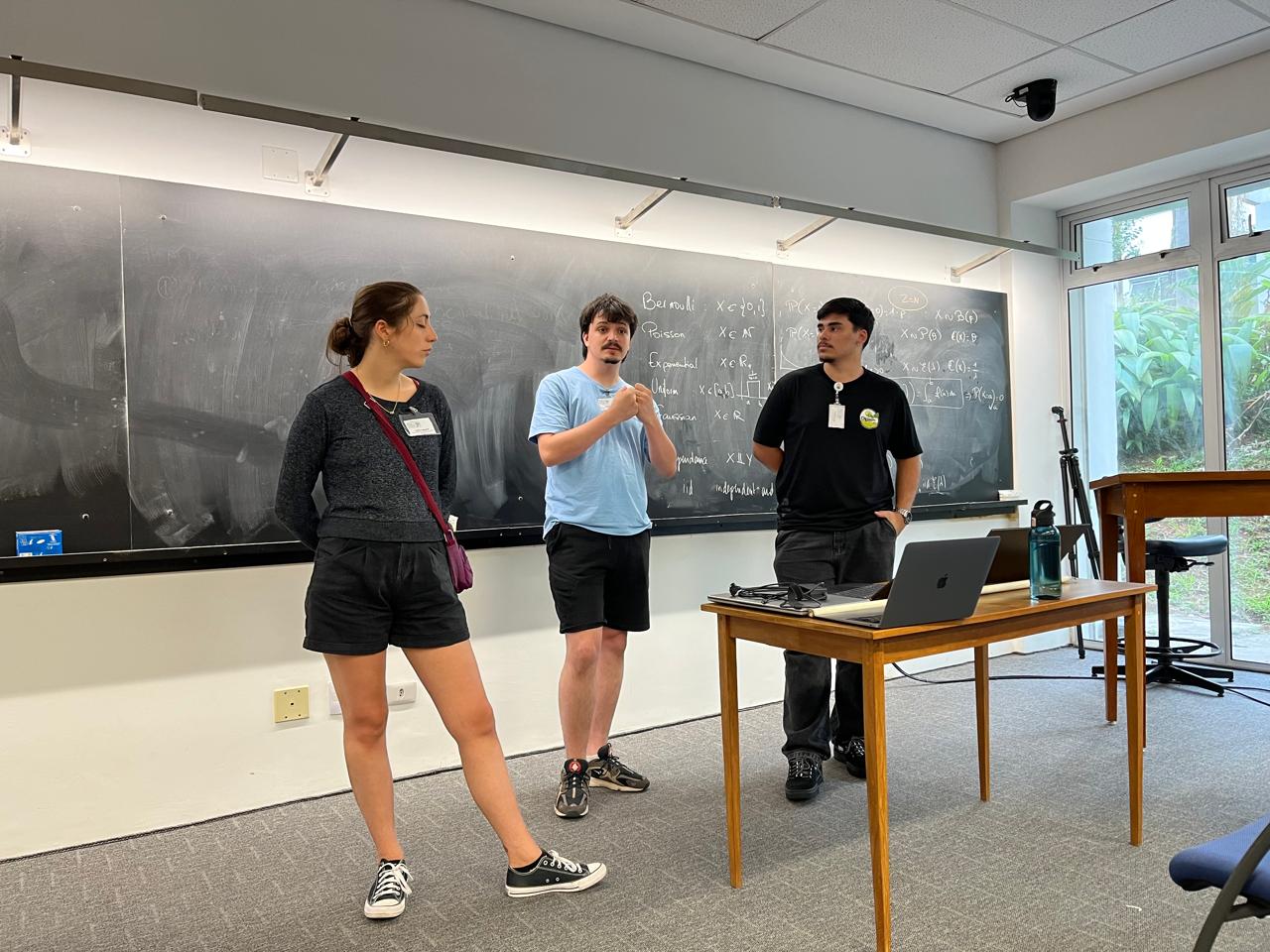
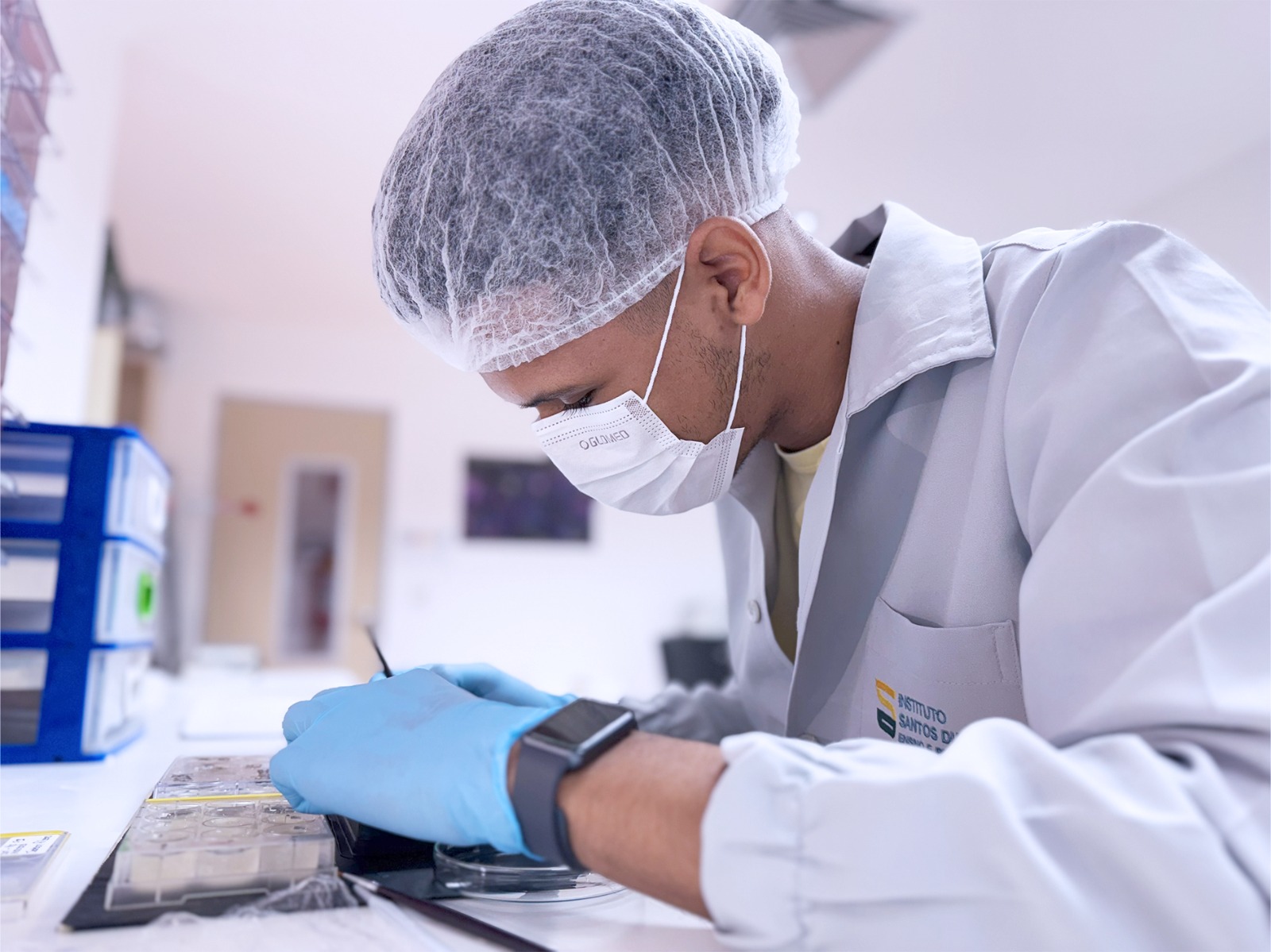
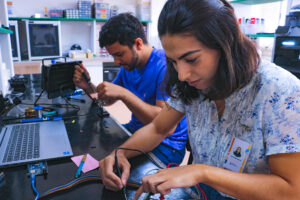
Attentive and curious eyes marked the Science Fair and Scientific Exhibitions of the Santos Dumont Institute (ISD), held between October 22nd and 24th at the Edmond and Lily Safra International Institute of Neuroscience (IIN-ELS), in Macaíba/RN. Around 2,000 children and teenagers participated in the presentation of scientific projects and thematic workshops, which opened the doors to a world of new discoveries.

This year, the Science Fair and Scientific Exhibitions welcomed students from public and private schools from various municipalities in Rio Grande do Norte, such as Macaíba, Parnamirim, Itajá, and Alto do Rodrigues – about 200 kilometers from the event location. The space provided an opportunity for visitors to experience new things outside the classroom and share their realities, with more than 140 projects presented during the three days of the event.

Student Vanuza Sofia, from the Felix Antônio Municipal School in Alto do Rodrigues, presented at the Fair a work entitled "Planet Water: Cultures of the Sea and River," which discusses the coexistence between riverside communities and the Piranhas-Açu River. The river crosses the city and faces pollution problems due to the improper disposal of waste in its waters. "The river is very important to our community. It's where the water and fish we consume come from. If the river is not well cared for, we and the ecosystem that depends on it will be harmed," she stated.

Representing the Libânia Lopes Pessoa Municipal School in Itajá, young Pedro, Vitor, and Davi demonstrated the clay brick production cycle, from obtaining the raw material to the final product. Ceramics are one of the cornerstones of the production chain in the municipality of Itajá. "Our work shows how the power of fire can transform clay into a brick that will build bedrooms, bathrooms, and houses," explained Pedro.

Science Fair Discusses Inclusion and Accessibility

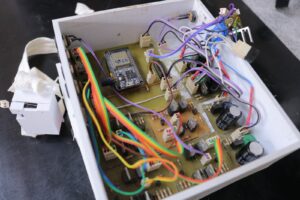
The development of new technologies that promote accessibility for people with disabilities also gained prominence at the 2025 edition of the ISD Science Fair and Scientific Exhibitions. An example of this was the work presented by Caio Targino, a student at IFRN Campus Parnamirim, which aims to develop a low-cost technology to motorize conventional wheelchairs.

The project was named 'Cariri' and was awarded as a standout work on the first day of the exhibition. “A motorized wheelchair currently has a very high cost, making it impossible for many people to purchase this equipment. What we aim to do is develop a technology that can lower this cost, expanding access to motorized wheelchairs and ensuring a better quality of life for people with disabilities.”

Students Pedro Miguel, David Enzo, and Luiz Wendel, from the Professora Lourdinha Guerra State Center for Professional Education in Parnamirim, expanded accessibility by presenting a chemistry experiment with sign language interpretation. “At our school, we have many deaf students. We learned sign language to be able to communicate with them and ensure they feel part of the school community.”

A dive into science

The ISD Science Fair and Scientific Exhibitions were part of the 22nd National Science and Technology Week (SNCT), promoted by the Ministry of Science, Technology and Innovation (MCTI), with support from the Ministry of Education (MEC), the National Council for Scientific and Technological Development (CNPq), the Coordination for the Improvement of Higher Education Personnel (CAPES), and the National Fund for Scientific and Technological Development (FNDCT).

The program also included thematic workshops that explored the central theme of the National Science and Technology Week: “Planet Water: Ocean Culture to Face Climate Change in my Territory”. Among the activities, a virtual reality experience with the Zero G equipment stood out, simulating zero gravity and allowing visitors to “dive” to the bottom of the ocean. Using virtual reality glasses, children and teenagers were able to swim among sharks, turtles, and colorful fish, in an experience that combined science, technology, and imagination.

"The workshop provided an immersive experience, combining technology with education and sensory activities with visual feedback," summarized Willyene Ferreira, a master's student in the ISD Graduate Program.

The experiences offered at the Fair aimed to awaken a scientific perspective through curiosity and hands-on experience. More than just an exhibition event, the Fair established itself as a collaborative learning environment where students and teachers could exchange ideas, test hypotheses, and strengthen their interest in scientific investigation.

Science beyond the walls

Designed to broaden the reach of science outreach initiatives, the ISD Science Fair and Scientific Exhibitions aims to bring science closer to communities that often lack access to advanced technological resources. By opening its facilities to schools from various regions, ISD reaffirms its commitment to the holistic education of young people and to the dissemination of scientific knowledge as a tool for social transformation.

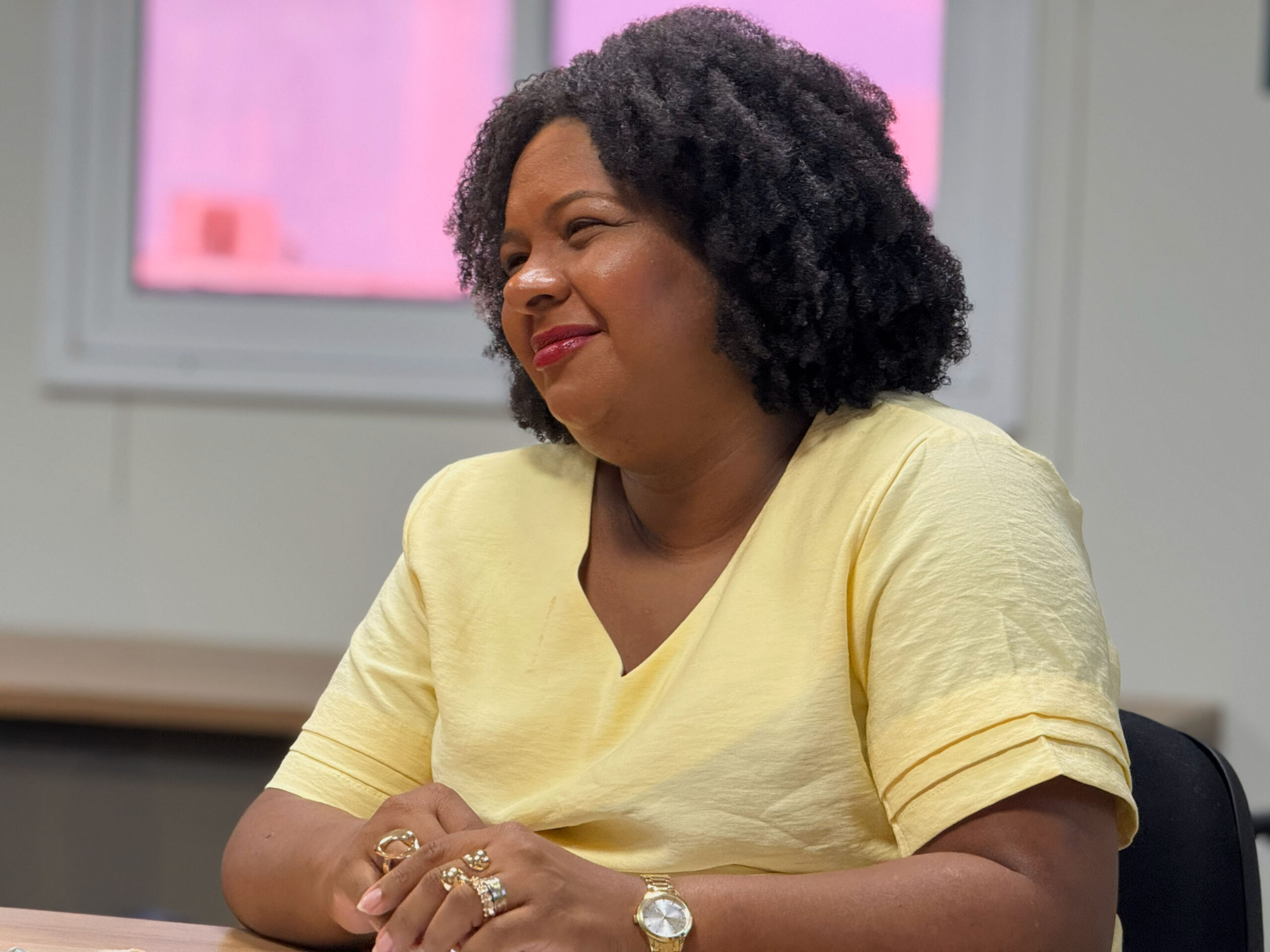
“This is an event that, in addition to impacting the perspective and routine of children and adolescents, manages to unite various areas of activity and various sectors of the institution and bring schools from the public and private network together for an enriching scientific experience. For next year, we hope to further expand participation,” points out Andressa Radiske, one of the coordinating teachers of the event.

About ISD

The Santos Dumont Institute is a Social Organization linked to the Ministry of Education (MEC) and includes the Edmond and Lily Safra International Neuroscience Institute and the Anita Garibaldi Health Education and Research Center, both in Macaíba. ISD's mission is to promote education for life, forming citizens through integrated teaching, research and extension actions, in addition to contributing to a fairer and more humane transformation of Brazilian social reality.

Communication Office
comunicacao@isd.org.br
(84) 99416-1880

Share this news

Recommended

More news

More than 2,000 students participate in the ISD Science Fair and Scientific Exhibitions in Macaíba

Attentive and curious eyes marked the Science Fair and Scientific Exhibitions of the Santos Dumont Institute (ISD), held between October 22nd and 24th at the Edmond and Lily Safra International Institute of Neuroscience (IIN-ELS), in Macaíba/RN. Around 2,000 children and teenagers participated in the presentation of scientific projects and thematic workshops, which opened the doors to a world of new discoveries.

This year, the Science Fair and Scientific Exhibitions welcomed students from public and private schools from various municipalities in Rio Grande do Norte, such as Macaíba, Parnamirim, Itajá, and Alto do Rodrigues – about 200 kilometers from the event location. The space provided an opportunity for visitors to experience new things outside the classroom and share their realities, with more than 140 projects presented during the three days of the event.

Student Vanuza Sofia, from the Felix Antônio Municipal School in Alto do Rodrigues, presented at the Fair a work entitled "Planet Water: Cultures of the Sea and River," which discusses the coexistence between riverside communities and the Piranhas-Açu River. The river crosses the city and faces pollution problems due to the improper disposal of waste in its waters. "The river is very important to our community. It's where the water and fish we consume come from. If the river is not well cared for, we and the ecosystem that depends on it will be harmed," she stated.

Representing the Libânia Lopes Pessoa Municipal School in Itajá, young Pedro, Vitor, and Davi demonstrated the clay brick production cycle, from obtaining the raw material to the final product. Ceramics are one of the cornerstones of the production chain in the municipality of Itajá. "Our work shows how the power of fire can transform clay into a brick that will build bedrooms, bathrooms, and houses," explained Pedro.

Science Fair Discusses Inclusion and Accessibility

The development of new technologies that promote accessibility for people with disabilities also gained prominence at the 2025 edition of the ISD Science Fair and Scientific Exhibitions. An example of this was the work presented by Caio Targino, a student at IFRN Campus Parnamirim, which aims to develop a low-cost technology to motorize conventional wheelchairs.

The project was named 'Cariri' and was awarded as a standout work on the first day of the exhibition. “A motorized wheelchair currently has a very high cost, making it impossible for many people to purchase this equipment. What we aim to do is develop a technology that can lower this cost, expanding access to motorized wheelchairs and ensuring a better quality of life for people with disabilities.”

Students Pedro Miguel, David Enzo, and Luiz Wendel, from the Professora Lourdinha Guerra State Center for Professional Education in Parnamirim, expanded accessibility by presenting a chemistry experiment with sign language interpretation. “At our school, we have many deaf students. We learned sign language to be able to communicate with them and ensure they feel part of the school community.”

A dive into science

The ISD Science Fair and Scientific Exhibitions were part of the 22nd National Science and Technology Week (SNCT), promoted by the Ministry of Science, Technology and Innovation (MCTI), with support from the Ministry of Education (MEC), the National Council for Scientific and Technological Development (CNPq), the Coordination for the Improvement of Higher Education Personnel (CAPES), and the National Fund for Scientific and Technological Development (FNDCT).

The program also included thematic workshops that explored the central theme of the National Science and Technology Week: “Planet Water: Ocean Culture to Face Climate Change in my Territory”. Among the activities, a virtual reality experience with the Zero G equipment stood out, simulating zero gravity and allowing visitors to “dive” to the bottom of the ocean. Using virtual reality glasses, children and teenagers were able to swim among sharks, turtles, and colorful fish, in an experience that combined science, technology, and imagination.

"The workshop provided an immersive experience, combining technology with education and sensory activities with visual feedback," summarized Willyene Ferreira, a master's student in the ISD Graduate Program.

The experiences offered at the Fair aimed to awaken a scientific perspective through curiosity and hands-on experience. More than just an exhibition event, the Fair established itself as a collaborative learning environment where students and teachers could exchange ideas, test hypotheses, and strengthen their interest in scientific investigation.

Science beyond the walls

Designed to broaden the reach of science outreach initiatives, the ISD Science Fair and Scientific Exhibitions aims to bring science closer to communities that often lack access to advanced technological resources. By opening its facilities to schools from various regions, ISD reaffirms its commitment to the holistic education of young people and to the dissemination of scientific knowledge as a tool for social transformation.

“This is an event that, in addition to impacting the perspective and routine of children and adolescents, manages to unite various areas of activity and various sectors of the institution and bring schools from the public and private network together for an enriching scientific experience. For next year, we hope to further expand participation,” points out Andressa Radiske, one of the coordinating teachers of the event.

About ISD

The Santos Dumont Institute is a Social Organization linked to the Ministry of Education (MEC) and includes the Edmond and Lily Safra International Neuroscience Institute and the Anita Garibaldi Health Education and Research Center, both in Macaíba. ISD's mission is to promote education for life, forming citizens through integrated teaching, research and extension actions, in addition to contributing to a fairer and more humane transformation of Brazilian social reality.
Communication Office
comunicacao@isd.org.br
(84) 99416-1880

Share this news