
Shield masks: 10 responses on ISD donations amid the spread of Covid-19

Posted in May 22, 2020
Shield masks are produced by professors and students of the master's degree in neuroengineering

Renata Moura
Journalist

The nursing technician looks at the camera and makes a heart shape with her hands.

She wears gloves, a cap, a disposable mask and the so-called face shield, a transparent 'shield mask' that – with the high demand in the world due to the new coronavirus – it became difficult to find on the market. 

The equipment covers the entire face and will protect it moments later, in an area defined by the hospital as “critical”: “it is the swab collection room”, that is, the collection of tests on secretions from patients with potential symptoms of Covid-19, the disease caused by the virus.

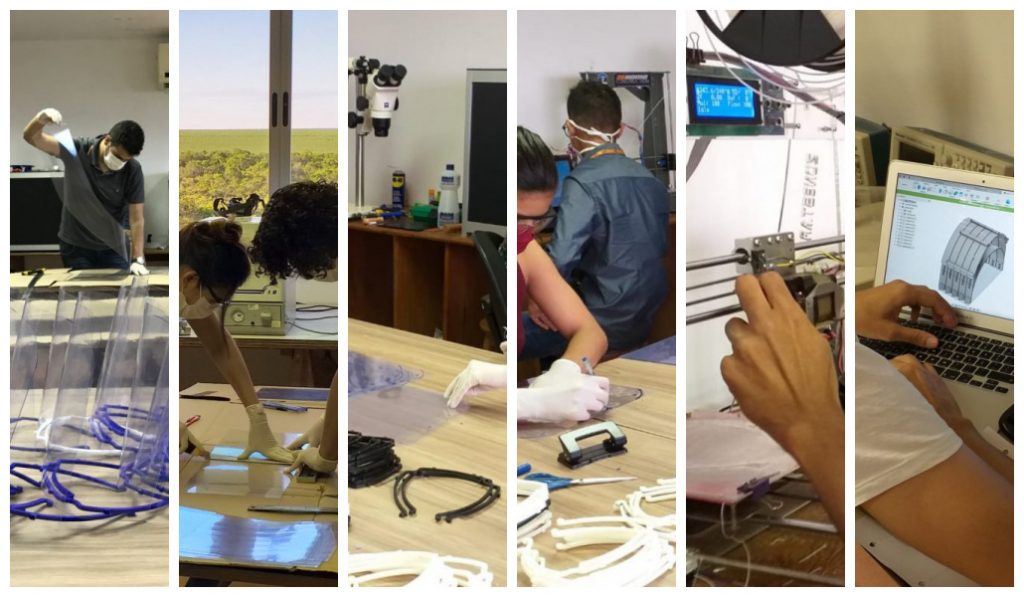
The photo of the healthcare professional was published on the Instagram of the maternity hospital where she works, in Parnamirim, a city 12 km from Natal, nestled in the Metropolitan Region. The theme of the publication is the arrival of 50 face shields for the team. Minutes before, the masks had left the neuroengineering laboratory of the Edmond and Lily Safra International Institute of Neuroscience (IIN-ELS), of the Santos Dumont Institute (ISD), where the head supports were designed and printed on 3D printers, the front parts, made of acetate, were cut by hand – and each unit “came to life” assembled by a group of professionals from areas such as engineering, physiotherapy, nursing and biomedicine.

The equipment is among the more than 1,000 produced by them – researchers and students of Master's Degree in Neuroengineering from IIN-ELS/ISD – for donation to hospitals, maternity wards and emergency services facing Covid-19 in Rio Grande do Norte.

Amid the spread of the disease in the state, the production line will complete two months next Sunday (24) and continues at full steam in Macaíba, the Institute’s headquarters city.

In the following 10 points, understand how the work has been carried out and why this collective effort began.

1 – Why is the Edmond and Lily Safra International Institute of Neuroscience (IIN-ELS), at the Santos Dumont Institute, producing face shields?
At ISD, we repeat daily that each person who completes a master's degree in neuroengineering must act to transform society and not remain trapped in the model of the researcher in the ivory tower. Thus, students and alumni of IIN-ELS naturally mobilized to produce a material that protects the face of healthcare professionals against contaminated droplets or fluids, but which is in short supply – which exposes professionals on the front lines of Covid-19 care.

2 – But did IIN-ELS have experience in this area?
IIN-ELS did not produce personal protective equipment, but it has printers and people with the skills to help fight the pandemic, so we put our heads together to meet the urgent need for protective masks for healthcare professionals. The Institute, with its multidisciplinary team of researchers and students in neuroengineering, must not only generate scientific knowledge, but above all transform knowledge into actions that benefit society, says IIN-ELS research coordinator Edgard Morya.

3 – How long has IIN-ELS been producing shield masks?
Production began on March 24, 2020. Work was interrupted for a week in May due to a lack of supplies. After donations, work was resumed.

4 – What donations did the Institute receive?
Donations of acetate, 3D printer filament and broken printers whose parts were used to assemble a new 3D printer.

5 – Are other donations necessary?
Yes. In supplies or money to buy materials and make it possible to donate masks to other health institutions (hospitals, health centers and now to health agents who are going to homes and must carry out prevention). Click here to learn how to collaborate.

6 – Can health units that need these masks still request them?
Yes. The 'face shields' produced by researchers and students of the ISD's master's degree in neuroengineering are intended for institutions that treat patients with Covid-19, or patients who may be asymptomatic transmitters of the disease, in Rio Grande do Norte. The donation is institutional, that is, it is not made directly from the ISD to individuals. For this reason, it is the director of the interested institution who must contact the Institute (by email covid19@isd.org.br). Click here to learn more.

7 – Where have the masks reached so far?
To 49 hospitals, emergency and urgent care services and maternity wards in Rio Grande do Norte, distributed across 17 municipalities.

8 – How many master’s students and researchers are involved in the project?
Leading the production line, set up in the Institute's neuroengineering laboratory, are the IIN-ELS research coordinator, Edgard Morya, and students from the master's program in neuroengineering. In addition to Morya, who is a physiotherapist, the project involves the participation of professors Fabrício (engineer) and André (engineer). Among the students are Alex (engineer), Iago (engineer), Mohamed (engineer), Domingos (engineer), Gabriela (engineer), Junio (physiotherapist), Valeria (physiotherapist), Natalia (physiotherapist), Heloisa (biomedical scientist), Pricila (nursing student), Patrícia (physiotherapist), Maria Alice (physiotherapy student) and others who participate virtually in the research for product information.

9 – How does this production line work?
Alex and Iago configure the print file for the head support (these configuration files are being exchanged worldwide to help with the process) and control the 3D printing of the support (quality control vs. speed). All the others finish the support pieces, mark the acetate, cut it manually and drill the holes. Then they fit the acetate into the head support. In addition, 1 student assembled a new 3D printer with parts from regular, broken printers donated to the ISD. Others take turns producing the face shields, in order to avoid crowds. The work involves about 3 people at a time. The doors and windows of the laboratory where they produce the products are kept open and everyone wears fabric masks.

10 – What types of tools and supplies do you use?
3D printers, roll of PLA and ABS filaments (types of polymer like inkjet printer ink), acetate, ruler, utility knives, paper punch, grinder, saw, pliers.

This was the total number of confirmed cases of Covid-19 in RN up to 05/21.
0

KNOW MORE

The number (12,584), according to a survey by the ISD based on data from the State Department of Public Health, is almost six times higher than that recorded on April 16, when the nursing technician mentioned at the beginning of the text used the shield mask for the first time in the maternity ward. The number of deaths and suspected cases also soared.

Text:  Renata Moura / Ascom – ISD

Communication Office
comunicacao@isd.org.br
(84) 99416-1880

Santos Dumont Institute (ISD)

Social organization that maintains ties with the Ministry of Education (MEC) and whose mission is to promote education for life, forming citizens through integrated teaching, research and extension actions and to contribute to a fairer and more humane transformation of the Brazilian social reality.

Communication Office
comunicacao@isd.org.br
(84) 99416-1880

Share this news

Recommended

More news

Shield masks: 10 responses on ISD donations amid the spread of Covid-19

Shield masks are produced by professors and students of the master's degree in neuroengineering

Renata Moura
Journalist

The nursing technician looks at the camera and makes a heart shape with her hands.

She wears gloves, a cap, a disposable mask and the so-called face shield, a transparent 'shield mask' that – with the high demand in the world due to the new coronavirus – it became difficult to find on the market. 

The equipment covers the entire face and will protect it moments later, in an area defined by the hospital as “critical”: “it is the swab collection room”, that is, the collection of tests on secretions from patients with potential symptoms of Covid-19, the disease caused by the virus.

The photo of the healthcare professional was published on the Instagram of the maternity hospital where she works, in Parnamirim, a city 12 km from Natal, nestled in the Metropolitan Region. The theme of the publication is the arrival of 50 face shields for the team. Minutes before, the masks had left the neuroengineering laboratory of the Edmond and Lily Safra International Institute of Neuroscience (IIN-ELS), of the Santos Dumont Institute (ISD), where the head supports were designed and printed on 3D printers, the front parts, made of acetate, were cut by hand – and each unit “came to life” assembled by a group of professionals from areas such as engineering, physiotherapy, nursing and biomedicine.

The equipment is among the more than 1,000 produced by them – researchers and students of Master's Degree in Neuroengineering from IIN-ELS/ISD – for donation to hospitals, maternity wards and emergency services facing Covid-19 in Rio Grande do Norte.

Amid the spread of the disease in the state, the production line will complete two months next Sunday (24) and continues at full steam in Macaíba, the Institute’s headquarters city.

In the following 10 points, understand how the work has been carried out and why this collective effort began.

1 – Why is the Edmond and Lily Safra International Institute of Neuroscience (IIN-ELS), at the Santos Dumont Institute, producing face shields?
At ISD, we repeat daily that each person who completes a master's degree in neuroengineering must act to transform society and not remain trapped in the model of the researcher in the ivory tower. Thus, students and alumni of IIN-ELS naturally mobilized to produce a material that protects the face of healthcare professionals against contaminated droplets or fluids, but which is in short supply – which exposes professionals on the front lines of Covid-19 care.

2 – But did IIN-ELS have experience in this area?
IIN-ELS did not produce personal protective equipment, but it has printers and people with the skills to help fight the pandemic, so we put our heads together to meet the urgent need for protective masks for healthcare professionals. The Institute, with its multidisciplinary team of researchers and students in neuroengineering, must not only generate scientific knowledge, but above all transform knowledge into actions that benefit society, says IIN-ELS research coordinator Edgard Morya.

3 – How long has IIN-ELS been producing shield masks?
Production began on March 24, 2020. Work was interrupted for a week in May due to a lack of supplies. After donations, work was resumed.

4 – What donations did the Institute receive?
Donations of acetate, 3D printer filament and broken printers whose parts were used to assemble a new 3D printer.

5 – Are other donations necessary?
Yes. In supplies or money to buy materials and make it possible to donate masks to other health institutions (hospitals, health centers and now to health agents who are going to homes and must carry out prevention). Click here to learn how to collaborate.

6 – Can health units that need these masks still request them?
Yes. The 'face shields' produced by researchers and students of the ISD's master's degree in neuroengineering are intended for institutions that treat patients with Covid-19, or patients who may be asymptomatic transmitters of the disease, in Rio Grande do Norte. The donation is institutional, that is, it is not made directly from the ISD to individuals. For this reason, it is the director of the interested institution who must contact the Institute (by email covid19@isd.org.br). Click here to learn more.

7 – Where have the masks reached so far?
To 49 hospitals, emergency and urgent care services and maternity wards in Rio Grande do Norte, distributed across 17 municipalities.

8 – How many master’s students and researchers are involved in the project?
Leading the production line, set up in the Institute's neuroengineering laboratory, are the IIN-ELS research coordinator, Edgard Morya, and students from the master's program in neuroengineering. In addition to Morya, who is a physiotherapist, the project involves the participation of professors Fabrício (engineer) and André (engineer). Among the students are Alex (engineer), Iago (engineer), Mohamed (engineer), Domingos (engineer), Gabriela (engineer), Junio (physiotherapist), Valeria (physiotherapist), Natalia (physiotherapist), Heloisa (biomedical scientist), Pricila (nursing student), Patrícia (physiotherapist), Maria Alice (physiotherapy student) and others who participate virtually in the research for product information.

9 – How does this production line work?
Alex and Iago configure the print file for the head support (these configuration files are being exchanged worldwide to help with the process) and control the 3D printing of the support (quality control vs. speed). All the others finish the support pieces, mark the acetate, cut it manually and drill the holes. Then they fit the acetate into the head support. In addition, 1 student assembled a new 3D printer with parts from regular, broken printers donated to the ISD. Others take turns producing the face shields, in order to avoid crowds. The work involves about 3 people at a time. The doors and windows of the laboratory where they produce the products are kept open and everyone wears fabric masks.

10 – What types of tools and supplies do you use?
3D printers, roll of PLA and ABS filaments (types of polymer like inkjet printer ink), acetate, ruler, utility knives, paper punch, grinder, saw, pliers.
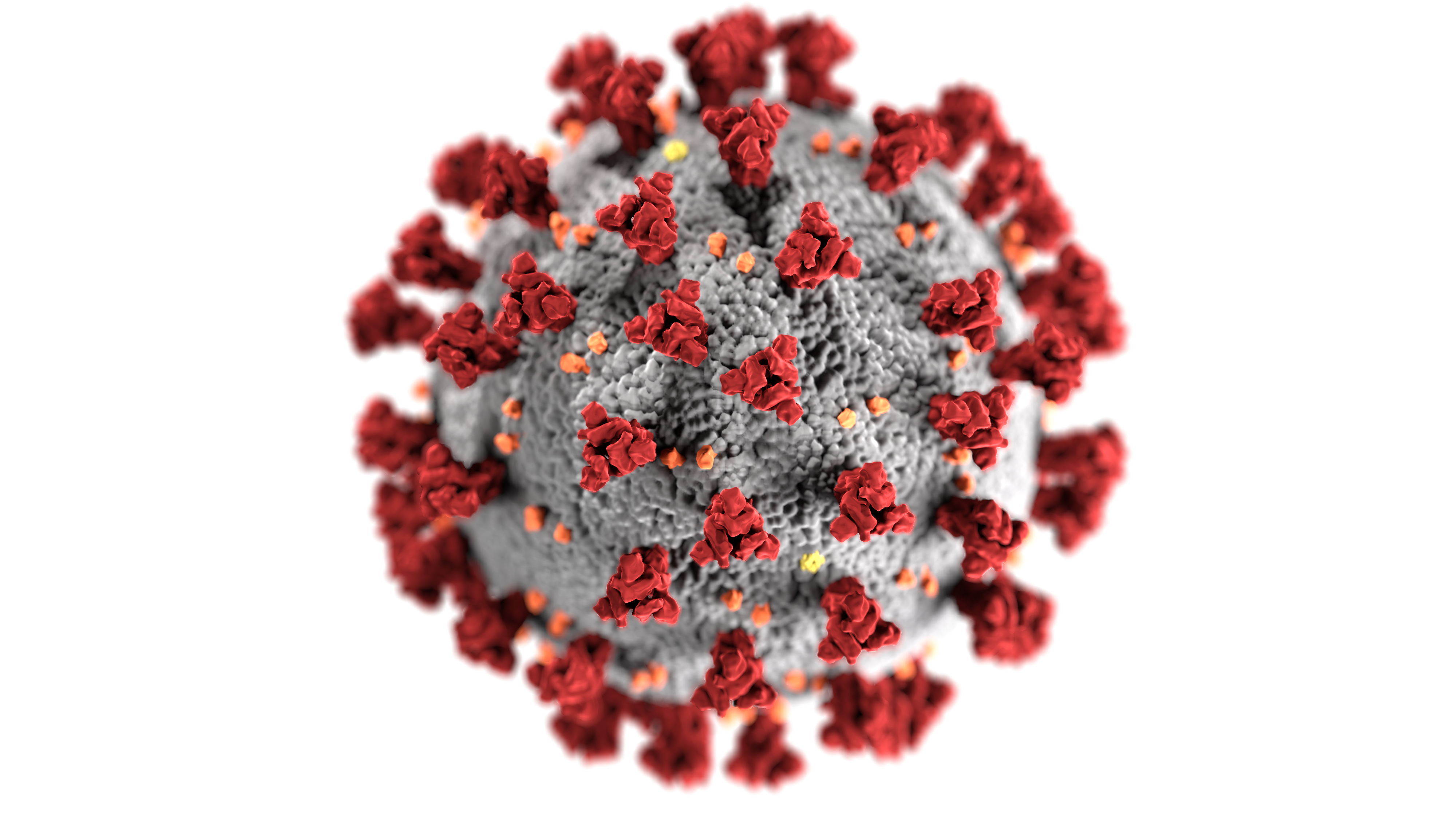
This was the total number of confirmed cases of Covid-19 in RN up to 05/21.
0

KNOW MORE

The number (12,584), according to a survey by the ISD based on data from the State Department of Public Health, is almost six times higher than that recorded on April 16, when the nursing technician mentioned at the beginning of the text used the shield mask for the first time in the maternity ward. The number of deaths and suspected cases also soared.
Text:  Renata Moura / Ascom – ISD

Communication Office
comunicacao@isd.org.br
(84) 99416-1880

Santos Dumont Institute (ISD)

Social organization that maintains ties with the Ministry of Education (MEC) and whose mission is to promote education for life, forming citizens through integrated teaching, research and extension actions and to contribute to a fairer and more humane transformation of the Brazilian social reality.

Communication Office
comunicacao@isd.org.br
(84) 99416-1880

Share this news