
Researchers and entities linked to innovation and technology visit the PAX structure

Posted in December 7, 2020

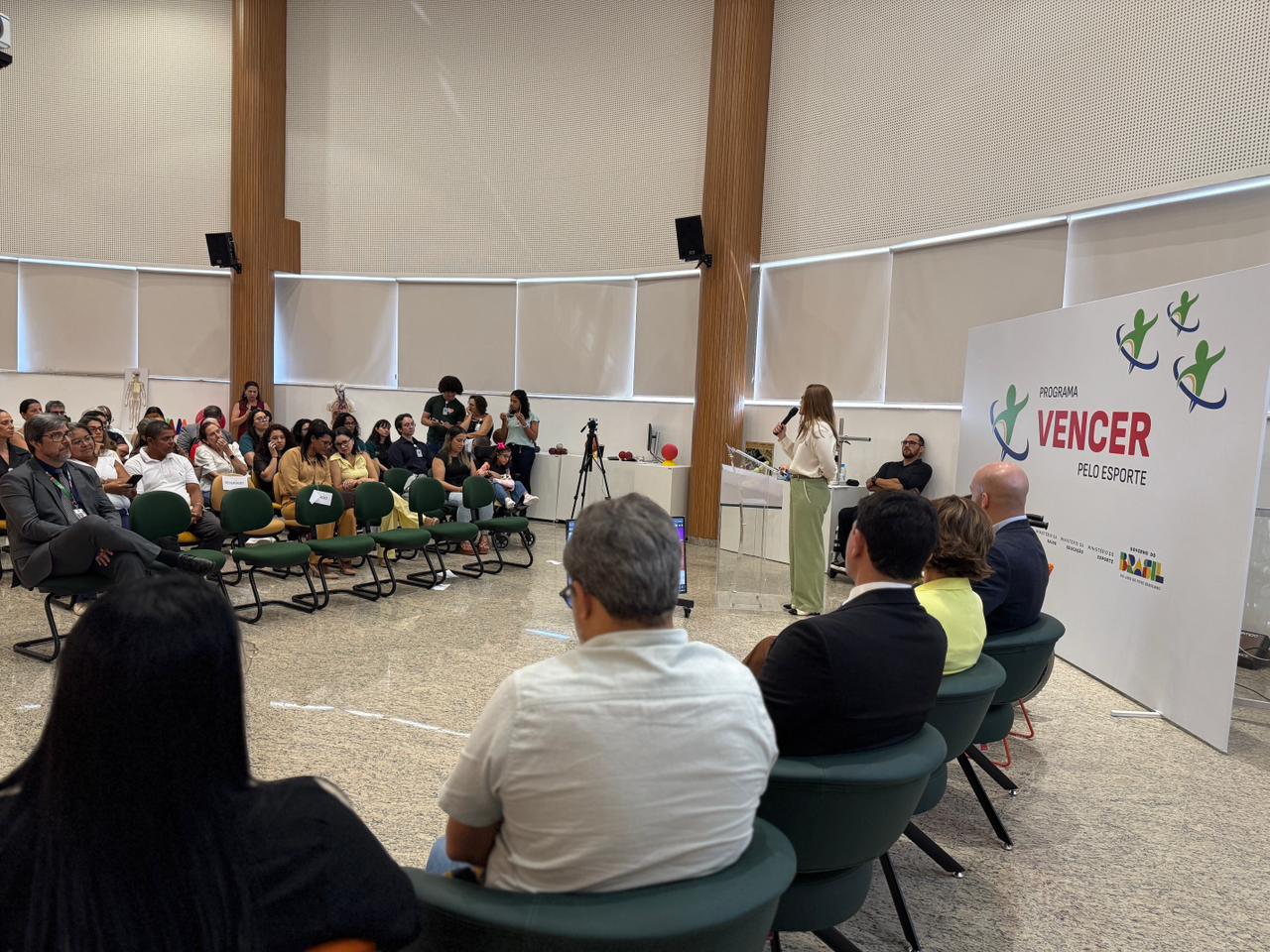
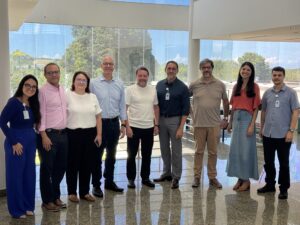
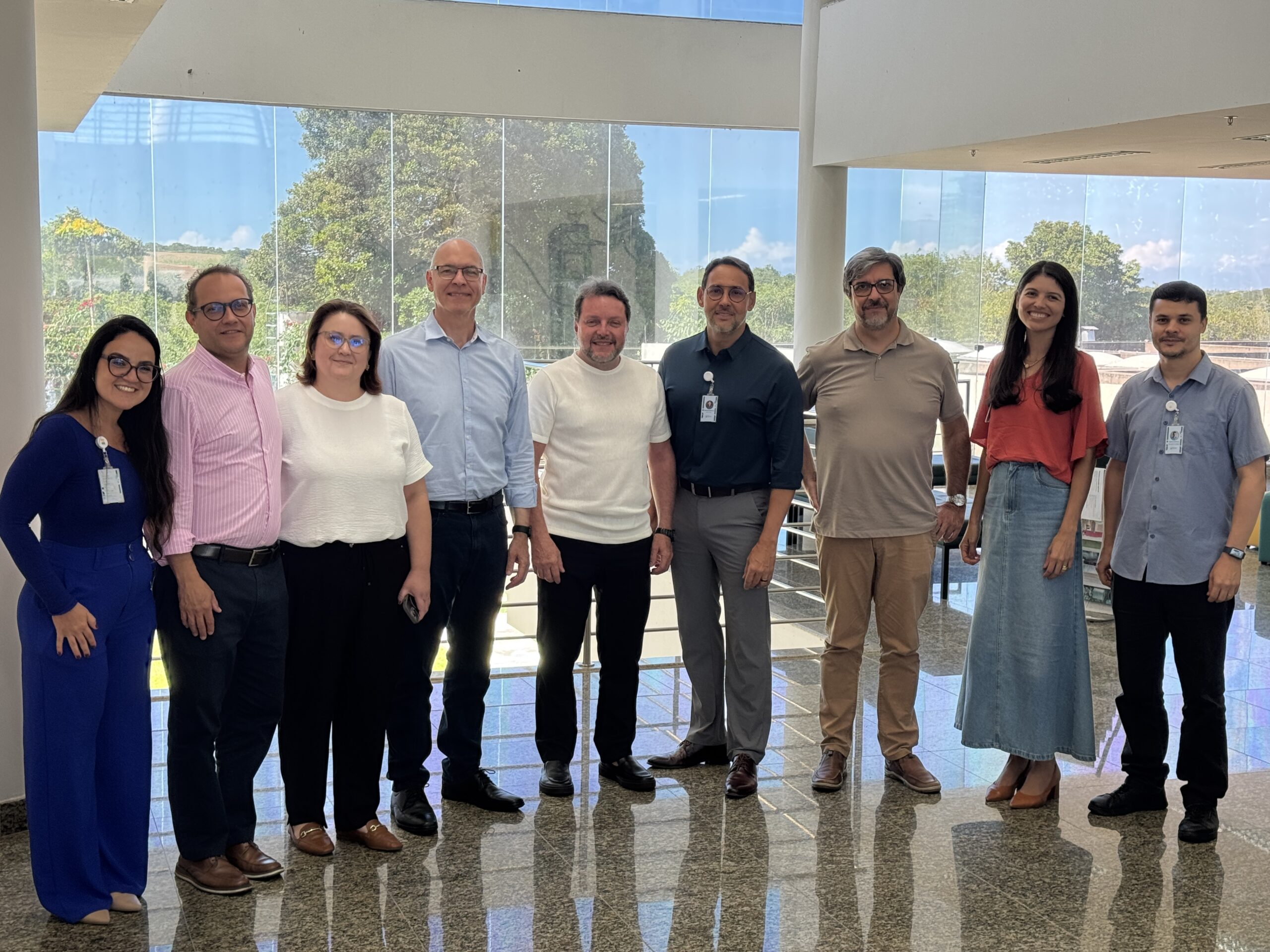
The Santos Dumont Institute (ISD) received this Monday (07) researchers, professors and representatives of teaching and research institutions linked to the areas of technology, innovation and entrepreneurship in Rio Grande do Norte, in a visit that included the Edmond and Lily Safra International Institute of Neuroscience (IIN-ELS) and the future facilities of the Augusto Severo Science and Technology Park (PAX), a project neighboring the IIN-ELS that has the ISD among its founders. 

The Park will operate in the area known as the Brain Campus, in Macaíba (RN), in a building belonging to the Federal University of Rio Grande do Norte (UFRN). The expectation is that calls for proposals for the construction work required for the new project will be launched next year and that the first phase of operations will begin in 2022.

“Today’s visit reflects what we want for the Park’s ecosystem: integration between universities, government, the productive sector, and entities linked to technology, innovation and entrepreneurship,” said ISD’s administrative director, Jovan Gadioli. According to him, the occupation of the Park strengthens the work already carried out by the ISD in technology and health and should bring the state's research institutions and the productive sector closer together. 

Present at the visit, the coordinator of e-Labora, the Center of Excellence in Applied Research of the School of Architecture, Engineering, and Technology of the Universidade Potiguar (UnP), Éder Miranda, was at PAX for the first time with the prospect of bringing the Center's activities to the Park. e-Labora works through extension projects, junior companies, and training in the area of innovation and technology. 

“We hope to come here and contribute in some way. We have a lot of great research being developed at the university and within the Park we will have prospects for initiating other innovations, with demands geared towards PAX. Our objective is in line with that of the Park, which is technological evolution and our intention is to really contribute to that,” said Miranda.

Also present at the visit, Marcelo Henrique Neves Pereira, a professor and researcher at the Department of Social and Human Sciences at CERES/UFRN, considers PAX to be an important instrument for integration between universities and the productive sector. “It is an initiative that adds value to research developed in educational institutions, integrating science and innovation with the interests of the productive sector, enterprises, startups and others,” commented the professor. 


Implantation

The Augusto Severo Science and Technology Park (PAX) began to be conceived in 2018 in Rio Grande do Norte, through the articulation of several partners, and will require R$75.26 million in investments. The resources are planned for five implementation stages, distributed between 2022 and 2040. However, PAX is expected to be ready in 2021, when calls for proposals for final works will be launched. The main objective of PAX is to generate more social and economic development, accelerated by research and innovation.

Other businesspeople from Brazil and abroad have already seen the potential of PAX and prospecting visits have signaled a promising future. 

Also participating in the visit this Thursday were the manager of IIN-ELS and research coordinator of the Institute, Edgard Morya, Daniel Fonseca, (administrator of the Brazilian Hospital Services Company EBSERH/HUOL), Eduardo Arruda, (Coordinator of the UNP Administration Course), Julio Rezende (Director of the RN Research Support Foundation), Rodrigo Fortunato, professor of the UnP Administration Department and Cícero Oliveira, Photographer of the UFRN Communication Agency. 
Communication Office
comunicacao@isd.org.br
(84) 99416-1880

Share this news

Recommended

More news

Researchers and entities linked to innovation and technology visit the PAX structure

The Santos Dumont Institute (ISD) received this Monday (07) researchers, professors and representatives of teaching and research institutions linked to the areas of technology, innovation and entrepreneurship in Rio Grande do Norte, in a visit that included the Edmond and Lily Safra International Institute of Neuroscience (IIN-ELS) and the future facilities of the Augusto Severo Science and Technology Park (PAX), a project neighboring the IIN-ELS that has the ISD among its founders. 

The Park will operate in the area known as the Brain Campus, in Macaíba (RN), in a building belonging to the Federal University of Rio Grande do Norte (UFRN). The expectation is that calls for proposals for the construction work required for the new project will be launched next year and that the first phase of operations will begin in 2022.

“Today’s visit reflects what we want for the Park’s ecosystem: integration between universities, government, the productive sector, and entities linked to technology, innovation and entrepreneurship,” said ISD’s administrative director, Jovan Gadioli. According to him, the occupation of the Park strengthens the work already carried out by the ISD in technology and health and should bring the state's research institutions and the productive sector closer together. 

Present at the visit, the coordinator of e-Labora, the Center of Excellence in Applied Research of the School of Architecture, Engineering, and Technology of the Universidade Potiguar (UnP), Éder Miranda, was at PAX for the first time with the prospect of bringing the Center's activities to the Park. e-Labora works through extension projects, junior companies, and training in the area of innovation and technology. 

“We hope to come here and contribute in some way. We have a lot of great research being developed at the university and within the Park we will have prospects for initiating other innovations, with demands geared towards PAX. Our objective is in line with that of the Park, which is technological evolution and our intention is to really contribute to that,” said Miranda.

Also present at the visit, Marcelo Henrique Neves Pereira, a professor and researcher at the Department of Social and Human Sciences at CERES/UFRN, considers PAX to be an important instrument for integration between universities and the productive sector. “It is an initiative that adds value to research developed in educational institutions, integrating science and innovation with the interests of the productive sector, enterprises, startups and others,” commented the professor. 


Implantation

The Augusto Severo Science and Technology Park (PAX) began to be conceived in 2018 in Rio Grande do Norte, through the articulation of several partners, and will require R$75.26 million in investments. The resources are planned for five implementation stages, distributed between 2022 and 2040. However, PAX is expected to be ready in 2021, when calls for proposals for final works will be launched. The main objective of PAX is to generate more social and economic development, accelerated by research and innovation.

Other businesspeople from Brazil and abroad have already seen the potential of PAX and prospecting visits have signaled a promising future. 

Also participating in the visit this Thursday were the manager of IIN-ELS and research coordinator of the Institute, Edgard Morya, Daniel Fonseca, (administrator of the Brazilian Hospital Services Company EBSERH/HUOL), Eduardo Arruda, (Coordinator of the UNP Administration Course), Julio Rezende (Director of the RN Research Support Foundation), Rodrigo Fortunato, professor of the UnP Administration Department and Cícero Oliveira, Photographer of the UFRN Communication Agency. 
Communication Office
comunicacao@isd.org.br
(84) 99416-1880

Share this news