


The Edmond and Lily Safra International Institute of Neuroscience (IIN-ELS), of the Santos Dumont Institute (ISD), is accepting applications until Monday (14) for the selection process of the 16th class of the Master's in Neuroengineering, the only one in Brazil in this area of knowledge.
Vacancies
The announcement (available on the page bit.ly/mestrado-neuroengenharia-isd) provides a total of 10 vacancies, with entry in August 2021.
Of the total number of vacancies offered, 7 are open to general competition, 1 is reserved for professors and staff of the Federal University of Rio Grande do Norte (UFRN) and 2 are for graduates of the Multiprofessional Residency Program in Health Care for People with Disabilities, from ISD.
The number of approved students may, however, be lower or higher than the number of available places, depending on the results of the technical evaluation of the candidates and suitability of the research projects.
Registrations
Since the 2020.2 selection process for the Master's degree, candidates must indicate which areas they have the most affinity with when registering. The application form presents eight projects developed at the Institute and asks which one(s) the potential student would like to have their application directed to. Registration for the selection process is free.
Among the researched topics are “Control of brain connectivity by stimulation”; “Development of brain-machine interface”; “Mechanisms of formation, expression and modification of memories; “Screening and monitoring of health care” among others that can be checked in detail in the Registration Form.
Selection process
Candidates will be selected from June 21 to 29, 2021. The selection process includes the analysis of documents such as letters of intent, letters of recommendation, CVs and academic records. Candidates approved at this stage will also have an eliminatory and qualifying interview phase.
The announcement of those approved is scheduled for July 2, 2021 and classes are scheduled to start on August 2.
Who can do a master's degree in neuroengineering?
The target audience for the selection process is candidates with undergraduate degrees in the health, engineering or biological fields.
The program has already received graduates from courses such as biomedical engineering, computer engineering, medicine, biological sciences, electrical engineering, computer science, nursing, biotechnology, civil engineering, control and automation engineering, chemical engineering, physiotherapy, psychology, biomedicine and speech therapy . Students come from different institutions and regions in Brazil.
Of the 10 vacancies foreseen in this selection, one is reserved for professors and employees of the Federal University of Rio Grande do Norte (UFRN) and two are destined for graduates of the Multiprofessional Residency in Health Care for People with Disabilities, from ISD.
About the course
The IIN-ELS/ISD master's degree in neuroengineering has been offered free of charge since 2013, lasts up to two years and is the first in Brazil recommended by the Coordination for the Improvement of Higher Education Personnel (CAPES).
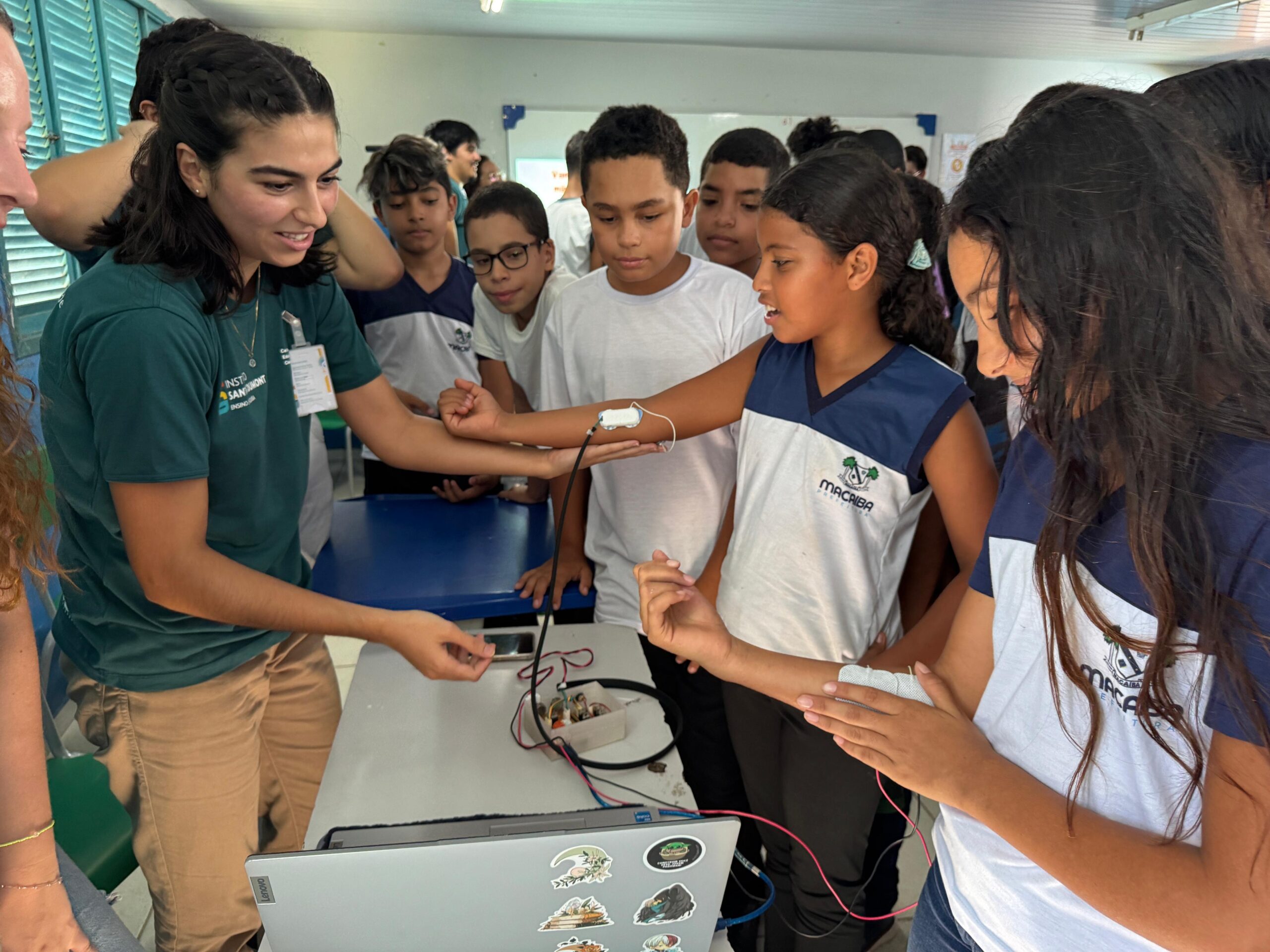
Classes and research are held at the IIN-ELS headquarters in Macaíba (RN), a city located about 14 kilometers from the capital, Natal. The Institute offers students free daily transportation between the two cities.
About IIN-ELS and the program
The Edmond and Lily Safra International Institute of Neuroscience (IIN-ELS) has been in operation since 2006 and develops teaching, research and extension activities in neuroscience and neuroengineering – two areas considered strategic for Brazil and the world.
The Institute's postgraduate program in Neuroengineering offers two lines of research (Brain-Machine Interface and Neuromodulation) and opens up prospects for professional activity linked to experimental, computational, theoretical, clinical and applied research, at molecular, cellular and systems levels.
There is room for the development of research and technologies in areas such as brain-machine interface, neuromodulation, computational neuroscience and signal processing, rehabilitation, brain-brain interface, prosthetics and orthoses, biocompatibility, neurodegenerative diseases, microcephaly, psychiatric diseases and cognition, among others.
Neuroengineering
Neuroengineering is an interdisciplinary research area that integrates neuroscience and engineering methods to study the functioning of the nervous system and develop solutions for the limitations and dysfunctions associated with the nervous system.
The knowledge generated in this area enables the development of technologies and applications ranging from neuroprosthetics to the improvement of neuromodulation techniques with therapeutic potential. The work uses behavioral, electrophysiological, histological and immunohistochemical approaches, combined with quantitative analysis methods.
The expectation is that the research developed will result in gains for society, such as the launch of cheaper prostheses for amputees, new forms of less invasive and lower-cost therapy for Parkinson's patients and the use of new technologies for the rehabilitation of paraplegic and quadriplegics.
Text: Kamila Tuenia / Ascom – ISD
Communication Office
comunicacao@isd.org.br
(84) 99416-1880
Santos Dumont Institute (ISD)
It is a Social Organization linked to the Ministry of Education (MEC) and includes the Edmond and Lily Safra International Institute of Neurosciences and the Anita Garibaldi Health Education and Research Center, both in Macaíba. ISD's mission is to promote education for life, forming citizens through integrated teaching, research and extension actions, in addition to contributing to a fairer and more humane transformation of Brazilian social reality.