

04/08/2016
Text: Ariane Mondo – Ascom ISD
Photos: ISD Collection

O Barriguda project, which integrates the Institutional Education Program for Social and Community Action of Santos Dumont Institute (ISD), was presented in China on July 28th, during Annual Conference organized by China Medical University It is The Network Towards Unity for Health (free translation: united network for health), Non-Governmental Organization that brings together health professionals and institutions from around the world and that works in partnership with the World Health Organization.
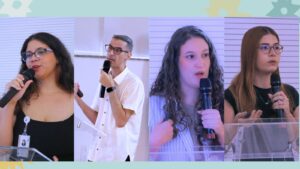
This year's event took place in the Chinese city of Shenyang, where Carolina Damasio, medical preceptor of Anita Garibaldi Health Education and Research Center (CEPS/ISD), spoke about the Barriguda project, carried out by CEPS since 2015 in the quilombola community of Capoeiras, located in Macaíba (RN).
On the occasion, Carolina had the opportunity to explain how Barriguda was able to establish a prenatal care strategy that addresses the needs identified in the quilombola community. The project is also innovative because it promotes the inclusion of medical students in an interprofessional prenatal care strategy, with the objective of identifying the knowledge, skills and attitudes necessary for the maternal health care of quilombola women. Carolina emphasized in her presentation that, in Brazil, education on ethnic-racial relations and the history of Afro-Brazilian culture are provided for in the new National Curricular Guidelines for the Undergraduate Course in Medicine and that, for this reason, Barriguda represents an advance in medical training.

Regarding the project’s participation in this event, Carolina said: “One of the most important things is being able to learn about other innovative experiences in medical schools in different countries. This opens doors for future partnerships and the construction of new projects, enabling a promising exchange of ideas.”
She also stated that the Barriguda project was highly praised by foreign researchers and professionals who publish articles in the area of teaching health professions. “They understood that initiatives like the Barriguda project are important because they promote interaction between medical students and neglected populations. This is part of the training of a health professional who is able to respond to all the demands of the population,” concluded Carolina.
International recognition
This was not the first time that CEPS/ISD conquered the world: in 2015, the project “Art of Birth“was the only winner from the Americas in the world competition”Projects That Work” promoted by Foundation for Advancement of International Medical Education and Research (FAIMER) – see article about the award HERE. The Art of Being Born is a project of Institutional Programal Education and Interprofessional Work in Maternal and Child Health of the ISD, which integrates teaching-research-extension actions aimed at the humanization of care and comprehensive care for pregnant women using the CEPS, through the implementation of recreational activities involving art in its different manifestations.
About the Barriguda Project (CEPS/ISD)

Capoeiras, in the municipality of Macaíba, is the largest quilombola community in Rio Grande do Norte. It includes approximately 300 families with limited access to adequate health care. Using the action research strategy, an interprofessional prenatal care strategy was implemented in this community that seeks to meet the needs identified for this specific population, respecting local values, knowledge, wisdom and culture.
With the participation of medical students, working in a multidisciplinary team (doctor, nurse, physiotherapist, psychologist and social worker), the services are carried out weekly and preceded by interprofessional health education activities that employ light technologies and value the historical and cultural recovery of quilombolas. Named by the pregnant women themselves, Barriguda refers to the way the community refers to the Baobab, a tree of African origin and revered as a symbol of health, strength, wisdom, long life and beauty, in addition to representing the location of the ancient quilombos in Brazil.