
Mental health and motherhood: mothers face double challenges in caring for children with disabilities

Posted in February 4, 2025

Motherhood brings new responsibilities for mothers. In many cases, it increases the workload and limits access to spaces outside the home. It is no coincidence that a study by USP, published in 2023, revealed that 11.2 million women left the job market to care for children, people with disabilities or to take on domestic tasks. 

Furthermore, a complementary study by Datafolha, also released in 2023, showed that 691,000 Brazilian women have at least one child. Of these, more than half are single, widowed or divorced, becoming single mothers. This scenario affects not only the quality of life, but directly interferes with the physical and mental health of mothers.

The exhaustion of these women, who give up on themselves to meet the needs of a new family member, should not be seen as a problem restricted to just one group. Therefore, reinforcing and putting maternal health care into practice is part of collective responsibility actions, in favor of guaranteeing the basic rights of this group.

This is what psychologist Dolores Medeiros, who works as a preceptor at the Santos Dumont Institute (ISD), a reference service for maternal and child health and for people with disabilities in Rio Grande do Norte, confirms. The professional highlights the importance of supporting the mother from the moment of pregnancy and draws special attention to cases of high-risk pregnancies, which often result in the birth of a child with a disability, which demands even greater care and sacrifices.

“There is something even more specific for the mother of a child with a health condition that requires her to be the caregiver. She may be even more sleep deprived, and the changes in social roles are sometimes much more intense. From the moment we talk about high risk, for example, that fear immediately arises: 'high risk of what?'. So, working with mothers in this context is about clarifying, giving space to emotions,” explains the psychologist.

Dolores Medeiros, multidisciplinary psychologist preceptor at ISD

For the preceptor, there is also an excessive romanticization and idealization of motherhood, which in itself causes changes in how the woman sees herself, whether in relation to herself or her family. The hypothesis or diagnosis of the disability comes as a result of this period that already provides, even in a pregnancy without risk, a constant break in perspectives and idealizations about the life being generated.

“As a health professional, we position ourselves as people who have specific knowledge, but who will be in contact with another human being, who often arrives with a lot of anxiety and expectations. Much more than knowing the test results and the diagnosis, it is through connection that we can access what stories and feelings are coming to us,” reinforces the professional.

Rhavenna Ribeiro, 34, experienced firsthand what it's like to be one of these mothers. As the mother of 6-year-old Marina, a person with multiple disabilities, she needed to learn how to take care of herself in order to be able to face, together with her daughter, the many barriers that arise in the daily life of an atypical family.

“There were many doubts, a feeling of helplessness, of lack of direction, I couldn’t see the other side, I cried a lot. That same day my husband said: ‘hey, she’s our daughter, this doesn’t change anything for us’. And that’s what it really was and that’s it! The love never changed, but the routine is completely upside down”, reports the mother.

The National Survey of Caregivers of Rare Disease Patients indicates that, by 2022, mothers represented 81% of caregivers of patients with rare diseases. Of this percentage, 78% needed to accompany the patient 24 hours a day and 46% had to resign from their jobs to be exclusively caregivers. 

 

Rhavenna and Marina now have a support network made up of family members and the health service.

Today, with a support network made up of family members and the ISD multidisciplinary service, Rhavenna believes that the main challenges in the process include: the difficulty in accessing public health services, the lack of support and listening, and the prejudice that causes delays in seeking support. Finally, she mentions the maternal overload: her daughter has so many needs that looking after herself becomes a challenge. 

“Since she has school, I have time alone to do activities that give me meaning beyond being a mother: working, reading a book, doing therapy, exercising, cooking. It’s a way of taking care of myself and being available for maternal support. Taking care of myself so I can continue on this journey with her, for me and for her,” says Rhavenna.

Marina and Rhavenna receive weekly support from specialized maternal and child health services and those for people with disabilities provided by ISD, in the context of multidisciplinary outpatient clinics and the institution's Specialized Rehabilitation Center (CER ISD). The mother cites the relationship with the professionals as one of the main points in ensuring that the path is not so turbulent.

For Dolores, this relationship outside the clinical walls is an essential stage of maternal care and support. “The health team often appears as a place of care, repair, rest, where, in addition to medical care, you can find people who can provide emotional support as well. So, it is truly a partnership that we are trying to build,” adds the ISD psychologist preceptor.

Health education and knowledge: mothers in collective care

There are multiple strategies for monitoring, welcoming and caring for the health of mothers in the context of people with disabilities. An example of this are the health education groups of the Anita Garibaldi Center for Health Education and Research (Anita), open spaces for the exchange of knowledge and experiences among family members, caregivers and people served by the Institute's specialized services.

One of these groups is TEApoiar, aimed at mothers, fathers and guardians of children diagnosed with Autism Spectrum Disorder (ASD). The initiative is made up of a multidisciplinary team of preceptors and residents, from professions such as physiotherapy, speech therapy, psychology, occupational therapy and social work, with the aim of establishing a safe and effective space for people with multiple realities and demands.

Yara Renaly, a psychologist at ISD, is one of the professionals involved in this group. She describes the project as a place for demystification and empowerment through knowledge. This is the space where people who are usually having their first contact with a disability will arrive; therefore, it is common for there to be moderate or high levels of anxiety and distress among the participants.

“Most of them are mothers of children undergoing diagnostic investigation, who do not really understand what their child has, or who already have a diagnosis but have nowhere to go, and need tools to be able to put something into practice. We try to address topics that they hear a lot about in their daily lives and that they end up misunderstanding, and then many begin to truly understand this diagnosis,” explains the professional.

TEApoiar is a group open to the public, and participants can join even if they are not receiving care from the ISD autism care line. In this space, participants learn more about the rights of people with disabilities, such as how to benefit from public policies, such as the BPC, and access to transportation and education. “We always provide opportunities for them to talk a little about themselves, what they are looking for, what their biggest challenges are, so that we can provide this assistance and even direct them to the flow of primary care,” says Yara.

Aline Serafim, from Bom Jesus/RN, is part of the group. She is the full-time caregiver for her son, Guilherme, who was diagnosed with autism at the age of three. For her, a series of feelings were present when she received the diagnosis: crying, uncertainty, fear of prejudice and of her son's acceptance by society and in relation to the possible challenges that would come with atypical motherhood. In addition to the diagnosis of ASD, Guilherme was also diagnosed with focal epilepsy.
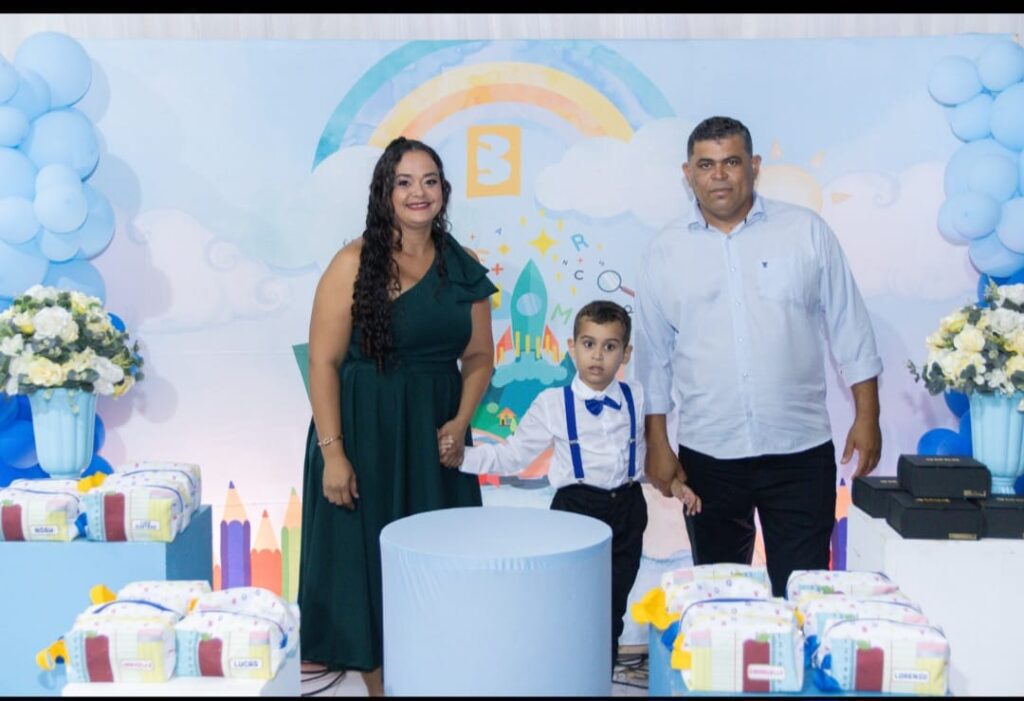
 

Aline Serafim, born in Bom Jesus/RN, is her son's full-time caregiver

It was only with the support network built by her husband, mother and other family members, in addition to joining the TEApoiar group, that Aline began to feel reassured about her son's future and potential.

“It was great to share experiences, in the conversations with professionals and other mothers, we saw that it’s not just us who go through this, that other families go through it too. This made us even stronger to care for and fight for our son,” says Aline.

Psychologist Yara Renaly emphasizes that health education is an initial step. “It’s about seeing, in fact, ‘I need help’, ‘I’m experiencing anxiety’. We see that we need to find something with the tools we have access to. So, we try to guide this person there so that, in the situation they are in, what they can do. It’s an initial step for us to be able to guide and for this family to seek other tools”, she explains.

About ISD

The Santos Dumont Institute is a Social Organization linked to the Ministry of Education (MEC) and includes the Edmond and Lily Safra International Neuroscience Institute and the Anita Garibaldi Health Education and Research Center, both in Macaíba. ISD's mission is to promote education for life, forming citizens through integrated teaching, research and extension actions, in addition to contributing to a fairer and more humane transformation of Brazilian social reality.
Communication Office
comunicacao@isd.org.br
(84) 99416-1880

Share this news

Recommended

More news

Mental health and motherhood: mothers face double challenges in caring for children with disabilities

Motherhood brings new responsibilities for mothers. In many cases, it increases the workload and limits access to spaces outside the home. It is no coincidence that a study by USP, published in 2023, revealed that 11.2 million women left the job market to care for children, people with disabilities or to take on domestic tasks. 

Furthermore, a complementary study by Datafolha, also released in 2023, showed that 691,000 Brazilian women have at least one child. Of these, more than half are single, widowed or divorced, becoming single mothers. This scenario affects not only the quality of life, but directly interferes with the physical and mental health of mothers.

The exhaustion of these women, who give up on themselves to meet the needs of a new family member, should not be seen as a problem restricted to just one group. Therefore, reinforcing and putting maternal health care into practice is part of collective responsibility actions, in favor of guaranteeing the basic rights of this group.

This is what psychologist Dolores Medeiros, who works as a preceptor at the Santos Dumont Institute (ISD), a reference service for maternal and child health and for people with disabilities in Rio Grande do Norte, confirms. The professional highlights the importance of supporting the mother from the moment of pregnancy and draws special attention to cases of high-risk pregnancies, which often result in the birth of a child with a disability, which demands even greater care and sacrifices.

“There is something even more specific for the mother of a child with a health condition that requires her to be the caregiver. She may be even more sleep deprived, and the changes in social roles are sometimes much more intense. From the moment we talk about high risk, for example, that fear immediately arises: 'high risk of what?'. So, working with mothers in this context is about clarifying, giving space to emotions,” explains the psychologist.

Dolores Medeiros, multidisciplinary psychologist preceptor at ISD

For the preceptor, there is also an excessive romanticization and idealization of motherhood, which in itself causes changes in how the woman sees herself, whether in relation to herself or her family. The hypothesis or diagnosis of the disability comes as a result of this period that already provides, even in a pregnancy without risk, a constant break in perspectives and idealizations about the life being generated.

“As a health professional, we position ourselves as people who have specific knowledge, but who will be in contact with another human being, who often arrives with a lot of anxiety and expectations. Much more than knowing the test results and the diagnosis, it is through connection that we can access what stories and feelings are coming to us,” reinforces the professional.

Rhavenna Ribeiro, 34, experienced firsthand what it's like to be one of these mothers. As the mother of 6-year-old Marina, a person with multiple disabilities, she needed to learn how to take care of herself in order to be able to face, together with her daughter, the many barriers that arise in the daily life of an atypical family.

“There were many doubts, a feeling of helplessness, of lack of direction, I couldn’t see the other side, I cried a lot. That same day my husband said: ‘hey, she’s our daughter, this doesn’t change anything for us’. And that’s what it really was and that’s it! The love never changed, but the routine is completely upside down”, reports the mother.

The National Survey of Caregivers of Rare Disease Patients indicates that, by 2022, mothers represented 81% of caregivers of patients with rare diseases. Of this percentage, 78% needed to accompany the patient 24 hours a day and 46% had to resign from their jobs to be exclusively caregivers. 


Rhavenna and Marina now have a support network made up of family members and the health service.

Today, with a support network made up of family members and the ISD multidisciplinary service, Rhavenna believes that the main challenges in the process include: the difficulty in accessing public health services, the lack of support and listening, and the prejudice that causes delays in seeking support. Finally, she mentions the maternal overload: her daughter has so many needs that looking after herself becomes a challenge. 

“Since she has school, I have time alone to do activities that give me meaning beyond being a mother: working, reading a book, doing therapy, exercising, cooking. It’s a way of taking care of myself and being available for maternal support. Taking care of myself so I can continue on this journey with her, for me and for her,” says Rhavenna.

Marina and Rhavenna receive weekly support from specialized maternal and child health services and those for people with disabilities provided by ISD, in the context of multidisciplinary outpatient clinics and the institution's Specialized Rehabilitation Center (CER ISD). The mother cites the relationship with the professionals as one of the main points in ensuring that the path is not so turbulent.

For Dolores, this relationship outside the clinical walls is an essential stage of maternal care and support. “The health team often appears as a place of care, repair, rest, where, in addition to medical care, you can find people who can provide emotional support as well. So, it is truly a partnership that we are trying to build,” adds the ISD psychologist preceptor.

Health education and knowledge: mothers in collective care

There are multiple strategies for monitoring, welcoming and caring for the health of mothers in the context of people with disabilities. An example of this are the health education groups of the Anita Garibaldi Center for Health Education and Research (Anita), open spaces for the exchange of knowledge and experiences among family members, caregivers and people served by the Institute's specialized services.

One of these groups is TEApoiar, aimed at mothers, fathers and guardians of children diagnosed with Autism Spectrum Disorder (ASD). The initiative is made up of a multidisciplinary team of preceptors and residents, from professions such as physiotherapy, speech therapy, psychology, occupational therapy and social work, with the aim of establishing a safe and effective space for people with multiple realities and demands.

Yara Renaly, a psychologist at ISD, is one of the professionals involved in this group. She describes the project as a place for demystification and empowerment through knowledge. This is the space where people who are usually having their first contact with a disability will arrive; therefore, it is common for there to be moderate or high levels of anxiety and distress among the participants.

“Most of them are mothers of children undergoing diagnostic investigation, who do not really understand what their child has, or who already have a diagnosis but have nowhere to go, and need tools to be able to put something into practice. We try to address topics that they hear a lot about in their daily lives and that they end up misunderstanding, and then many begin to truly understand this diagnosis,” explains the professional.

TEApoiar is a group open to the public, and participants can join even if they are not receiving care from the ISD autism care line. In this space, participants learn more about the rights of people with disabilities, such as how to benefit from public policies, such as the BPC, and access to transportation and education. “We always provide opportunities for them to talk a little about themselves, what they are looking for, what their biggest challenges are, so that we can provide this assistance and even direct them to the flow of primary care,” says Yara.

Aline Serafim, from Bom Jesus/RN, is part of the group. She is the full-time caregiver for her son, Guilherme, who was diagnosed with autism at the age of three. For her, a series of feelings were present when she received the diagnosis: crying, uncertainty, fear of prejudice and of her son's acceptance by society and in relation to the possible challenges that would come with atypical motherhood. In addition to the diagnosis of ASD, Guilherme was also diagnosed with focal epilepsy.


Aline Serafim, born in Bom Jesus/RN, is her son's full-time caregiver

It was only with the support network built by her husband, mother and other family members, in addition to joining the TEApoiar group, that Aline began to feel reassured about her son's future and potential.

“It was great to share experiences, in the conversations with professionals and other mothers, we saw that it’s not just us who go through this, that other families go through it too. This made us even stronger to care for and fight for our son,” says Aline.

Psychologist Yara Renaly emphasizes that health education is an initial step. “It’s about seeing, in fact, ‘I need help’, ‘I’m experiencing anxiety’. We see that we need to find something with the tools we have access to. So, we try to guide this person there so that, in the situation they are in, what they can do. It’s an initial step for us to be able to guide and for this family to seek other tools”, she explains.

About ISD

The Santos Dumont Institute is a Social Organization linked to the Ministry of Education (MEC) and includes the Edmond and Lily Safra International Neuroscience Institute and the Anita Garibaldi Health Education and Research Center, both in Macaíba. ISD's mission is to promote education for life, forming citizens through integrated teaching, research and extension actions, in addition to contributing to a fairer and more humane transformation of Brazilian social reality.
Communication Office
comunicacao@isd.org.br
(84) 99416-1880

Share this news