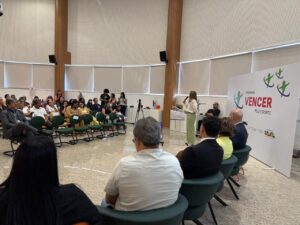



The Santos Dumont Institute (ISD) held, this Tuesday (26), the second edition of the Seminar for Strengthening the Care Network for People in Situations of Sexual Violence. The event was part of the program alluding to Purple August, a month dedicated to raising awareness for the end of the various forms of violence against women.
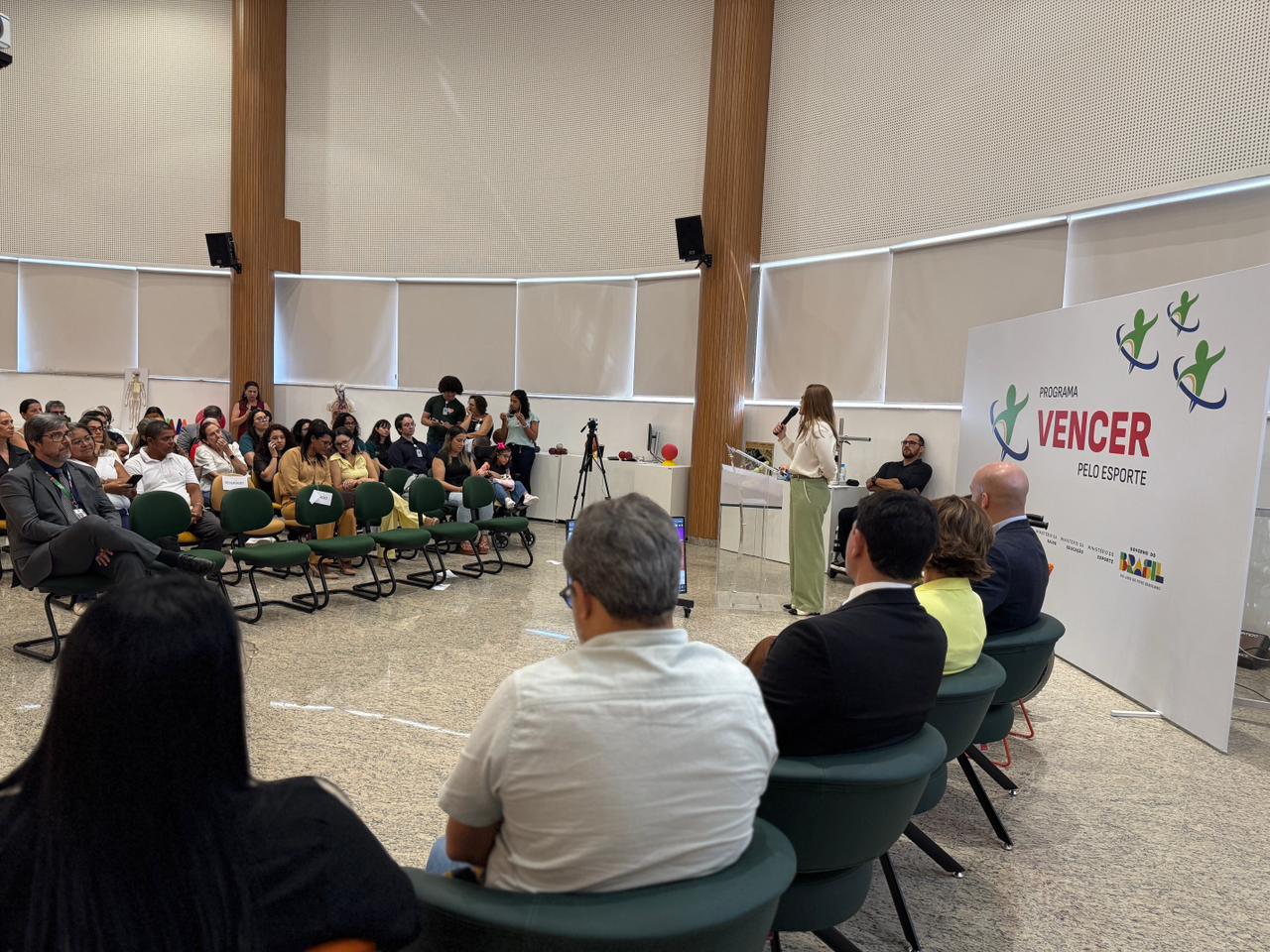
Held in the Paulo Freire Auditorium at the Anita Garibaldi Center for Health Education and Research (Anita), an ISD unit that supports people experiencing violence, the seminar brought together health professionals, social workers, representatives of the Judiciary, residents, and undergraduate students. It was a time for reflection and guidance on the rights, protection mechanisms, and forms of support provided by law.
The program featured lectures by experts working directly to defend women's rights, both in the health and criminal fields. Among the guests was Public Prosecutor Érica Canuto, who emphasized the importance of expanding awareness of the available safety net.
"Purple August isn't just a color. Purple August is a law, the Maria da Penha Law. It's important for women to know their rights so they know where to seek help. There's an entire protection network ready to assist women exposed to violence," she stated.

Alexandra Lima, social worker and ISD preceptor, noted that health and social service professionals are often the first to identify and assist people experiencing violence. She said ongoing team training is essential to ensure qualified listening, confidentiality, and appropriate referrals.
"It's important to discuss this topic by bringing together various stakeholders from different services so that we can invest in training qualified professionals, helping to ensure that services are prepared to support people experiencing violence, especially women," she stated.
The lecture series also featured talks by Dolores Medeiros, a psychologist preceptor at ISD, who discussed the emotional impacts of violence and the importance of qualified listening; Paula Carvalho, an obstetrician preceptor at ISD, who highlighted the role of gynecological and obstetric care in identifying signs of violence; and Maria Mirane, a social worker at the Casa da Mulher de Macaíba, who presented the municipal facility's experience in welcoming and referring women at risk.
Reception of people in situations of sexual violence
Sexual violence is a form of aggression and abuse that occurs without consent, involving forced acts, coercion, or exploitation against a person. Sexual abuse and sexual exploitation are its main manifestations.
The reception and care of people experiencing violence must be provided within the context of comprehensive care, with actions accessible to the entire population, without discrimination. These actions include emergency measures, monitoring, rehabilitation, and treatment of the physical, emotional, and social impacts of interpersonal violence.
The protection network for people experiencing violence is made up of a set of interconnected services that ensure rights, break cycles of violence, and provide comprehensive support to victims. These services include:
- Dial 180, the national reporting and guidance channel;
- Specialized Women's Assistance Stations (DEAMs), responsible for recording incidents and applying protective measures;
- Social Assistance Reference Centers (CRAS) and Specialized Centers (CREAS), which offer psychosocial support;
- Health services, such as hospitals and referral units for emergency care and prophylaxis;
- Public Defender's Office and Public Prosecutor's Office, which guarantee access to justice and the defense of rights;
- Shelters and reception centers, which offer temporary protection to women at imminent risk.
ISD as a reference in reception
Since 2016, the Santos Dumont Institute has served as a referral service for people experiencing violence in Macaíba, through the "Facing Law(s)" project. Services are provided at Anita, Monday through Friday, from 8 a.m. to 5 p.m. In the municipality, the Aluízio Alves Emergency Care Unit (UPA) and Alfredo Mesquita Filho Hospital are also referral health services for victims.
About ISD
The Santos Dumont Institute is a Social Organization linked to the Ministry of Education (MEC) and includes the Edmond and Lily Safra International Neuroscience Institute and the Anita Garibaldi Health Education and Research Center, both in Macaíba. ISD's mission is to promote education for life, forming citizens through integrated teaching, research and extension actions, in addition to contributing to a fairer and more humane transformation of Brazilian social reality.