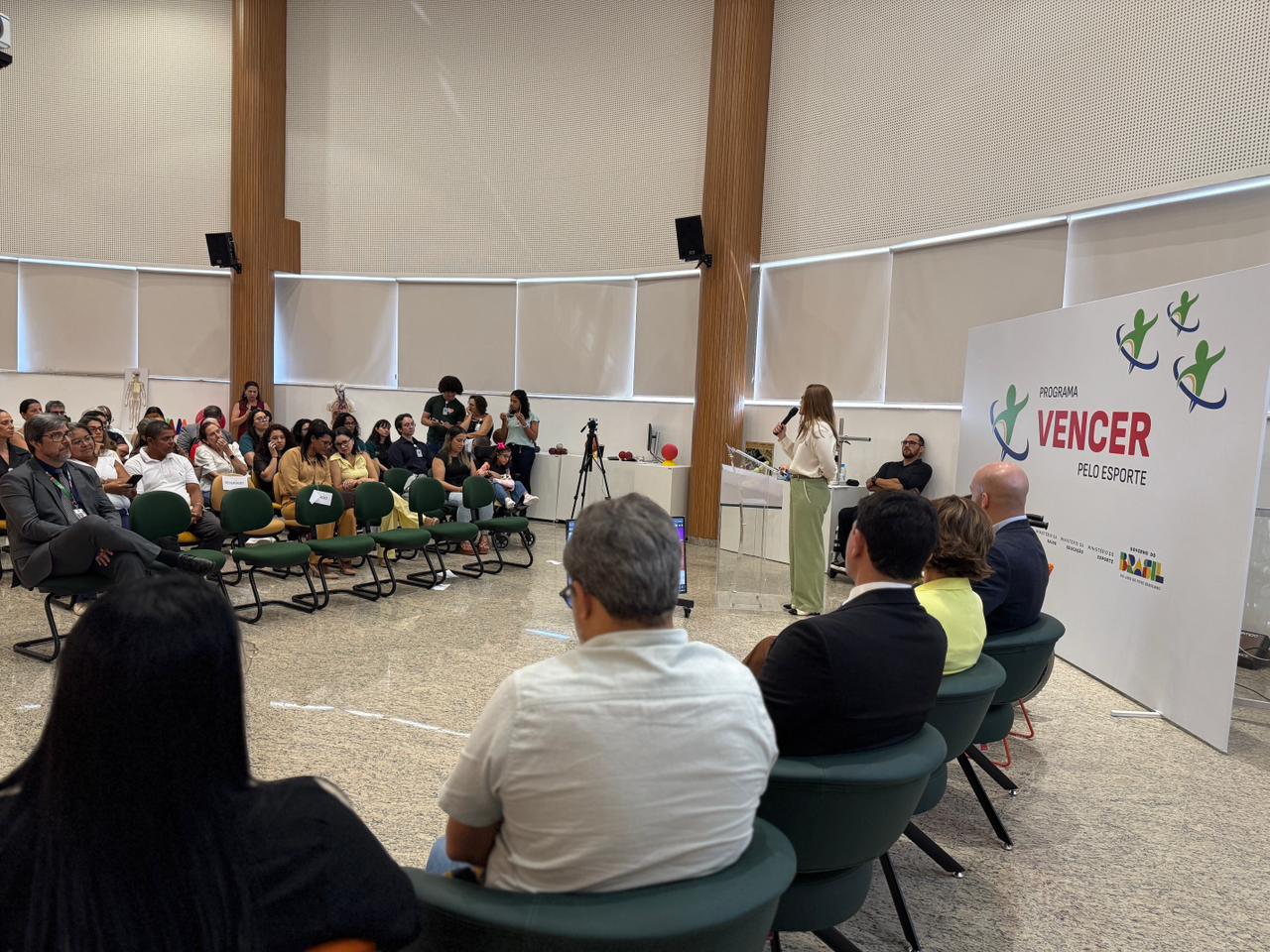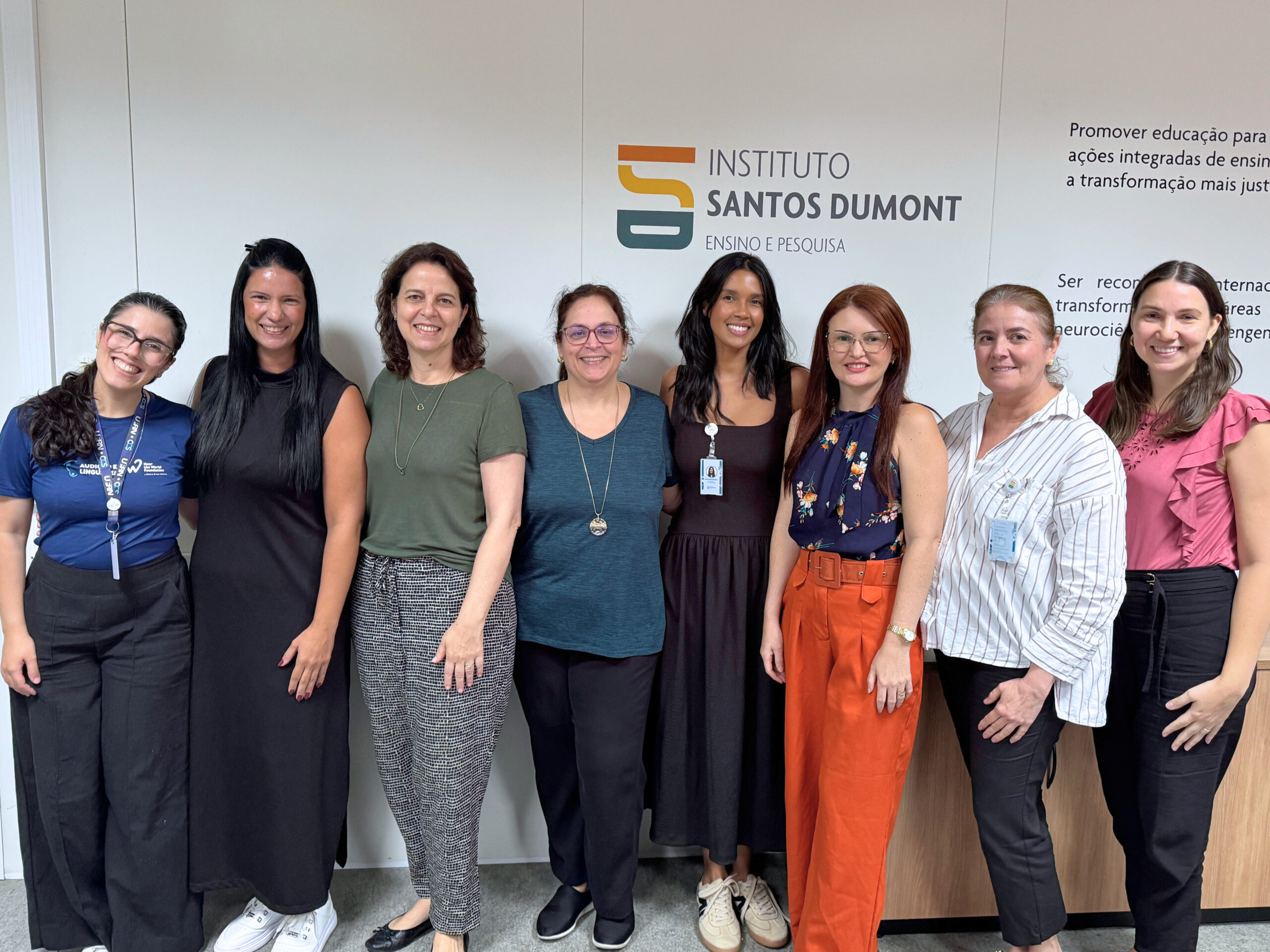



Professionals from the areas of health, education, social assistance and public safety participated, this Tuesday (27), in the II Seminar for Strengthening the Care Network for People in Situations of Sexual Violence, promoted by the Santos Dumont Institute (ISD). The initiative aimed to discuss strategies for confronting abuse and sexual violence, in addition to strengthening policies for welcoming and caring for people affected by these crimes.
The event was held in the auditorium of the Edmond and Lily Safra International Institute of Neuroscience (IIN-ELS), in Macaíba, and was part of the Orange May program – a national awareness campaign on combating sexual violence against children and adolescents, which marks May 18th.
During the seminar, the importance of integrated action between different sectors was reinforced to ensure humanized, agile and effective care. Throughout the discussions, participants shared experiences and reflected on the challenges faced in working directly with people in situations of sexual violence.
“Unfortunately, children and adolescents make up the majority of the population we serve. This group attends schools and uses health services. Therefore, it is essential that the network is prepared, with well-defined flows, to offer support and the best possible care,” highlighted Alexandra Lima, ISD’s social worker preceptor.
During her presentation, Alexandra detailed the Municipal Flow for the Care Network for People in Situations of Sexual Violence in Macaíba, identifying the main reference points for care: the Anita Garibaldi Health Education and Research Center (Anita), the Aluízio Alves UPA and the Alfredo Mesquita Filho Hospital. In addition, she explained the role of the Specialized Social Assistance Reference Centers (CREAS), which offer specialized assistance to families and individuals who are in situations of social risk, such as violence, neglect, mistreatment or discrimination.

The program also included a lecture by ISD pediatrician preceptor Sabrinna Machado, who addressed aspects of medical practice in these cases. The professional presented technical notes from the Ministry of Health that guide the procedures to be adopted, highlighting the importance of humane care, adequate recording of cases and the indication of post-exposure prophylaxis (PEP) to prevent sexually transmitted infections.
Sabrinna warned about the risk of recurrence of aggression and reinforced the importance of recording the details of the person in a situation of violence during the first consultation. “It is essential that the person does not have to repeat their story several times. A sensitive and well-conducted reception is essential to minimize the emotional impacts”, she advised.
The pediatrician also noted that children and adolescents often show signs that something serious has happened. The most common signs include: sudden changes in behavior, aggression, low self-esteem, insecurity, sexual behavior that is incompatible with their age, isolation, school dropout, injuries without a clear explanation, and changes in appetite.

Brazil records increase in reports of sexual violence against children and adolescents
According to a report by the Ministry of Human Rights and Citizenship (MDHC), Brazil recorded a 22.6% increase in reports of crimes against children and adolescents in 2024, totaling almost 290 thousand reports. For delegate Izabel Matos, from the Specialized Police Station for Women in Macaíba, the numbers reflect, in part, a historical underreporting of these crimes.
“The growth we have observed year after year is also the result of greater publicity through reporting channels. In addition to investigations, the Civil Police have been working to raise awareness among the population through actions such as distributing pamphlets, giving talks at schools and holding public events,” he said.

The delegate also highlighted the coordination between security forces, the Judiciary and other institutions in combating these crimes. “It is essential to receive complaints quickly, identify the aggressors and hold them accountable as soon as possible,” she said.
Reports of sexual abuse or violence can be made anonymously by calling the Civil Police hotline 100 or 181. Public participation is essential to protect children and adolescents at risk.
About ISD
The Santos Dumont Institute (ISD) is a Social Organization linked to the Ministry of Education (MEC) and includes the Edmond and Lily Safra International Neuroscience Institute and the Anita Garibaldi Center for Health Education and Research, both in Macaíba. ISD's mission is to promote education for life, forming citizens through integrated teaching, research and extension actions, in addition to contributing to a fairer and more humane transformation of Brazilian social reality.