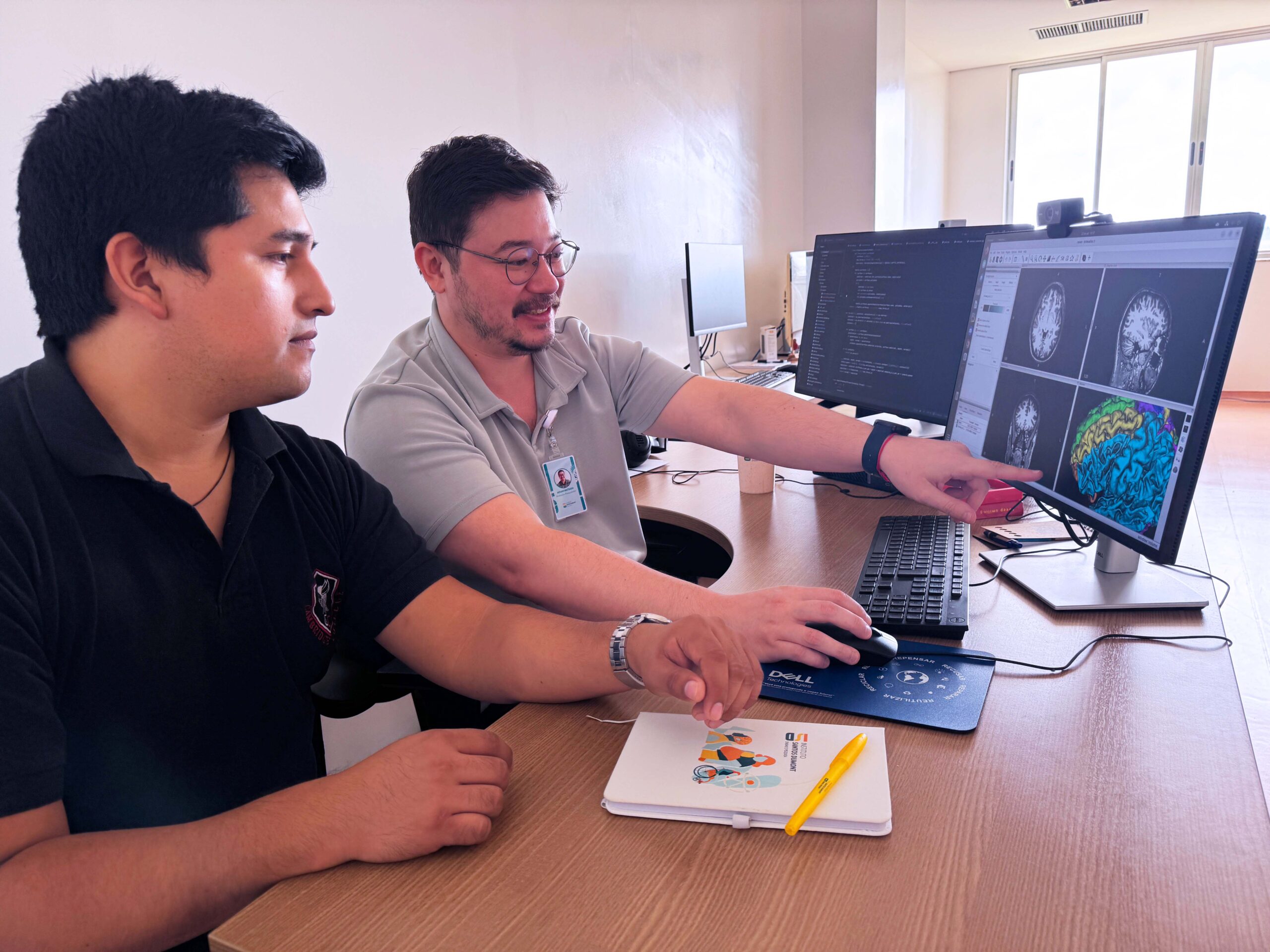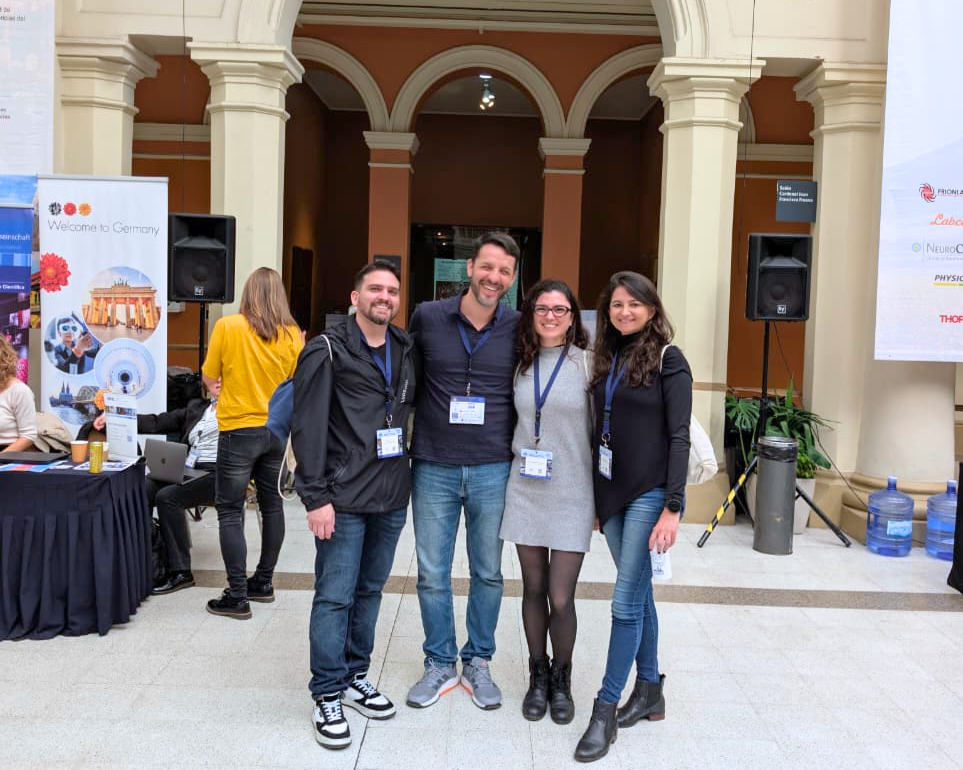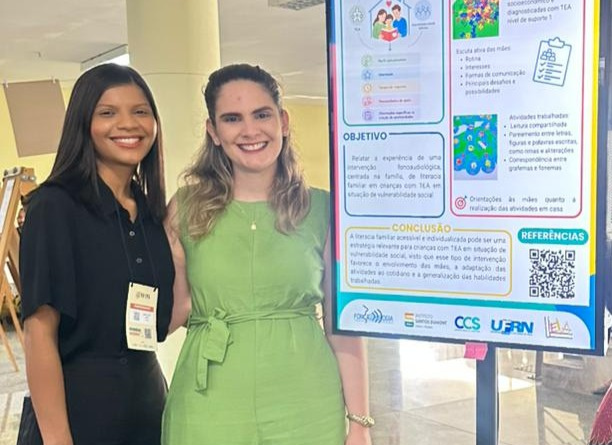



Neuroengineers trained by the Postgraduate Program in Neuroengineering (PPGN) at the Santos Dumont Institute (ISD) have been accepted into national doctoral programs. The new doctoral candidates will continue research initiated in the institution's laboratories in Macaíba, addressing topics in neuromodulation, computational neuroscience, and rehabilitation.
The four approved graduates come from diverse backgrounds and have developed interdisciplinary studies at ISD with objectives ranging from proposing clinical solutions to strengthening the scientific basis for understanding brain function.
Psychologist Laudeíres Gadelha, supervised at ISD by researcher Andressa Radiske, has been accepted into the doctoral program in Physiological Sciences at the Federal University of Rio Grande do Norte (UFRN). Her research will investigate, at a pre-clinical level using animal models, unconventional interventions for the treatment of depression, focusing on strategies capable of modulating brain patterns associated with the disorder.
“The ISD was where my scientific journey truly began to take shape, especially in areas involving mental health and behavior. Without a doubt, the experiences and lessons I learned at the Institute played an essential role in the choices I made for my doctorate,” says Laudeíres.
Also a psychologist, Wíviny Martins was accepted into the Postgraduate Program in Health Sciences (PPGCSA) at UFRN. In her doctoral studies, she will continue the line of research initiated in her master's degree under the guidance of researcher Fabrício Brasil, expanding a clinical trial on the use of neuromodulation in the treatment of Major Depressive Disorder (MDD). The research's distinguishing feature lies in the use of a pioneering electrode array for transcutaneous spinal cord stimulation with direct current, an innovative approach in the context of MDD as a primary outcome.
“The greatest contribution I take from the Institute is, without a doubt, the daily experience with interdisciplinarity and multi-professional work. The constant exchange of knowledge between diverse areas, in a continuous dialogue, gave me the maturity and systemic vision required to conduct research with quality and ethics,” highlights Wíviny.
In the field of computational neuroscience, biomedical engineer Joana Laabs, supervised by Professor Carolina Gonzalez, was accepted into the Postgraduate Program in Bioinformatics (PPg-Bioinfo) at UFRN. Her research will investigate the microcircuits of the hippocampus, a brain region fundamental to the formation of memories, focusing on a specific type of cell responsible for regulating and balancing the activity of neurons in this area. The study focuses specifically on a region of the hippocampus considered crucial in the processes of storing and retrieving episodic memories, linked to previously lived experiences and events.
“The ISD provided me with a solid foundation in understanding the mechanisms involved in memory and cognition. During my master's degree, I had the opportunity to learn different surgical techniques, experimental methods, and neural signal analysis that will be fundamental to the development of my doctoral project,” reports Joana.
Within the scope of neuroengineering applied to health, physiotherapist Lucivanio Varela, supervised at ISD by researcher Caroline Cunha, is entering the doctoral program in Physiotherapy (PPGFST) at UFRN, in the research line of Assessment and Intervention in the Musculoskeletal System. The project, still in the definition phase, will focus on the development of research related to neuromuscular electrical stimulation applied to rehabilitation.
“One of the distinguishing features of the ISD program is precisely the integration between technology and clinical practice, which allows for a better understanding of how technological resources can be applied in the rehabilitation process. The master's degree also contributed to the development of scientific thinking and data analysis, which will certainly help in the development of activities during the doctoral studies,” concludes Lucivanio.
About ISD
The Santos Dumont Institute (ISD) is a Social Organization of the Federal Executive Branch, supervised by the Ministry of Education, with the intervention of the Ministry of Sport. It encompasses the Edmond and Lily Safra International Institute of Neuroscience and the Anita Garibaldi Center for Education and Research in Health, both located in Macaíba. The ISD's mission is to promote education for life, forming citizens through integrated teaching, research, and outreach activities, as well as contributing to a more just and humane transformation of Brazilian social reality.