


Regions of the human brain responsible for walking can be exercised and activated even in people who have suffered complete spinal cord injuries. This is what scientists from the Santos Dumont Institute (ISD), a social organization linked to the Ministry of Education, reveal in a study that combines mental training and brain activity analysis (neurofeedback) with robotic technology aimed at physical rehabilitation.
Published in the international scientific journal “IEEE Transactions on Human-Machine Systems”, the study aims to investigate whether the use of neurofeedback can increase the user's ability and skill in mentally practicing the body movements involved in a long walk.
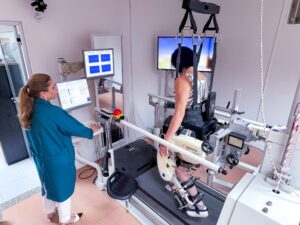
However, unlike other neurofeedback systems, this one was specifically developed to distinguish what is the effect of the movement's imagination from what comes only from the leg movement caused by robotic walking training with the Lokomat, a robotic system that suspends the user on a treadmill and performs the movement of the lower limbs. Thus, it was possible to understand more clearly how the neurofeedback-based motor imagery, in itself, may contribute to the reorganization of cortical rhythms after spinal cord injury
In practical terms, researchers subjected research participants with spinal cord injuries to robotic training while neurofeedback taught the user to modulate their brain rhythms differently than the cortical modulation induced solely by passive walking training on the Lokomat. "The tested intervention went beyond what passive training can provide, focusing on how the brain learned to activate patterns similar to those of active movement," explains research professor Caroline Cunha do Espírito Santo, who participated in the study.
She also adds that when the same intervention was tested offering a neurofeedback false, there was no difference in brain activity during the imagery of walking compared to movement on the Lokomat, indicating a lack of mental practice.
These findings show that neurofeedback is crucial for engaging cortical motor areas during motor imagery of walking after complete spinal cord injury, surpassing the effectiveness of verbal commands.
The published study is part of one of the research projects of the ISD Postgraduate Program in Neuroengineering (PPGN/ISD), which has as one of its matrices the development of innovative technologies to solve challenges in the rehabilitation of neurological diseases and conditions.
Physiotherapist and neuroengineer Ericka da Silva Serafini, a PPGN graduate, authored the article under the supervision of Professor Caroline and Professor Denis Delisle-Rodríguez. According to the researchers, the study brings the use of scientific techniques such as electroencephalography (EEG) and neurofeedback closer to clinical practice.
“This work shows that even individuals without voluntary movement can present modulation of cortical activity when given structured tasks and feedback adequate. This reinforces the idea that the brain can be trained even in the absence of motor function, opening the way for personalized strategies based on assistive technologies,” he explains.

In addition to Ericka, Cristian Guerrero-Mendez, Douglas Dunga, Teodiano Bastos-Filho, and ISD research professor André de Azevedo Dantas also participated in the study. The article can be accessed at: https://ieeexplore.ieee.org/abstract/document/11163517.
According to the scientists, the way the participants' brains responded shows the potential for learning and neural adaptation. This reinforces the possibility of the method having future clinical applications. Because the measurements used are reliable, the results gain strength and indicate that neurofeedback can be incorporated into rehabilitation programs that stimulate brain plasticity.
Interdisciplinary team
The team involved in the scientific work includes neuroscientists, health professionals, and engineers, an interdisciplinary approach that is part of the ISD's approach in teaching, research, and outreach.
"Interdisciplinarity is essential because the rehabilitation of people with spinal cord injuries involves knowledge from multiple fields. On this team, each member dedicated themselves to designing and planning rehabilitation sessions, analyzing and interpreting brain signals, and developing and adjusting the neurofeedback system. This collaboration ensures that each stage of the study is considered in an integrated manner, enabling advances that would not be possible in a single field," says Professor Caroline.
About ISD
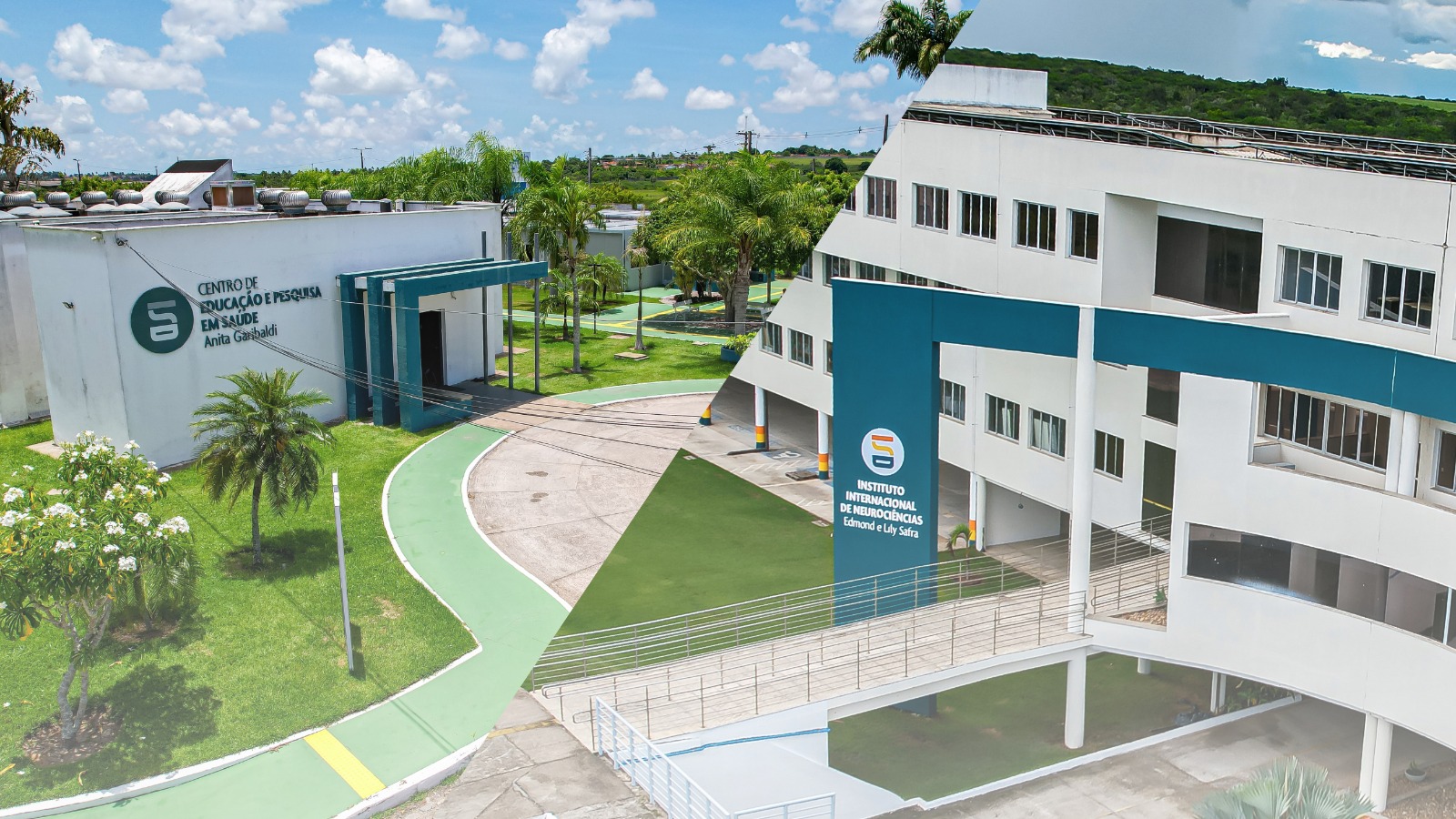
The Santos Dumont Institute is a Social Organization linked to the Ministry of Education (MEC) and includes the Edmond and Lily Safra International Neuroscience Institute and the Anita Garibaldi Health Education and Research Center, both in Macaíba. ISD's mission is to promote education for life, forming citizens through integrated teaching, research and extension actions, in addition to contributing to a fairer and more humane transformation of Brazilian social reality.