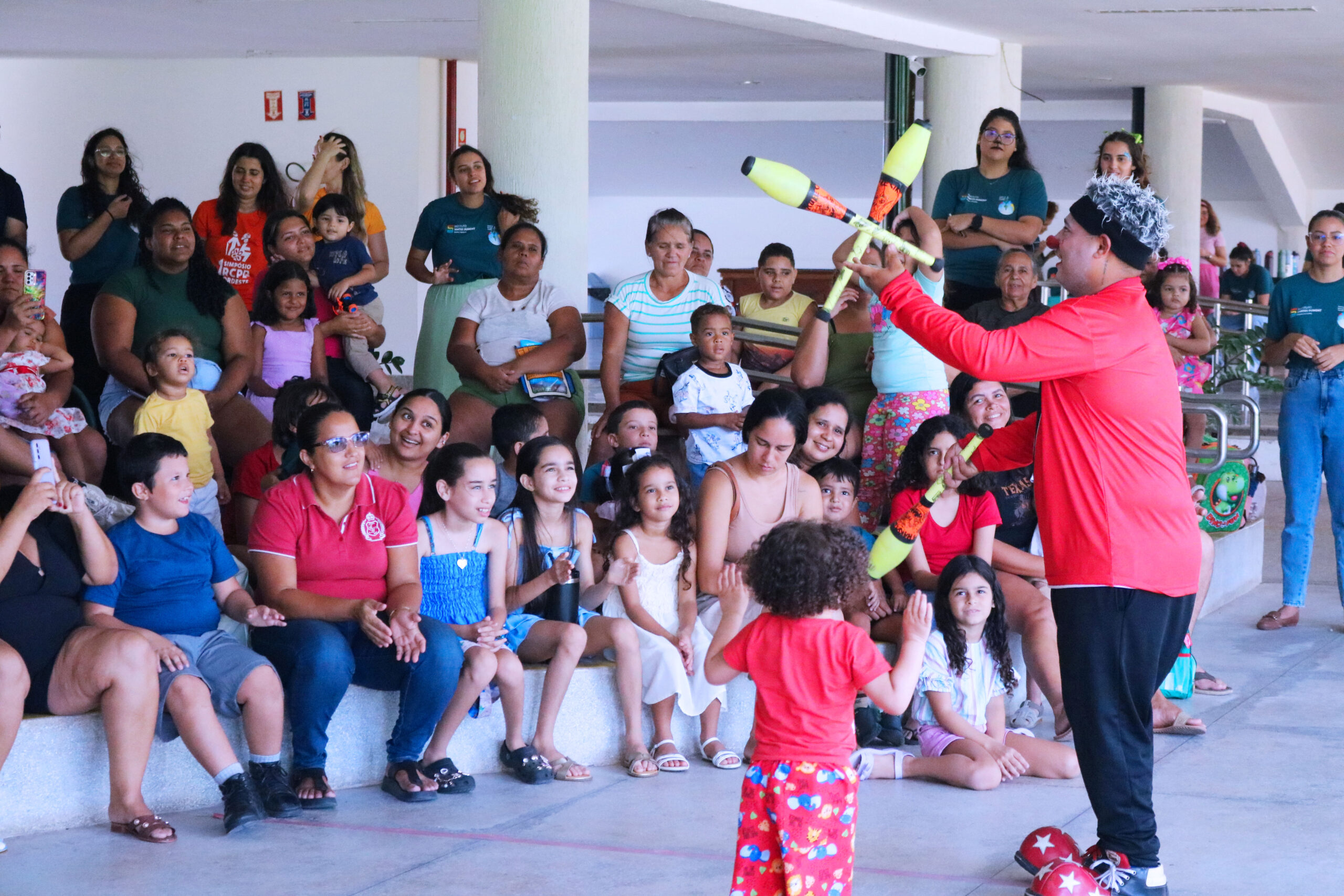


Anyone approaching the Chapel of Our Lady of Aparecida, in the Quilombola Community of Capoeiras, in Macaíba/RN, was warmly greeted by the sound of children's laughter, curious glances, and giant soap bubbles gliding through the air. There, in that sacred space of unity for the village, time seemed to slow down to give way to a rescue as simple as it was urgent: the right to be a child.
This was the essence of the action promoted last Friday (29) by the Santos Dumont Institute (ISD) in partnership with ChildFund Brazil, an international organization recognized for safeguarding and guaranteeing the rights of children and adolescents. With the support of the Pastoral da Criança e Adolescente, the activity transformed the Capoeiras chapel into a laboratory of playful parenting and socio-emotional development.
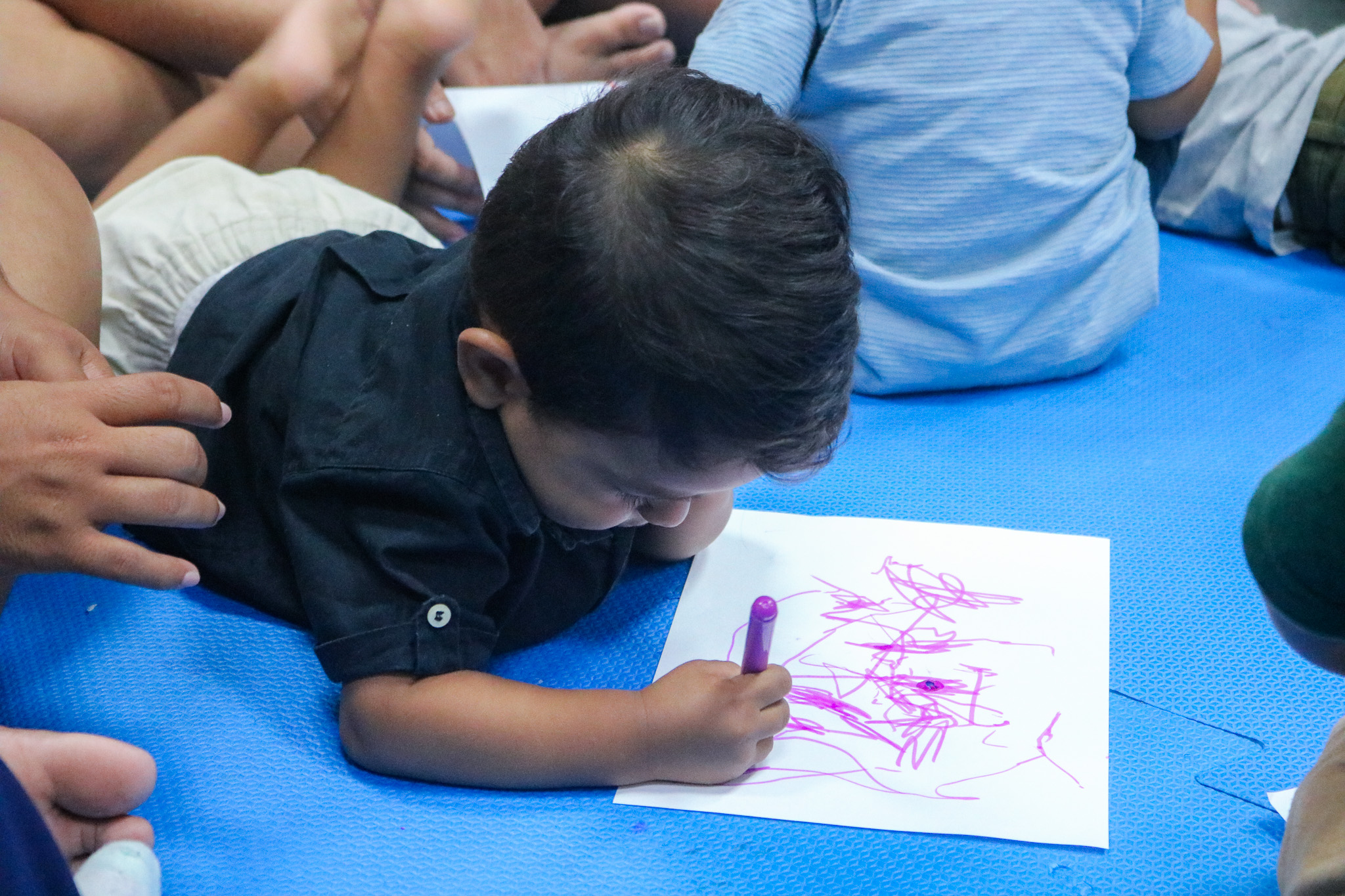
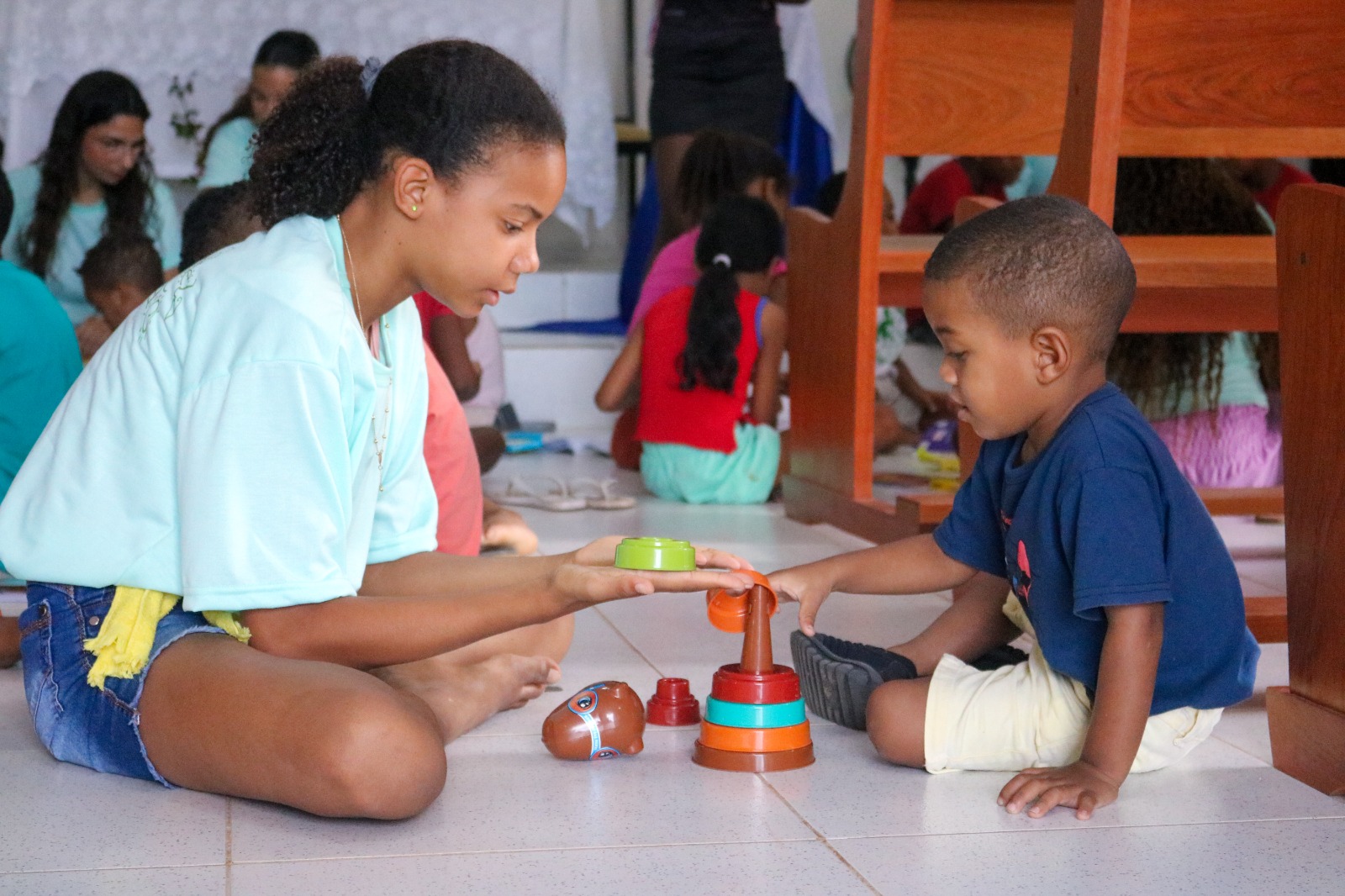
On one side of the space, geometric blocks, coloring books, modeling clay, and free painting came to life in the hands of boys and girls. On the other, craft workshops transformed recyclable and low-cost materials into objects of fun. Under the supervision of ISD residents and preceptors, the children discovered the magic of playing with the yo-yo, the tin can telephone made from plastic cups, foam horses, and soap bubbles blown through straws.
Engaging with extremely simple games proved that playfulness doesn't require technology, but rather presence and commitment. “Our community has many old games that we aren't sharing with our children because we think they won't find them interesting. What we've seen is that when we play these games, they find them interesting and participate. Furthermore, it helps to get them away from screens,” observed Renata Maria, representative of the Pastoral da Criança (Children's Pastoral).
Strengthening parenting
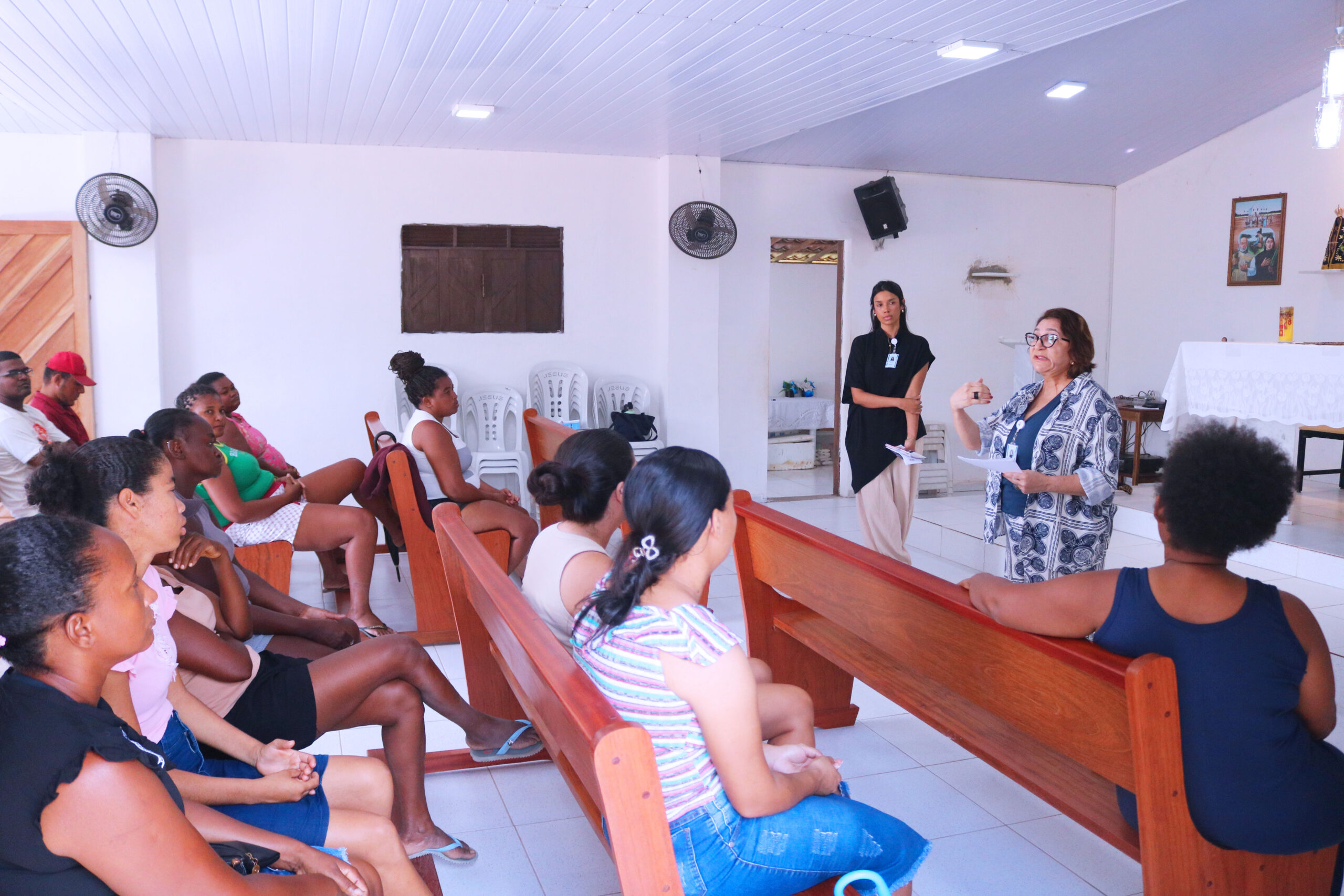
While the children explored textures, colors, and shapes, another activity took place outside the chapel. Seated in a circle, mothers and guardians participated in a conversation led by ISD health professionals.
The central theme was playful parenting, aiming to raise awareness among adults about the invaluable importance of setting aside exclusive time to play with their children. The activity sought to demonstrate how this habit directly strengthens family bonds and promotes healthy neurodevelopment.
For many families, the moment served as a wake-up call to a worrying contemporary reality: the isolation caused by the early and excessive use of electronic devices.
“I found today’s activity very important because these are healthy games that get children away from screens. These are games that will encourage children to play with activities that are good for the body and mind,” said Marília Santos, mother of little Luana Esther, 6 years old, who actively participated in each workshop.
Ancestry and continuity
More than just a morning of isolated entertainment, the event sought to respect the roots and cultural identity of Capoeiras. The quilombola community, rich in oral traditions and memories, saw an opportunity to reflect its own past to ensure the future of new generations.
“I think these activities are extremely important, especially because nowadays we have few moments like this: children playing with their parents. In the mothers' discussion group, we talked about how this habit has been lost over time and how important it is to recover it,” reflected Renata Maria, representative of the Pastoral da Criança (Children's Pastoral).
All the toys purchased and materials built and used during the event were donated to the community. According to Renata Maria, these educational resources will be integrated into the Pastoral's regular activities, held at least once a month, with the aim of continuously monitoring and stimulating the development of local children.
The ISD operates continuously in the Capoeiras area, offering ongoing support ranging from prenatal care for pregnant women to early childhood care. “Talking about the ISD is talking about a rich history in Capoeiras. We are very grateful for the Institute's existence and for it being our partner,” concluded Renata.
About ISD
The Santos Dumont Institute (ISD) is a Social Organization of the Federal Executive Branch, supervised by the Ministry of Education, with the intervention of the Ministry of Sport. It encompasses the Edmond and Lily Safra International Institute of Neuroscience and the Anita Garibaldi Center for Education and Research in Health, both located in Macaíba. The ISD's mission is to promote education for life, forming citizens through integrated teaching, research, and outreach activities, as well as contributing to a more just and humane transformation of Brazilian social reality.