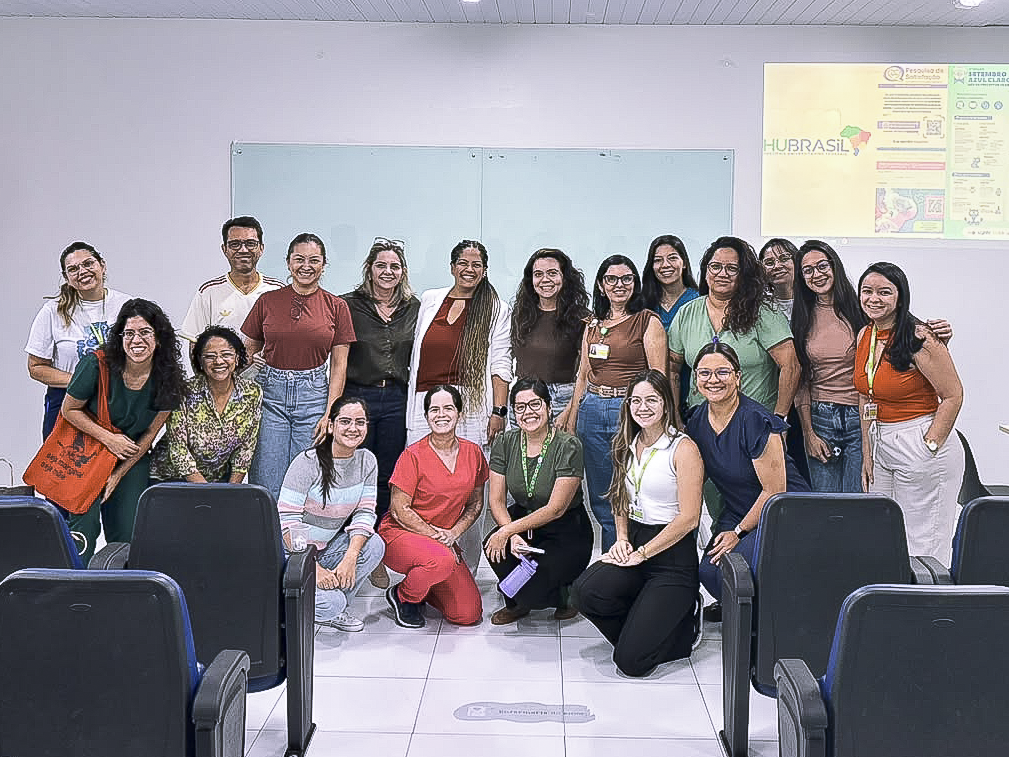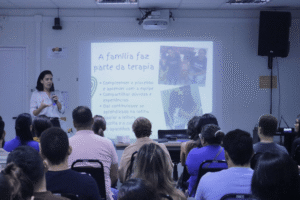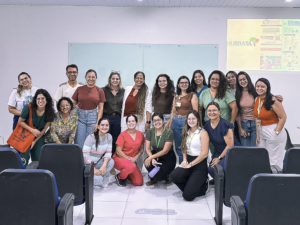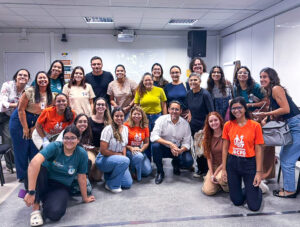


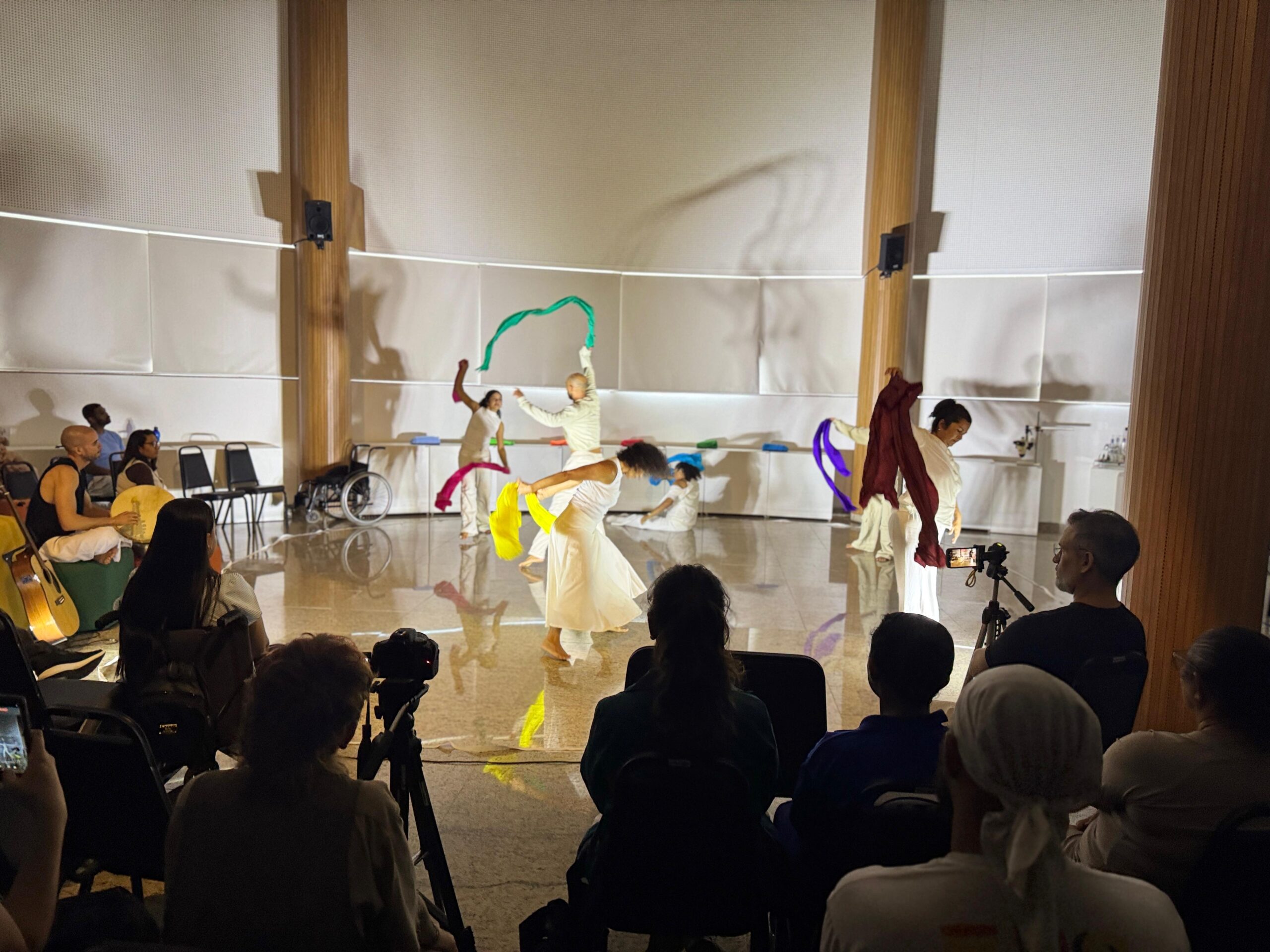
Last Friday (10), the Santos Dumont Institute (ISD) held the Pause Show, a cultural presentation that marked the end of the Dance Therapy extension project activities. The event took place at the Edmond and Lily Safra International Institute of Neuroscience (IIN-ELS), an ISD unit in Macaíba.
The result of a collective process built over meetings held throughout 2026, the performance brought together participants, family members, a multidisciplinary team, and ISD students in an experience that integrated art, care, and body expression.
Throughout the workshop, participants were invited to explore different possibilities of expression through dance, respecting the uniqueness of each body. The presentation highlighted the potential of dance therapy as an integrative practice capable of promoting health, well-being, and social participation.
“Dance therapy is a modality with enormous potential for rehabilitation in all aspects: motor, psychological, social, but above all, body image, which I see as one of the most difficult to convey to a person with a disability. Here, gesture and intention merge with free movement, which allows for an experience without boundaries regarding what is expected of a body, simply allowing it to be,” emphasizes the physiatrist preceptor at ISD, Ana Laura Ferratto.
The artistic team for the show included people with and without disabilities. Participants in the performance included Sueli Machado, who is also a user of the ISD (Intelligent Visual System), Bartira Seixas, Milena Silva, and Letícia Sanchez, with a technical team comprised of Jefferson Arruda, dancer and choreographer, and Ana Cláudia Viana, assistant director and dance teacher.
Dance therapy at ISD
Dance therapy is a therapeutic modality developed by María Fux, an Argentinian choreographer, based on a non-choreographed dance expression, led by a choreographer, using words, shapes, objects, colors, sounds, and music. The method has already included people with disabilities of various categories, such as intellectual, hearing, and total visual impairment.
The Dance Therapy outreach project at the Santos Dumont Institute was created with the goal of promoting encounters focused on experimenting with movement as a resource for expression, care, and health promotion. During the first semester of 2026, the method was used by dance and health professionals with one person with a spinal cord injury and two people with hearing loss.
The initiative was led by three ISD professionals: medical preceptors Ana Laura Ferratto, a physiatrist, and Priscila Farias, an otolaryngologist; and research support technician João Rodrigo Oliveira, a physiotherapist and neuroengineer.
About ISD
The Santos Dumont Institute (ISD) is a Social Organization of the Federal Executive Branch, supervised by the Ministry of Education, with the intervention of the Ministry of Sport. It encompasses the Edmond and Lily Safra International Institute of Neuroscience and the Anita Garibaldi Center for Education and Research in Health, both located in Macaíba. The ISD's mission is to promote education for life, forming citizens through integrated teaching, research, and outreach activities, as well as contributing to a more just and humane transformation of Brazilian social reality.