

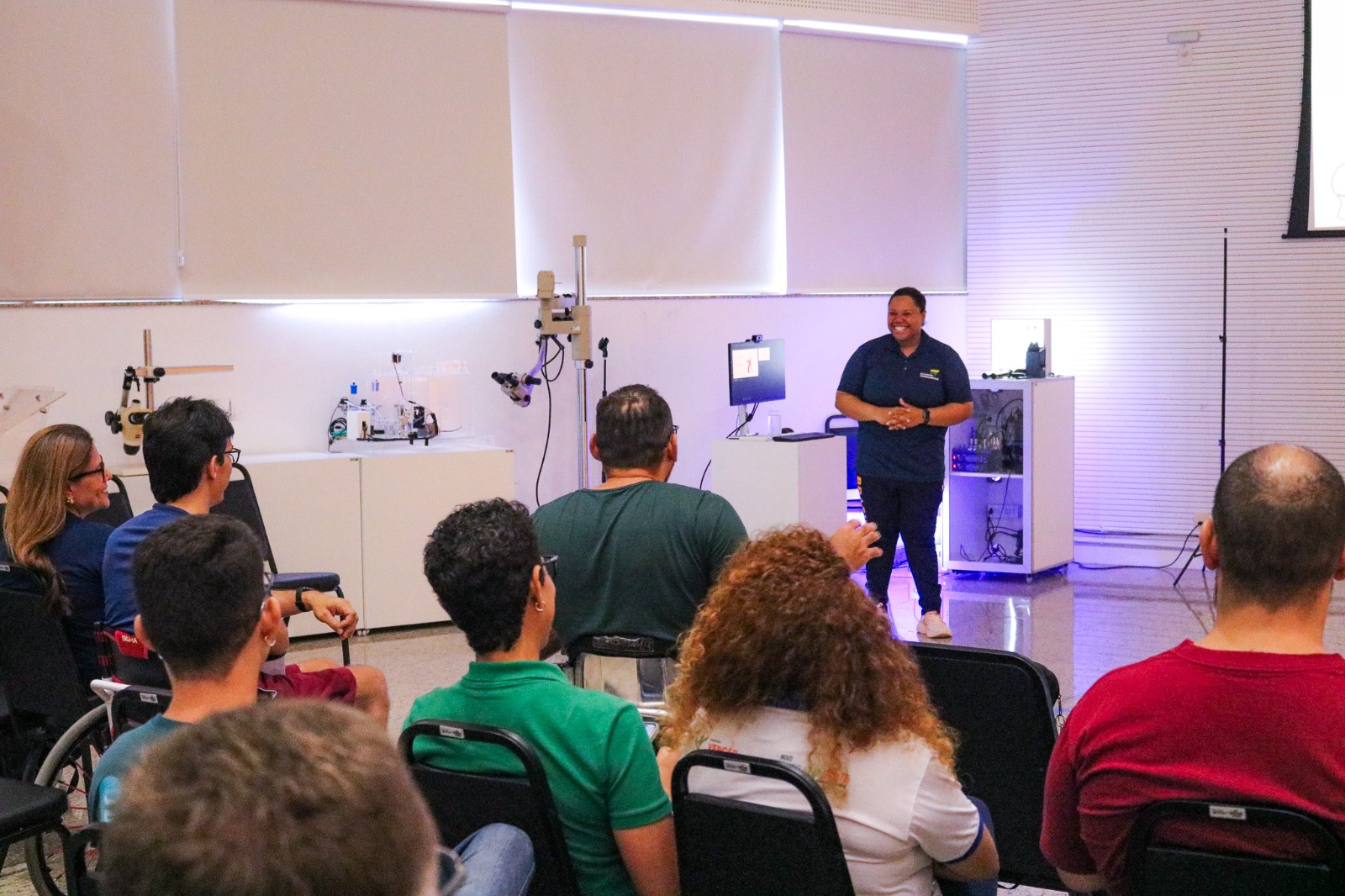
The “IV Paralympic Sports Seminar”, promoted by the Brazilian Paralympic Committee (CPB) in partnership with the Santos Dumont Institute (ISD), took place on October 27th and 28th, bringing together students, health professionals, athletes and family members in theoretical and practical activities focused on adapted sports.
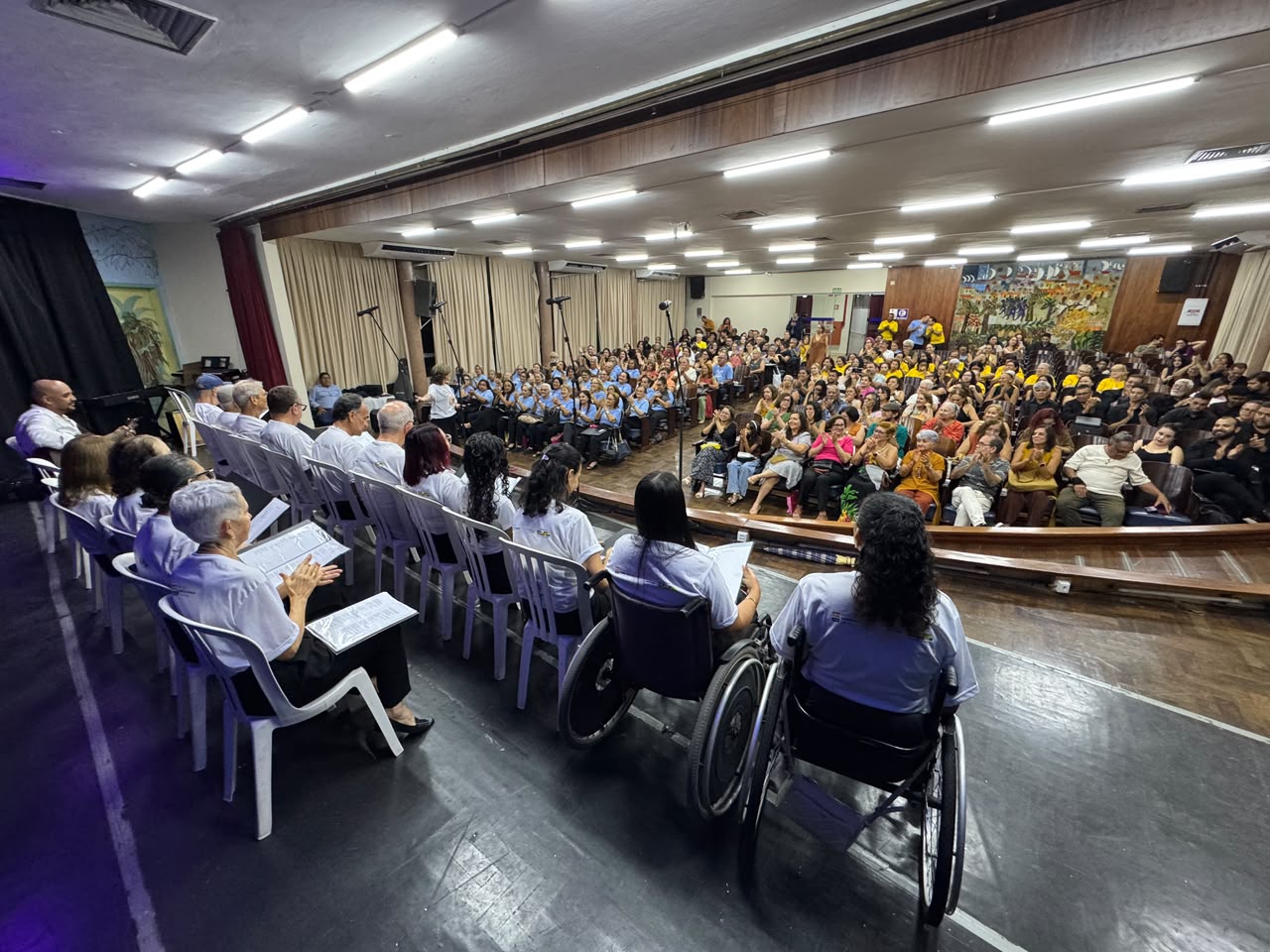
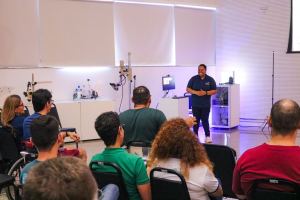
The event opened at the Central Campus of the Federal University of Rio Grande do Norte (UFRN) in Natal. The inauguration featured a lecture given by Tibério Maribondo, a professor, physical education professional, and supervisor of the Paralympic Reference Centers in Natal and Macaíba.
In addition, Professor and researcher André Schliemann, a specialist in Inclusive Physical Education, participated in the opening ceremony, lecturing on the possibilities of including people with intellectual disabilities and Autism Spectrum Disorder (ASD) in Paralympic sports.
The second day of the event was held at the Edmond and Lily Safra International Institute of Neuroscience (IIN-ELS), an ISD unit in Macaíba. The program continued with a theoretical and practical class with Professor Jéssica Bispo de Souza on table tennis in the context of people with disabilities.
Those present were able to participate in the entire sports process, from preparation, with reflex, posture and movement drills, to the practice of volleyball and table tennis. Participants included preceptors, residents and interns from ISD, users of health services and family members, the coordinator of the ISD/Macaíba Paralympic Reference Center, Fabíola Campos, and Professor Tibério Maribondo.
About ISD
The Santos Dumont Institute (ISD) is a Social Organization of the Federal Executive Branch, supervised by the Ministry of Education, with the intervention of the Ministry of Sport. It encompasses the Edmond and Lily Safra International Institute of Neuroscience and the Anita Garibaldi Center for Education and Research in Health, both located in Macaíba. The ISD's mission is to promote education for life, forming citizens through integrated teaching, research, and outreach activities, as well as contributing to a more just and humane transformation of Brazilian social reality.