


Renata Moura and Kamila Tuenia
reporters
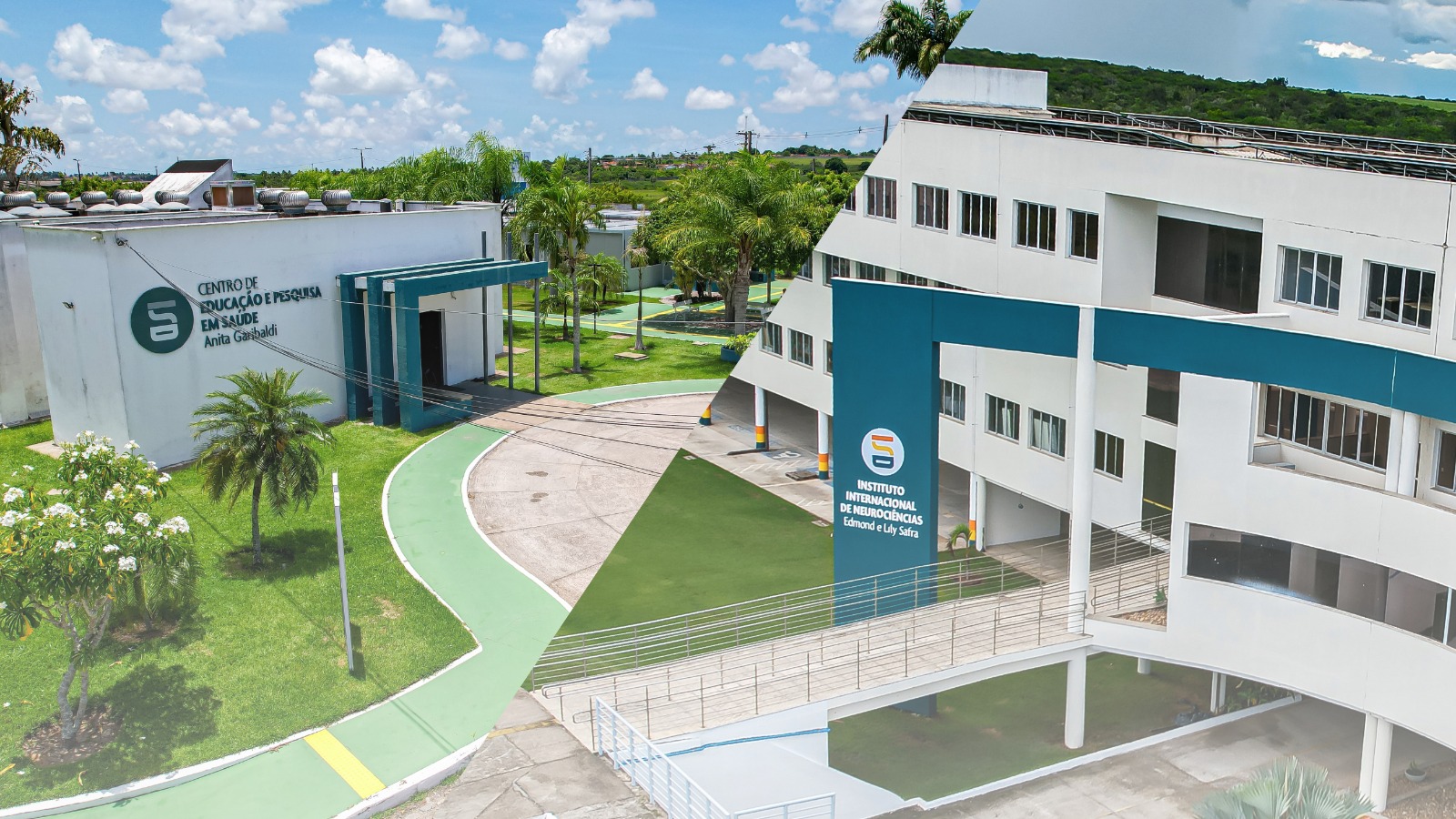
The Santos Dumont Institute (ISD) received this Thursday (05) representatives of the state government, entities from the productive sector and companies from the energy and construction materials industry sectors in a visit that included the Edmond and Lily Safra International Institute of Neuroscience (IIN-ELS) and the future facilities of the Augusto Severo Science and Technology Park (PAX), a project neighboring the IIN-ELS that has the ISD among its founders.
The park will operate in the area known as the Brain Campus, in Macaíba (RN), in a building of the Federal University of Rio Grande do Norte (UFRN) next to the Edmond and Lily Safra International Institute of Neurosciences. The expectation is that calls for proposals for the construction work required for the new project will be launched next year and that the first phase of operations will begin in 2022.
“A major strength of PAX is its ability to articulate and bring together different social actors from Rio Grande do Norte, aligned with the strategies for making the project viable, within the time required for a project of this magnitude. To achieve this, having the main structure ready is another important strength,” said ISD general director Reginaldo Freitas Júnior.
According to him, the occupation of the Park strengthens the work already carried out by the ISD in technology and health and should bring the state's research institutions and the productive sector closer together.
See below a photo gallery of the visit to the building where the Science Park will operate and the Edmond and Lily Safra International Institute of Neuroscience.


Investments
During this Thursday's visit, PAX and IIN-ELS received potential investors from the companies SIMM Soluções, Texas Controls and Brazil Chemical and Industrial Mining (BQMIL). The possibility of operating and investing in the park is considered 'interesting' and is under analysis, according to José Perales, president of SIMM Soluções, a company in the area of engineering and consulting for wind and solar energy.
“We have several segments within our company, we work with construction, engineering and development of new solutions and part of our activities 'match' the project and the objective that we know here”, he stated.
Implantation
The Augusto Severo Science and Technology Park (PAX) began to be designed in 2018 in Rio Grande do Norte, through the articulation of several partners, and will require R$75.26 million in investments. The resources are planned for five implementation stages, distributed between 2022 and 2040. However, according to Olavo Bueno, coordinator of Industrial Development at the State Secretariat for Economic Development, PAX should be ready in 2021.
“The first stage we are working on is for the park to be ready in 2021, when tenders will be issued for final works, so that it can begin operating in 2022. The companies are initially coming to study the possibility of operating here and gradually occupying all this space,” said Bueno.
Bob Hodgson, the consultant responsible for the World Bank's technical assessment of the Park for possible financing, is expected to complete the report he is working on this month after a series of meetings with the institutions involved in the project. The expectation is that Of the total amount to be invested, approximately R$1.8 million, or R$10.621 million, will be released by the bank. The remainder is expected to come from public financing and private partnerships.
“They are evaluating our proposal and will make suggestions for improving the project. They will provide an opinion on the innovation ecosystem that will validate the proposal as a very good opportunity to attract investment from the State Government through the World Bank. As soon as we have these resources, we will begin work to improve the infrastructure,” said the director of the UFRN Innovation Agency (AGIR/UFRN), Daniel Pontes, who represented UFRN advisor and Park coordinator Ângela Paiva during the visit.
“Even though we won’t have the building fully operational in 2021, from 2020 onwards we started activities to bring the Park closer to businesspeople and we are already starting actions so that the external public is also aware of the existence of this project”, he says.
Other businesspeople from Brazil and abroad have already seen the potential of PAX and, according to Pontes, the prospecting visits have signaled a promising future.
“In all these moments where we bring businesspeople, we bring opinion-makers to visit the park, we have received good impressions and positive opinions regarding the structure, in addition to future intentions of collaboration and participation in the project”, reports Daniel Pontes.
Also participating in the visit this Thursday were the administrative director of ISD, Jovan Gadioli dos Santos, the manager of IIN-ELS and research coordinator of the Institute, Edgard Morya, in addition to representatives of the Support Service for Micro and Small Businesses of Rio Grande do Norte (Sebrae/RN), the Foundation for Research Support of RN (Fapern) and the State Secretariat for Economic Development, founding institutions of the Science Park project, alongside UFRN, the Santos Dumont Institute, the Government of RN, Fecomércio, Fiern, UERN, IFRN and the municipal governments of Parnamirim, Macaíba, São Gonçalo do Amarante and Natal.
The main objective of PAX is to generate more social and economic development, accelerated by research and innovation.