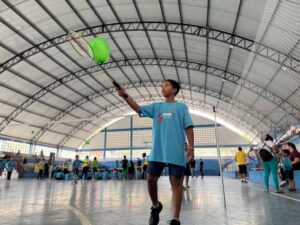


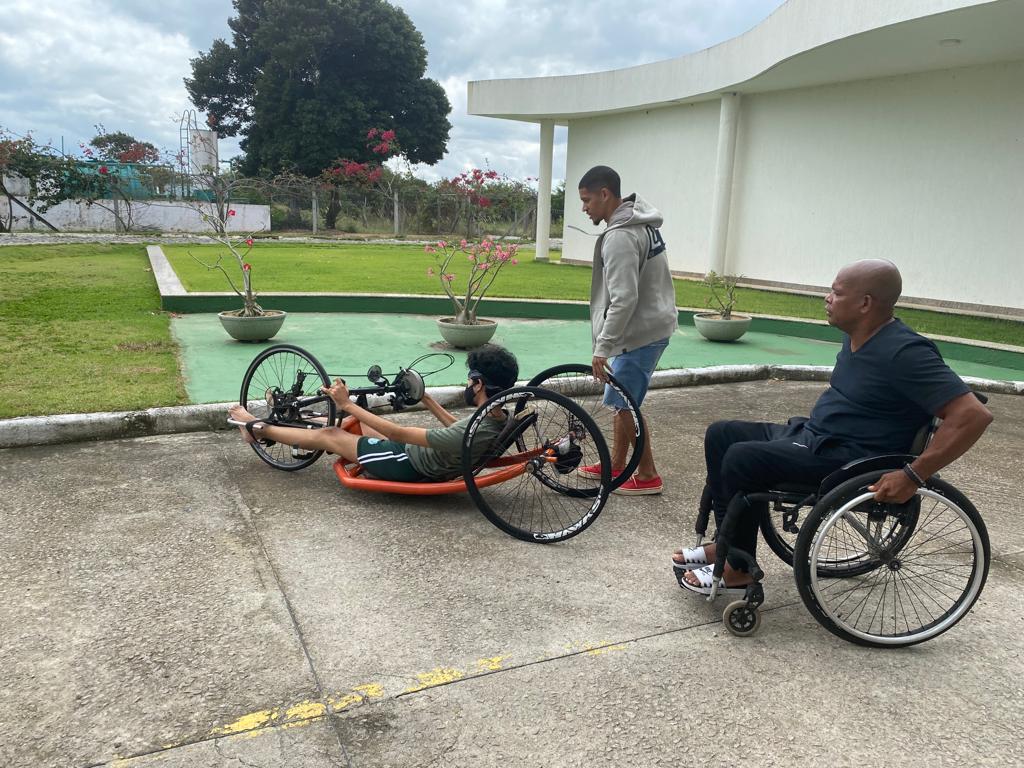
Promoting social inclusion, self-esteem and the inclusion of exercise in the routine: these are some of the benefits associated with parasports, a topic that was discussed on Wednesday (11/24) by patients from the Adult Spinal Cord Injury care line at the Santos Dumont Institute (ISD), at the event “Parasports as a possibility for social inclusion and personal fulfillment”. Organized by residents of the Multiprofessional Residency Program in Health Care for People with Disabilities (RESPCD) at ISD, the activity was attended by Paralympic athletes, such as medal-winning swimmer Joana Neves, and members of the Friends of the Physically Disabled Society (SADEF/RN). In addition to promoting a discussion group that allowed integration and the exchange of experiences about the participation of people with disabilities in sports, those present were able to participate in adapted sports activities, such as handcycling and table tennis.
RESPCD's resident psychologist, Sarah Oliveira, and multidisciplinary physiotherapist preceptor Natália Barbosa, who are part of the event's organizing team, explain that the initiative arose from requests from patients themselves in the Adult Spinal Cord Injury care line, for more moments of interaction and meetings on topics relevant to people with disabilities in general.
One of those present was Gustavo Henrique da Silva, 29, a CER ISD user since 2020. Through the rehabilitation developed at ISD, Gustavo practices cycling on a handbike, an adapted bicycle that works with the pedals on the hands instead of the feet. Gustavo, who has already tried other physical activities, such as weight training and athletics, says that the activity is useful for establishing a routine and incorporating movement into his daily life. He currently cycles an average of 20km per day.
“Sports encompass many other things. There are dreams that people have talked about here, such as traveling, visiting other places, and through sports, they have been able to take that extra step. These moments are special for us, because of the issue of inclusion in sports and social inclusion as well,” he says.
Incorporating more physical activities and sports into his routine has become one of Gustavo's goals, and he is thinking about trying out other sports, such as weightlifting. He says that he started this practice with the encouragement of his mother, who encouraged him not to just stay at home.
Family support was mentioned in more than one statement shared during the meeting, reinforcing the importance of family participation in the rehabilitation and social inclusion processes of people with disabilities. Many of those present had questioned, during their lives, whether they would one day be able to be included in everyday practices. In many cases, there was no knowledge that it was possible for a person with disabilities to be an athlete or take part in any sport. To change this reality, family participation was essential, in the form of encouragement and joint search for information.
According to tutor Natália Barbosa, the family often plays a significant role in motivating people with disabilities, reinforcing integration initiatives as fundamental in showing the possibilities of participation in society.
This is also what Joana Neves, a Paralympic medalist in swimming, one of the people who shared her experience at the event, said. Throughout her life, Joana has faced difficulties in which support has proven to be essential. For this reason, she considers the role of family encouragement in the integration of people with disabilities into sports and society to be essential.
“I say it a lot: don’t leave your child at home. When the family hides a person with a disability, they feel like a burden. Be the first person to support your child, starting at home, because when you have the support of your family, you can do anything else,” she says.
The theme chosen for the event, parasports, is already being worked on by the institution through adapted sports activities carried out in Macaíba, within the CER ISD Parasports Care Line. Resident Sarah Oliveira explains that the activity makes it possible to see sports practice in the inclusion and social participation of this group. “The idea was to bring in athletes who are already involved and also the practical part, to bring this notion of what parasports is all about,” she adds.
Text: Naomi Lamarck/ Ascom – ISD
Photograph: Naomi Lamarck / Ascom – ISD
Communication Office
comunicacao@isd.org.br
(84) 99416-1880
Santos Dumont Institute (ISD)
It is a Social Organization linked to the Ministry of Education (MEC) and includes the Edmond and Lily Safra International Institute of Neurosciences and the Anita Garibaldi Health Education and Research Center, both in Macaíba. ISD's mission is to promote education for life, forming citizens through integrated teaching, research and extension actions, in addition to contributing to a fairer and more humane transformation of Brazilian social reality.