

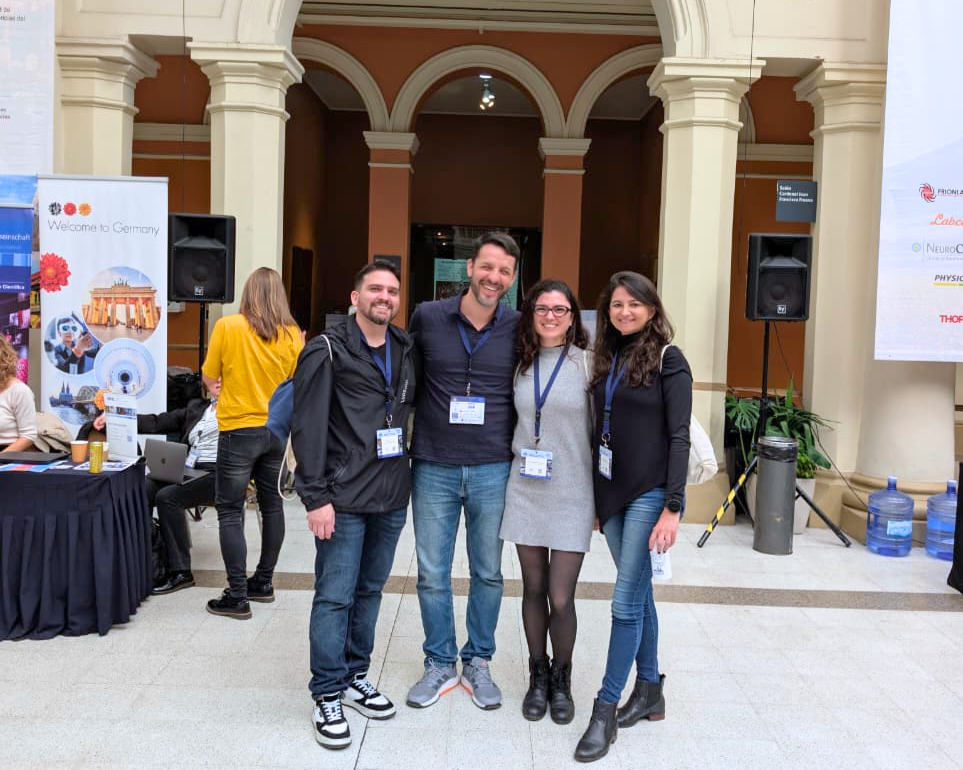
Participation in national and international scientific events is part of the strategies of the Santos Dumont Institute (ISD) to strengthen academic training, stimulate scientific production, and expand the insertion of its researchers in collaborative networks. In this context, students and professors from the institution's Postgraduate Program in Neuroengineering (PPGN) participated, from August 31 to September 3, in the IV Congress of the Federation of Latin American and Caribbean Societies of Neuroscience (FALAN), held in Chile.
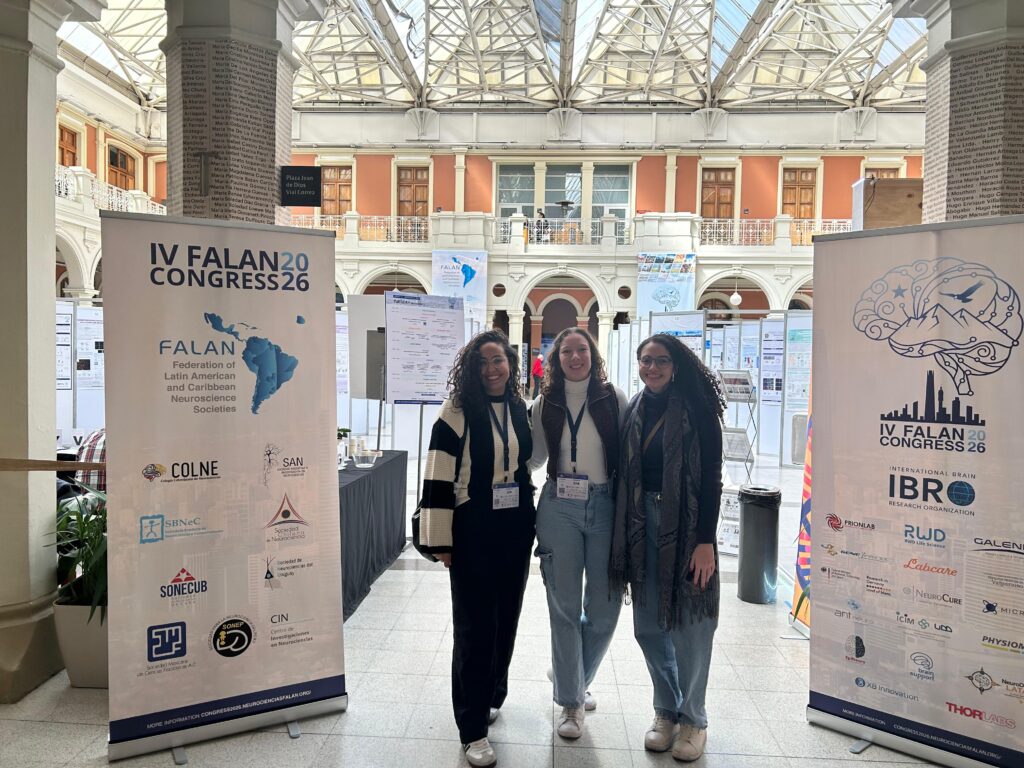
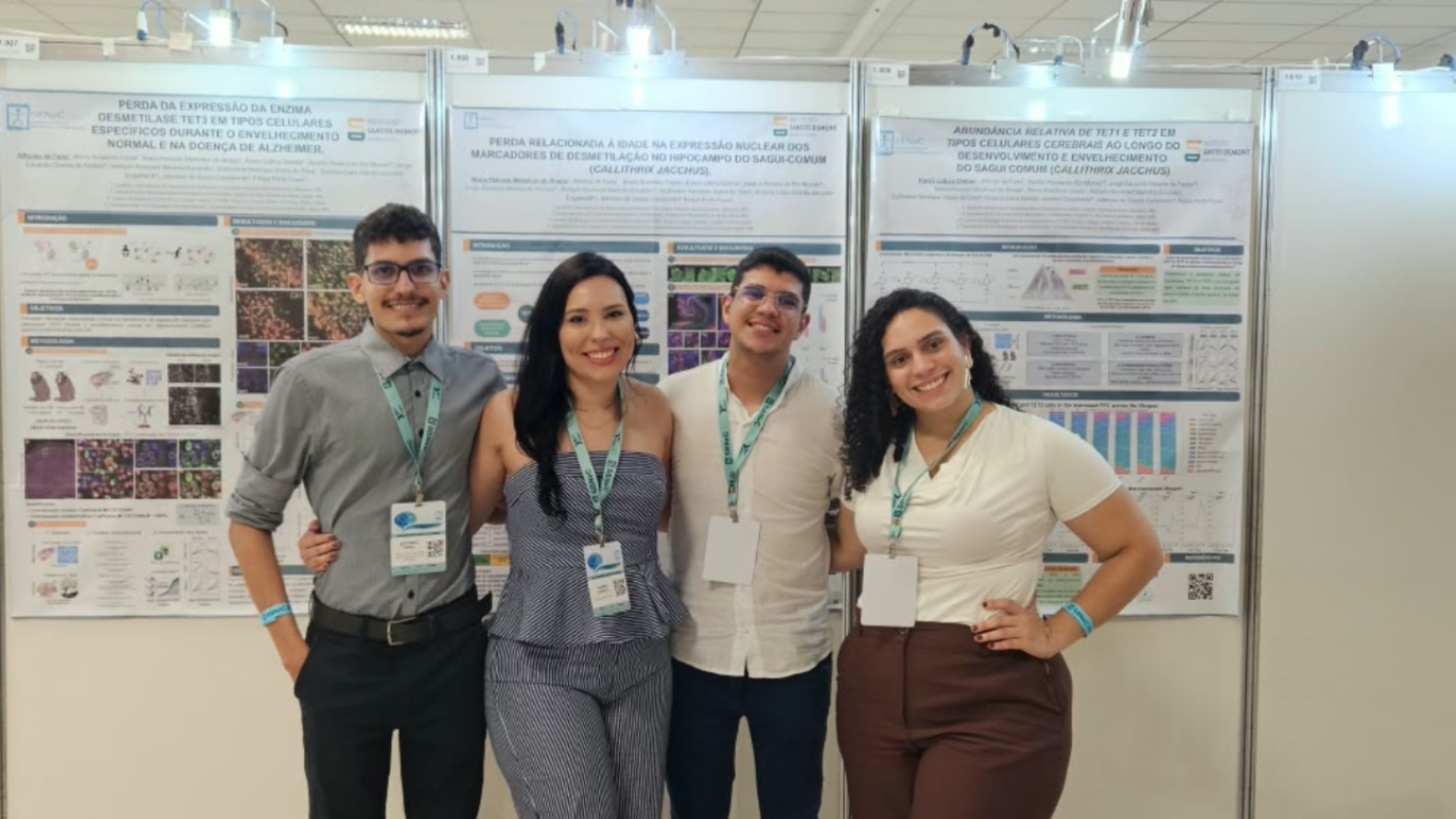
Representing the ISD at the congress were students Ana Helena Silva Moura and Rebeka Nogueira da Silva, alumna Aurea Estella de Araújo Silva, and PPGN research professors Andressa Radiske, Carolina Gonzalez, Felipe Fiuza, and Ramón Hypolito, contributing to scientific discussions and the dissemination of research developed by the Institute.
Among the works presented by the students was the research by Rebeka Nogueira da Silva, entitled "The effects of early and chronic exposure to environmental enrichment on learning and anxiety in adult Wistar rats"Developed over the past few years under the guidance of Professor Ramón Hypolito, the study is part of the researcher's training at the Institute.
For Rebeka, attending FALAN had a special meaning as it was her first time participating in an international neuroscience conference. The student highlights the learning opportunities and scientific exchange provided by the program as high points of the experience.
"Each symposium, lecture, and poster session provided valuable opportunities for learning, dialogue, and exchanging experiences with neuroscientists from different Latin American countries," reports the master's student.
Program graduate Aurea Estella de Araújo Silva also presented results produced during her master's degree in the PPGN. Her research investigated the role of the nucleus accumbens in the learning and reconsolidation of instrumental memories. The results indicated that inhibition of the nucleus accumbens impaired the acquisition of instrumental memory, while, under the conditions evaluated, it was not possible to affirm that inhibition affected its reconsolidation after reactivation.
For the researcher, who was also participating in an international event for the first time, the experience was an opportunity to expand her knowledge and establish connections with researchers from different institutions.
"Contact with people from other laboratories was extremely important not only to find out what is being done, but also by whom it is being produced and how," he emphasizes.
Participation also opened up new opportunities for scientific collaboration. According to Aurea, the experience allowed her to see firsthand the importance of... networking In the academic environment, contacts were made that involved invitations for integration between laboratories and the identification of new possibilities for collaboration.
Another challenge was presenting the work in more than one language. "Despite the challenge of presenting my work in more than one language, it was certainly very rewarding to realize that the people who were there were genuinely interested in learning about my work," she says.
The ISD's presence at the congress reinforces the institution's commitment to training researchers and disseminating the knowledge produced in its areas of expertise. Participation in international events also provides students with the opportunity to present their results to researchers from different countries, establish contacts, and follow contemporary discussions in the field of neuroscience.
About ISD
The Santos Dumont Institute (ISD) is a Social Organization of the Federal Executive Branch, supervised by the Ministry of Education, with the intervention of the Ministry of Sport. It encompasses the Edmond and Lily Safra International Institute of Neuroscience and the Anita Garibaldi Center for Education and Research in Health, both located in Macaíba. The ISD's mission is to promote education for life, forming citizens through integrated teaching, research, and outreach activities, as well as contributing to a more just and humane transformation of Brazilian social reality.