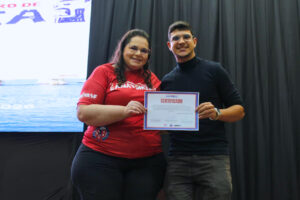
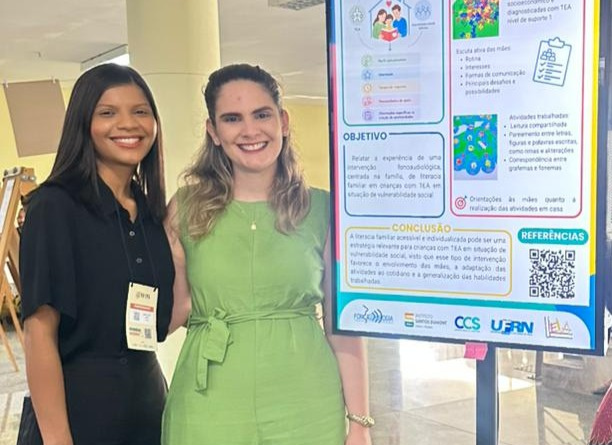
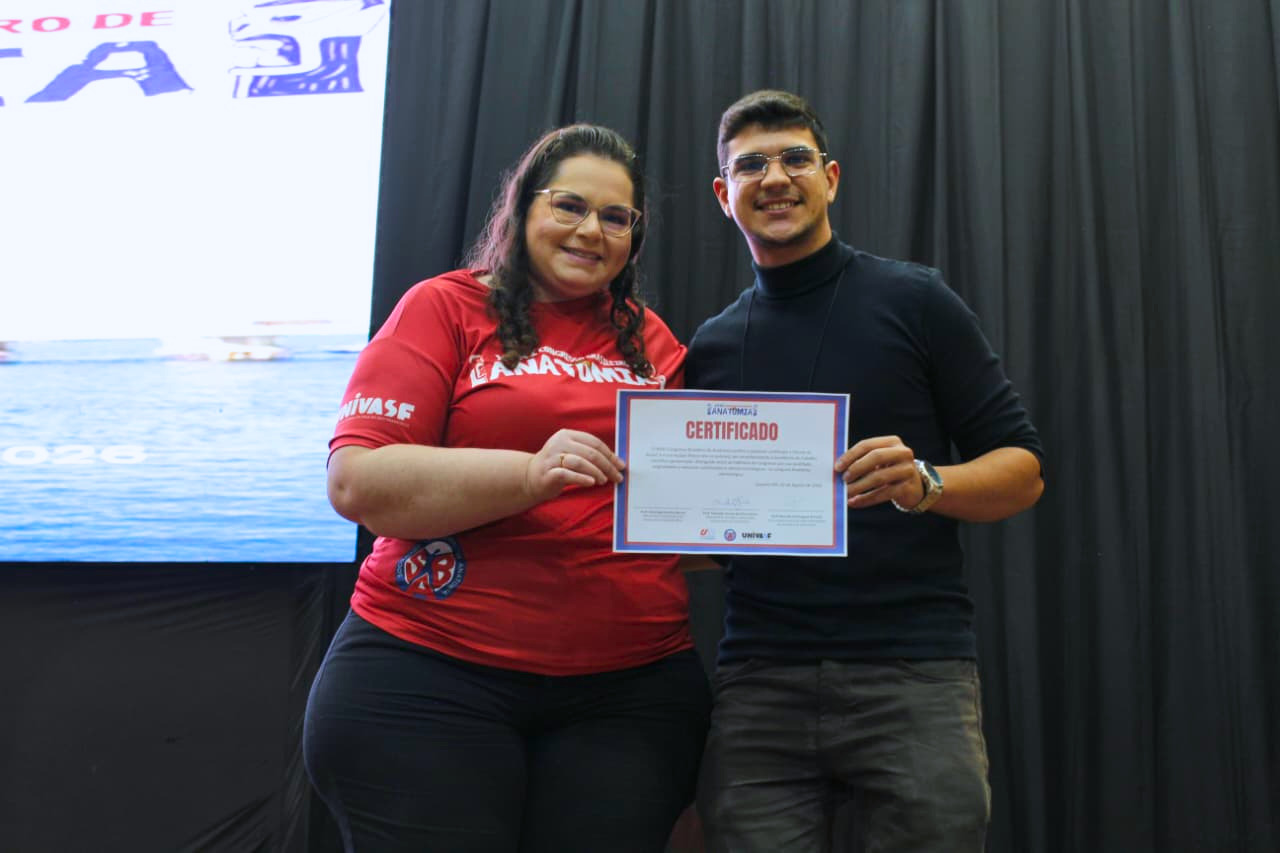
On December 13th, the researcher at Edmond and Lily Safra International Institute of Neuroscience (IIN-ELS), Manuela Sales, participated in the IV Journey of Parasitic Biology, promoted by the Federal University of Rio Grande do Norte (UFRN), in Natal/RN. She spoke on the topic “Microcephaly: what we know and where we intend to intervene”, on which occasion he explained the project that uses neuromodulation in children with microcephaly, to be started in January 2018: “It is a pioneering project in the area, which seeks to improve the quality of life of children with microcephaly caused by the Zika virus or of other teratogenic factors. Depending on the availability of resources, we intend to initiate studies that seek to understand the impact of neuroinflammation on microcephaly, as well as the effects of using neuromodulation in these cases”, explained Manuela.
The researcher took second place in the event's II Photography Competition, with the image titled “Super-macrophages: ACTIVATE!”, taken at Eisenbarth's Laboratory, at Yale University, in the USA. According to the author of the image, macrophages, cells that act in the immune system, were differentiated in vitro from mouse bone marrow precursors. After 7 days, they were infected with Leishmania infantum (5 parasites: 1 cell) in stationary growth phase for 12 hours. The reaction was photographed using a Nikon Eclipse Ti microscope, with a 65x objective.
Crop from the image "Super-macrophages: ACTIVATE!". Photo: Manuela Sales
The IV Parasite Biology Conference took place between December 13 and 15, 2017, at the UFRN Biosciences Center and was organized by the University's Parasite Biology Postgraduate Program. The event aimed to address recent research and bring perspectives from the areas of microbiology, parasitology, immunology and entomology.
Text: Ariane Mondo / Ascom – ISD
Photos: personal collection
Communication Office comunicacao@isd.org.br (84) 99416-1880
Santos Dumont Institute (ISD)
Social organization that maintains ties with the Ministry of Education (MEC) and whose mission is to promote education for life, forming citizens through integrated teaching, research and extension actions and to contribute to a fairer and more humane transformation of the Brazilian social reality.
Communication Office comunicacao@isd.org.br (84) 99416-1880
On December 13th, the researcher at Edmond and Lily Safra International Institute of Neuroscience (IIN-ELS), Manuela Sales, participated in the IV Journey of Parasitic Biology, promoted by the Federal University of Rio Grande do Norte (UFRN), in Natal/RN. She spoke on the topic “Microcephaly: what we know and where we intend to intervene”, on which occasion he explained the project that uses neuromodulation in children with microcephaly, to be started in January 2018: “It is a pioneering project in the area, which seeks to improve the quality of life of children with microcephaly caused by the Zika virus or of other teratogenic factors. Depending on the availability of resources, we intend to initiate studies that seek to understand the impact of neuroinflammation on microcephaly, as well as the effects of using neuromodulation in these cases”, explained Manuela.
The researcher took second place in the event's II Photography Competition, with the image titled “Super-macrophages: ACTIVATE!”, taken at Eisenbarth's Laboratory, at Yale University, in the USA. According to the author of the image, macrophages, cells that act in the immune system, were differentiated in vitro from mouse bone marrow precursors. After 7 days, they were infected with Leishmania infantum (5 parasites: 1 cell) in stationary growth phase for 12 hours. The reaction was photographed using a Nikon Eclipse Ti microscope, with a 65x objective.
Crop from the image "Super-macrophages: ACTIVATE!". Photo: Manuela Sales
The IV Parasite Biology Conference took place between December 13 and 15, 2017, at the UFRN Biosciences Center and was organized by the University's Parasite Biology Postgraduate Program. The event aimed to address recent research and bring perspectives from the areas of microbiology, parasitology, immunology and entomology.
Text: Ariane Mondo / Ascom – ISD
Photos: personal collection
Communication Office comunicacao@isd.org.br (84) 99416-1880
Santos Dumont Institute (ISD)
Social organization that maintains ties with the Ministry of Education (MEC) and whose mission is to promote education for life, forming citizens through integrated teaching, research and extension actions and to contribute to a fairer and more humane transformation of the Brazilian social reality.
Communication Office comunicacao@isd.org.br (84) 99416-1880