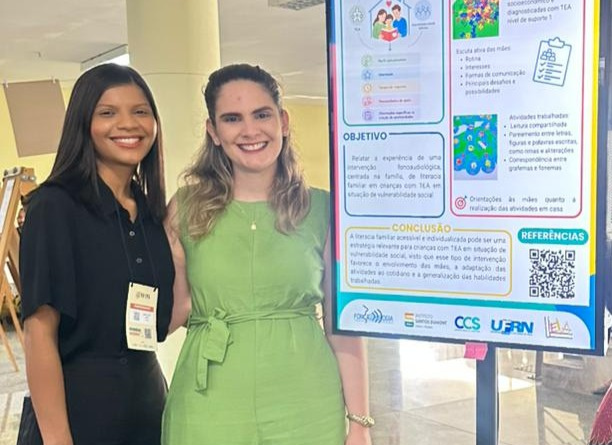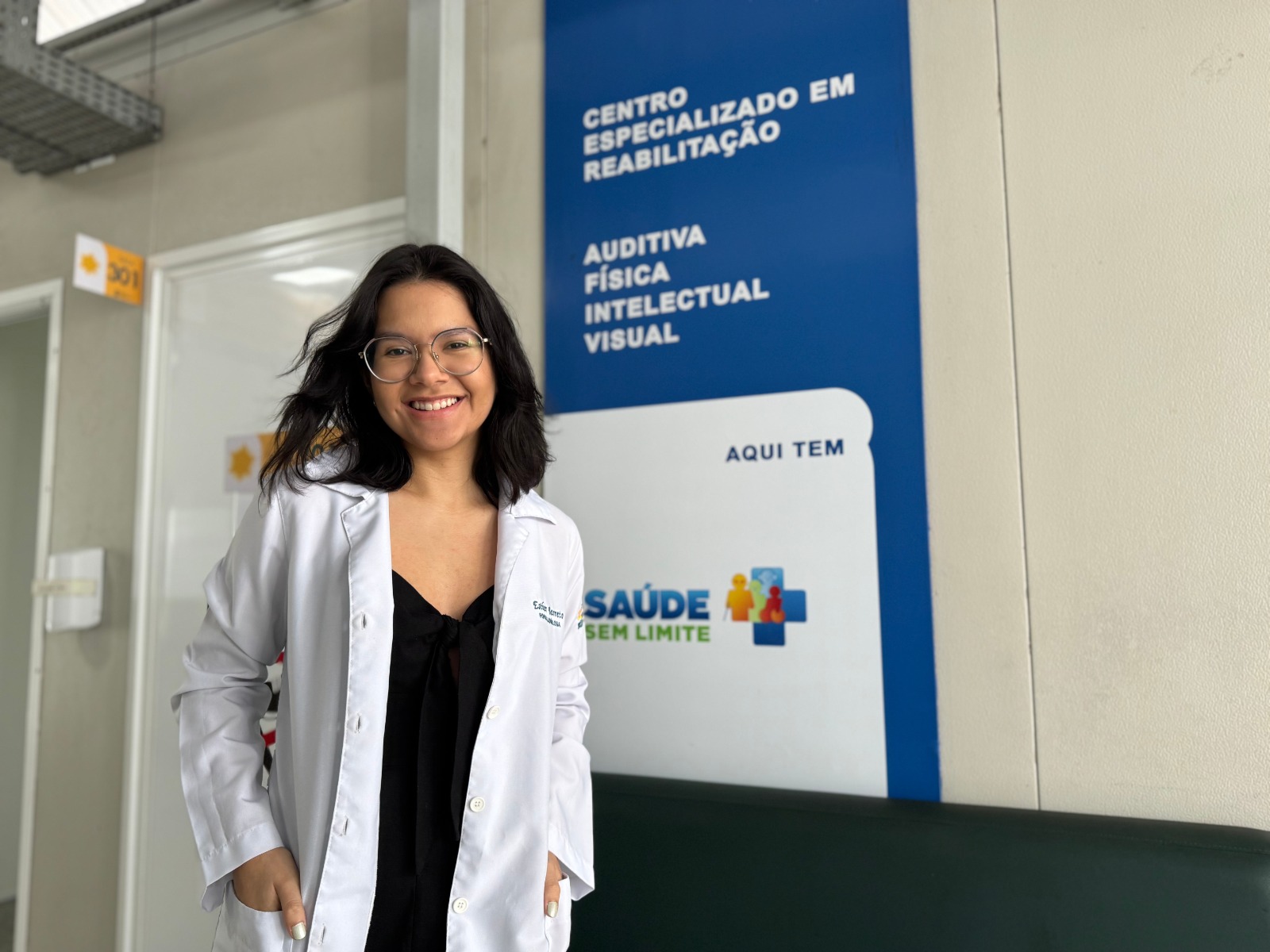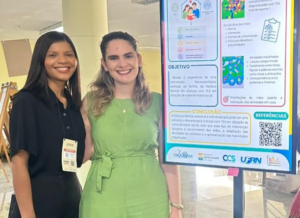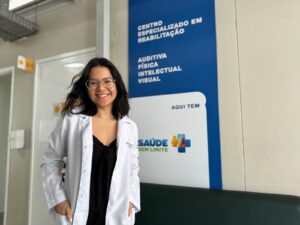


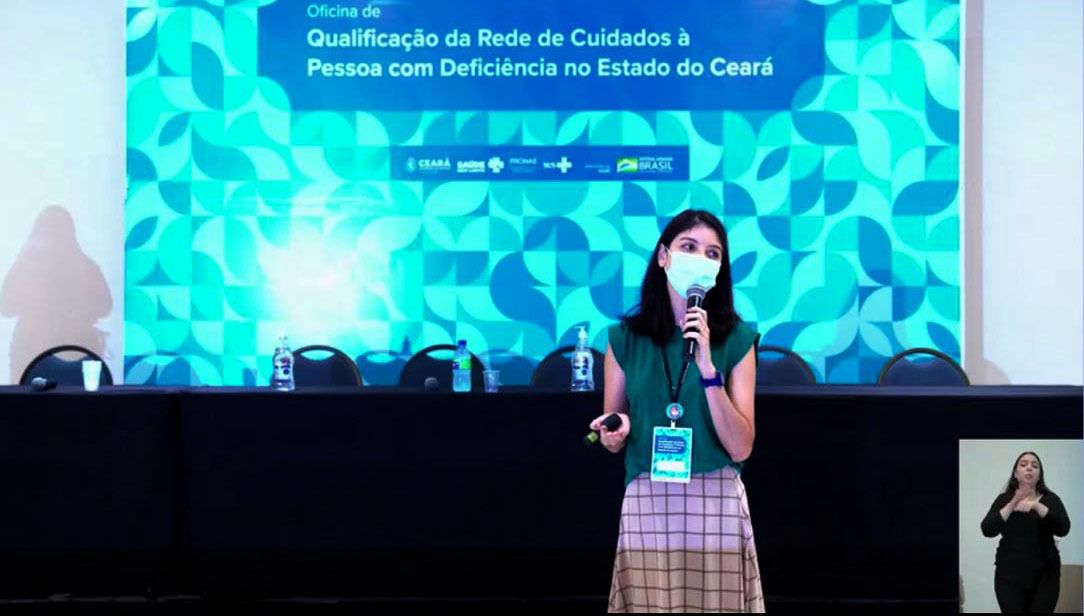
The Santos Dumont Institute (ISD) was invited by the Ministry of Health to present its successful experience in the rehabilitation of autistic children at national events. This Thursday, the 24th, neuropsychologist Samantha Maranhão, who works as a preceptor at the Institute, participated in the Qualification Workshop for the Healthcare Network for People with Disabilities in the State of Ceará within the scope of the Unified Health System (Rede PcD), in Fortaleza (CE).
She gave a lecture on the theme: “Organization of Care for People with ASD in Rio Grande do Norte – experience report from the Santos Dumont Institute – Macaíba/RN”. The workshop is part of an integrated action between the ministerial body and the State Departments of Public Health throughout Brazil. Last year, the ISD hosted the local event and brought together representatives from all the Specialized Rehabilitation Centers (CER) spread throughout Rio Grande do Norte.
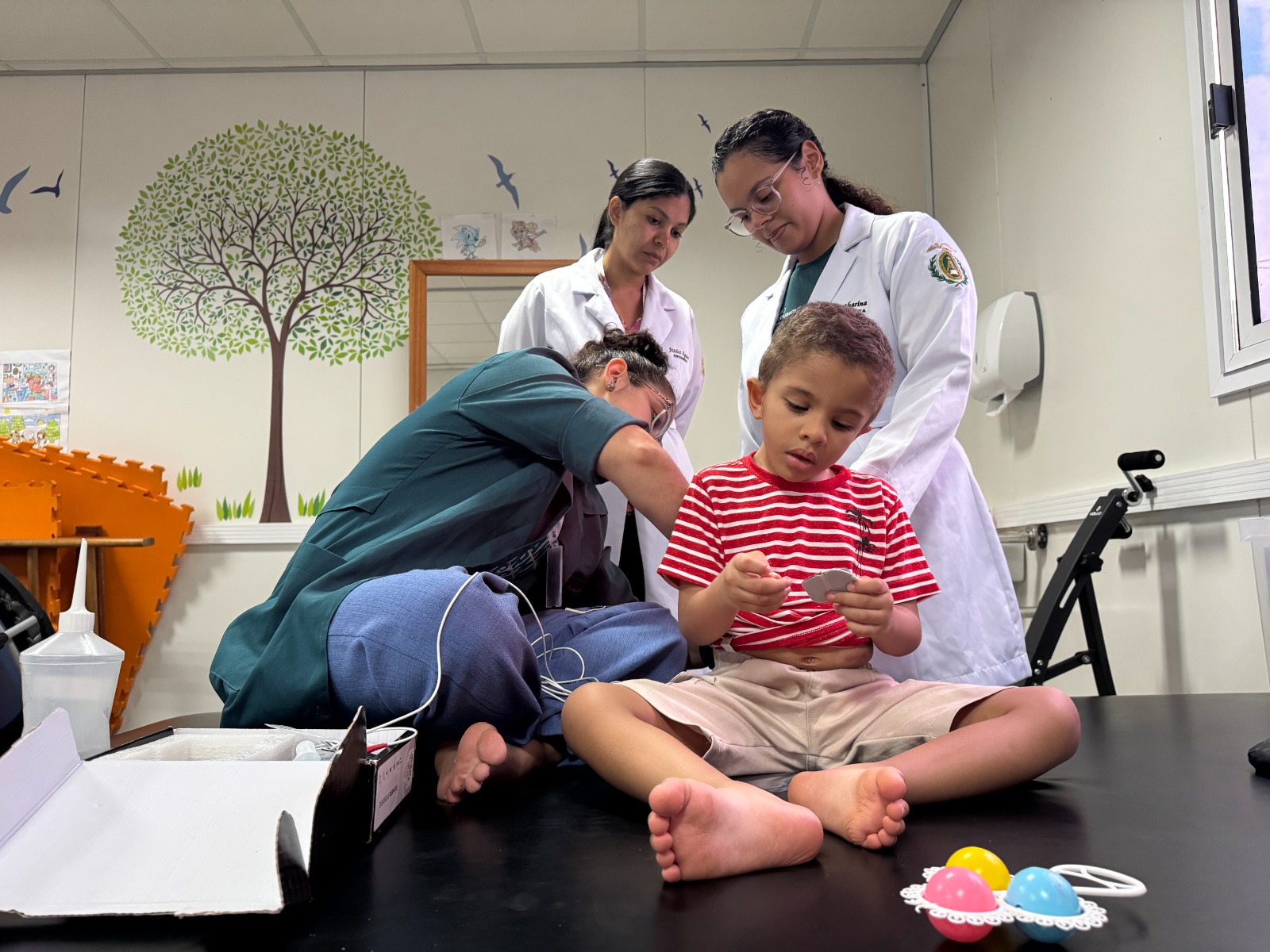
As explained by Samantha Maranhão, the Institute began providing care to children aged 0 to 12 with Autism Spectrum Disorder (ASD) in 2015. At that time, there was no public health network dedicated to treating this condition in children. Through ongoing education work developed by the ISD through an agreement with the Municipal Government of Macaíba, professionals working in the Basic Health Units in Macaíba began to understand the condition and identify the initial signs related to autism.
“The network started to work better. Referrals were made easier and we identified that there was pent-up demand in the municipality of Macaíba, where we are located. Younger and younger children are being referred for evaluation at the ISD. We have noticed a significant change in this. Today, our service has a well-structured clinical evaluation protocol, with gold standard instruments,” highlighted Samantha Maranhão during the presentation of the service to an audience made up of managers and frontline health professionals.
The ISD Autism Clinic operates on three fundamental axes, which are: Early identification and stimulation; clinical evaluation for diagnostic confirmation; and qualification. Patients are admitted after a screening, with 40 new patients admitted each year, in addition to the 20 who are already part of the service. The ISD is a reference for Autism in Rio Grande do Norte and develops an intensive outpatient program such as hippotherapy, a laboratory for daily life activities, school support through reading and writing in integrated education and teaching actions.
These activities are developed based on important concepts, such as: cultural competence, family-centered care and the International Classification of Functioning, Disability and Health (ICF), with an emphasis on functionality and social participation.
A new presentation is scheduled for April 14, in Cuiabá (MT), bringing together health professionals who work in Specialized Rehabilitation Centers in the region.
Text: Ricardo Araújo / Ascom – ISD
Photograph: reproduction
Communication Office
comunicacao@isd.org.br
(84) 99416-1880
Santos Dumont Institute (ISD)
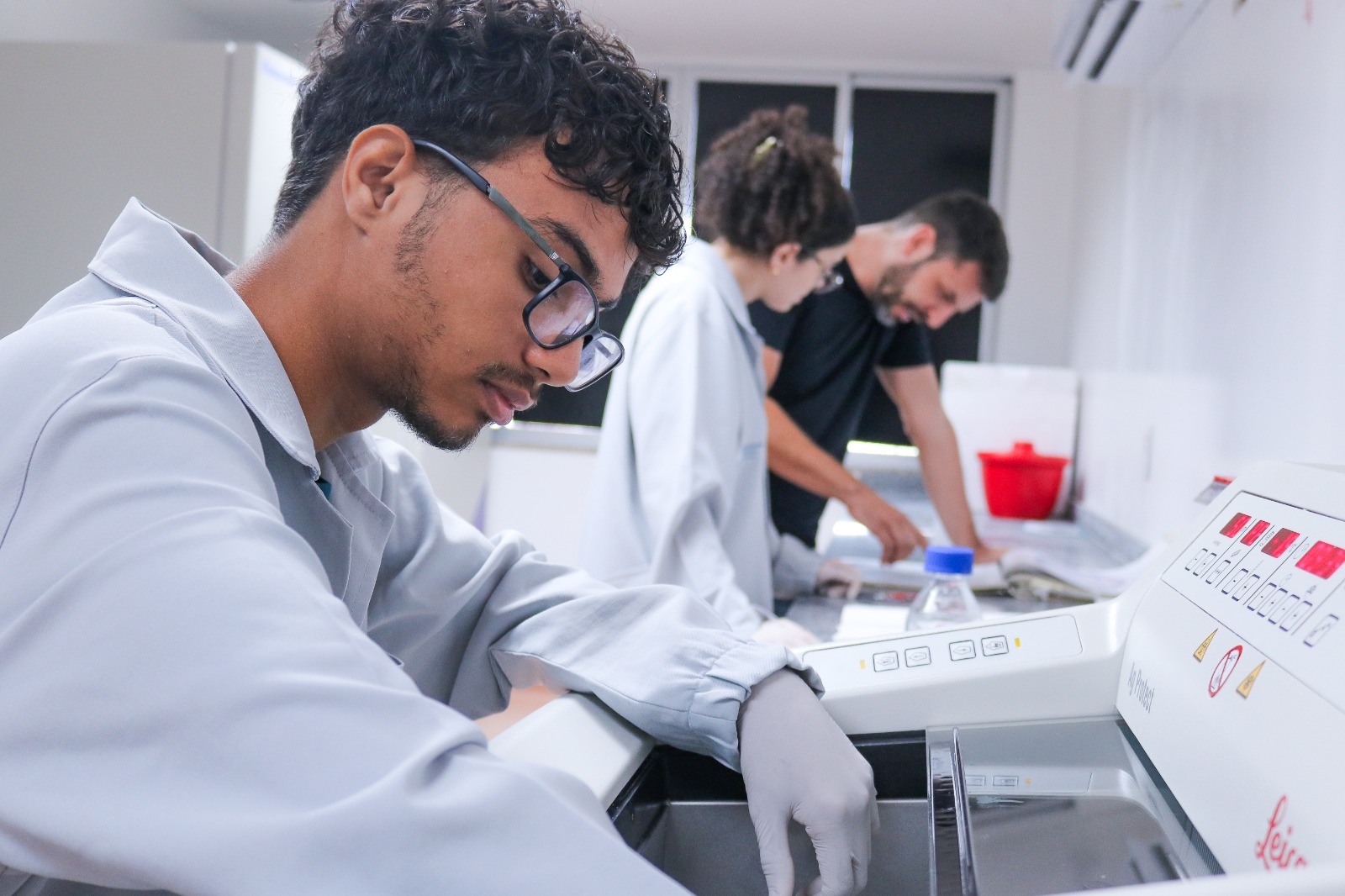
It is a Social Organization linked to the Ministry of Education (MEC) and includes the Edmond and Lily Safra International Institute of Neurosciences and the Anita Garibaldi Health Education and Research Center, both in Macaíba. ISD's mission is to promote education for life, forming citizens through integrated teaching, research and extension actions, in addition to contributing to a fairer and more humane transformation of Brazilian social reality.