

A Master's student from the Postgraduate Program in Neuroengineering (PPGN) at the Santos Dumont Institute (ISD) participated in the IEEE International Conference on Human-Machine Systems (ICHMS), held in Singapore on July 3rd, presenting a study developed by researchers from the Institute. The research aims to describe the impacts of brain-computer interfaces on cognitive training in people with long-term Covid.
On that occasion, biomedical engineer and ISD master's student, Samara Tenório, presented the work "Cognitive Training Using a Brain-Computer Interface for θ/β Ratio Self-Regulation – Preliminary Results with Long Covid-19 Survivors," in a virtual participation in the ICHMS program, one of the main international events in the field of brain-computer interface studies.
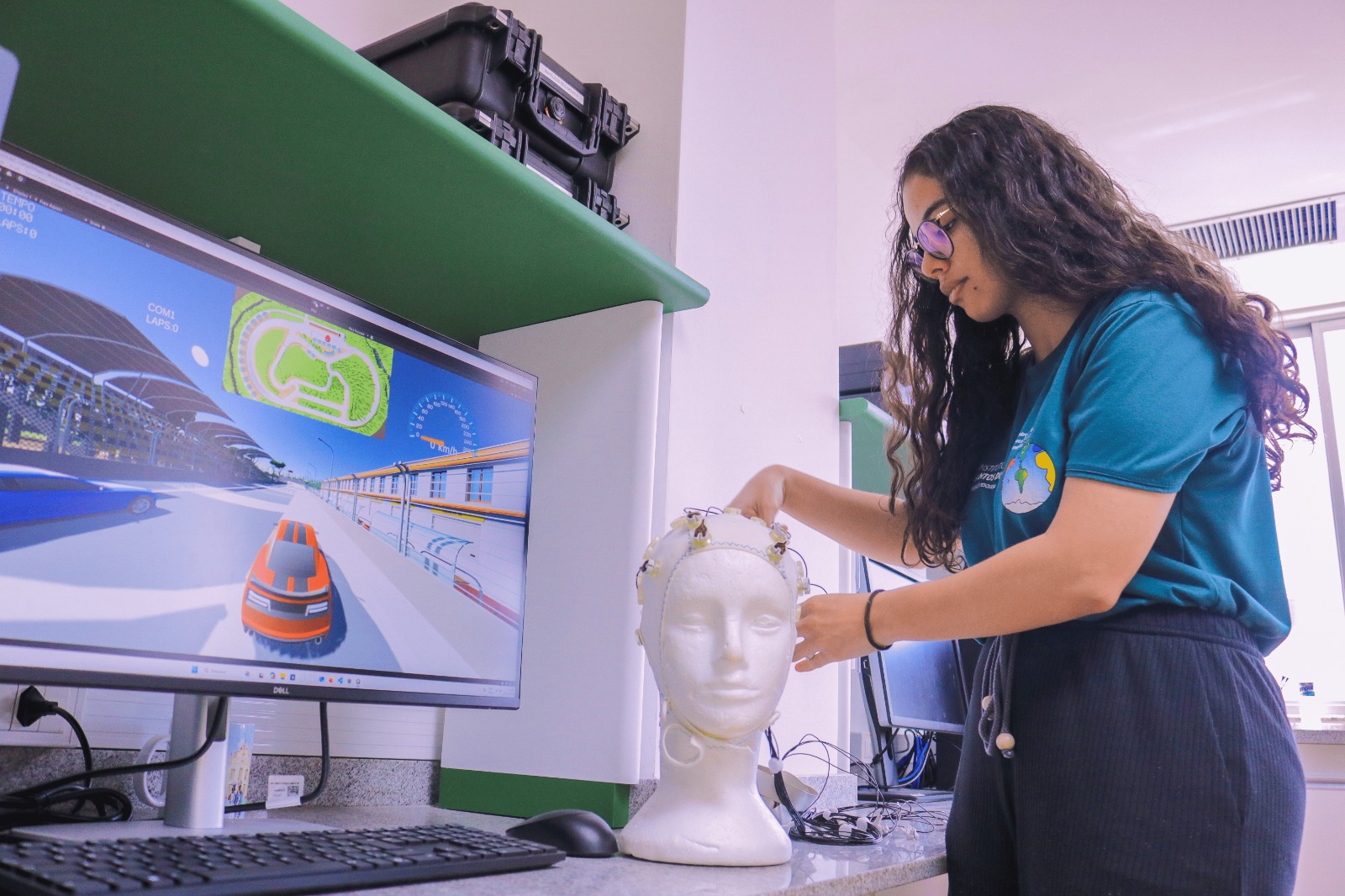
The study investigates the use of a brain-computer interface associated with serious gaming (computer games with purposes beyond mere entertainment) as a rehabilitation strategy for people who have developed long-term Covid.
Long Covid is the term given to the chronic syndrome that arises after recovery from a Covid-19 diagnosis, which can cause a series of cognitive changes, impairing manual skills, memory, reasoning, and attention.
The research developed at ISD seeks to expand knowledge about these consequences through an interactive application based on brain activity. The results, presented at the event, reinforce findings of changes in brain activity associated with improved attention after using the proposed technology. Participants also showed improvements in cognitive skills such as working memory and executive functions after cognitive training.
“Presenting this research at a recognized international event means an opportunity to showcase the research group's progress and receive feedback from researchers working in this area. It is also a way to bring scientific research closer to solutions with potential for clinical application and direct benefit to society,” says ISD master's student and lead author of the work, Samara Tenório.
Illustrating ISD's efforts to promote the internationalization of science, the research presented at ICHMS was conducted in collaboration between ISD and the Federal University of Espírito Santo (UFES) and integrated with international partners such as Kumamoto University (Japan) and INRS (Canada).
Co-author of the work, psychologist Jade Carvalho, participated in the study during her time as a visiting researcher at ISD, a period in which she had access to the infrastructure and equipment necessary for the development of her research, through the Institute's Open Laboratories program. For her, the experience at the institute was crucial to her training as a researcher.
“The ISD is an essential space for the development of science in Brazil. My experience at the institute reinforced the notion that it is possible to do science in the country committed to the community. The level of support and autonomy I found exceeded my expectations,” she reports.
In addition to Samara and Jade, the study includes researchers Yuzen Hatano, Cristian Guerrero-Mendez, Mariane Lima de Souza, Tomohiko Igasaki, Teodiano Bastos-Filho, and Tiago H. Falk, as well as ISD research professors André Dantas and Denis Delisle Rodriguez (study supervisor).
About ISD
The Santos Dumont Institute (ISD) is a Social Organization of the Federal Executive Branch, supervised by the Ministry of Education, with the intervention of the Ministry of Sport. It encompasses the Edmond and Lily Safra International Institute of Neuroscience and the Anita Garibaldi Center for Education and Research in Health, both located in Macaíba. The ISD's mission is to promote education for life, forming citizens through integrated teaching, research, and outreach activities, as well as contributing to a more just and humane transformation of Brazilian social reality.