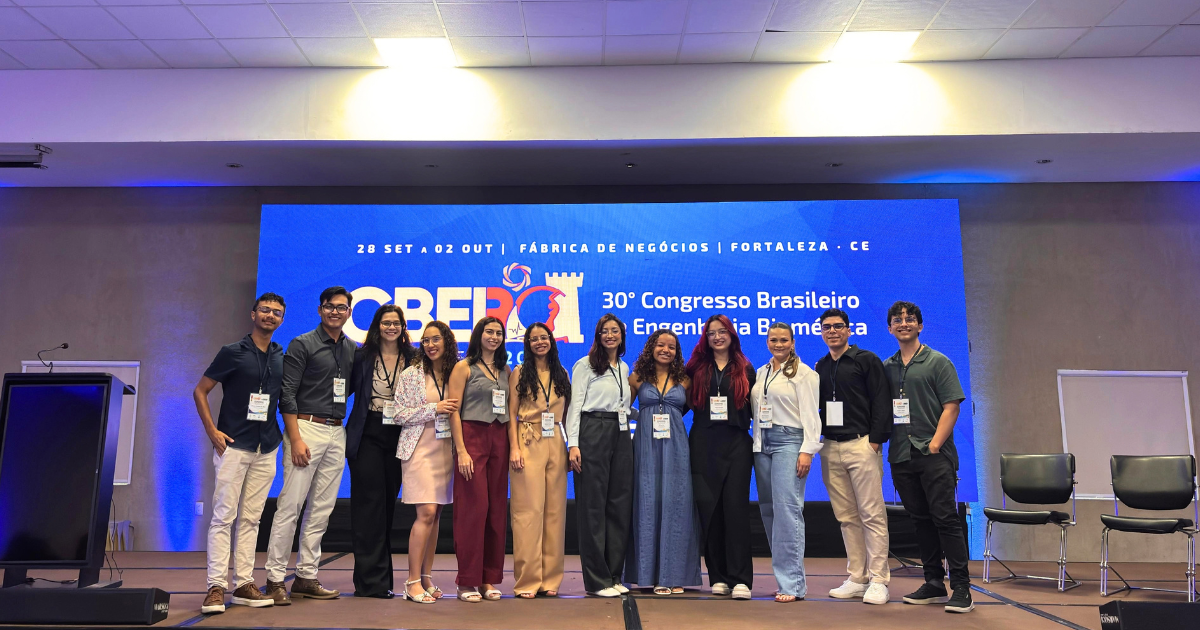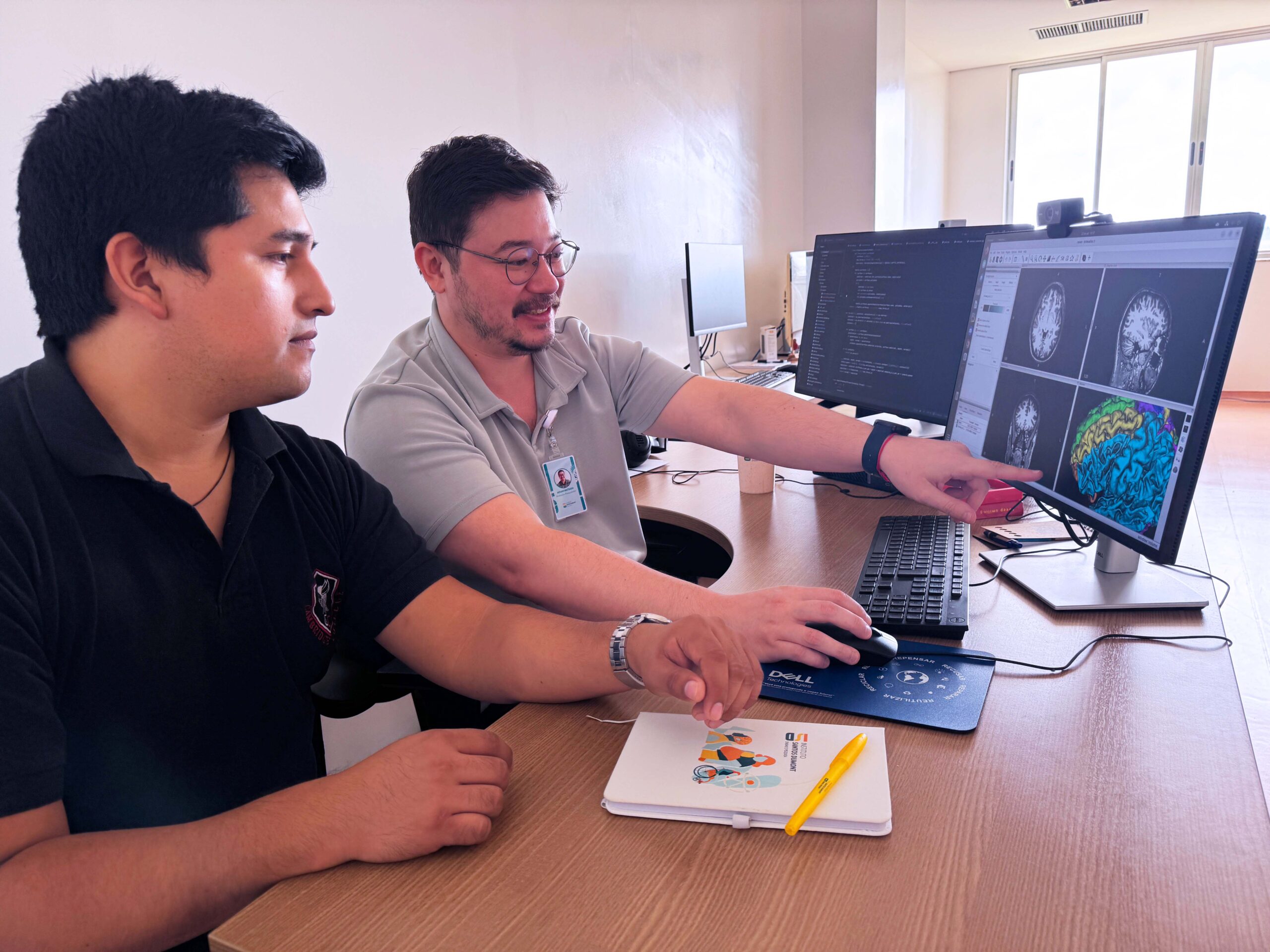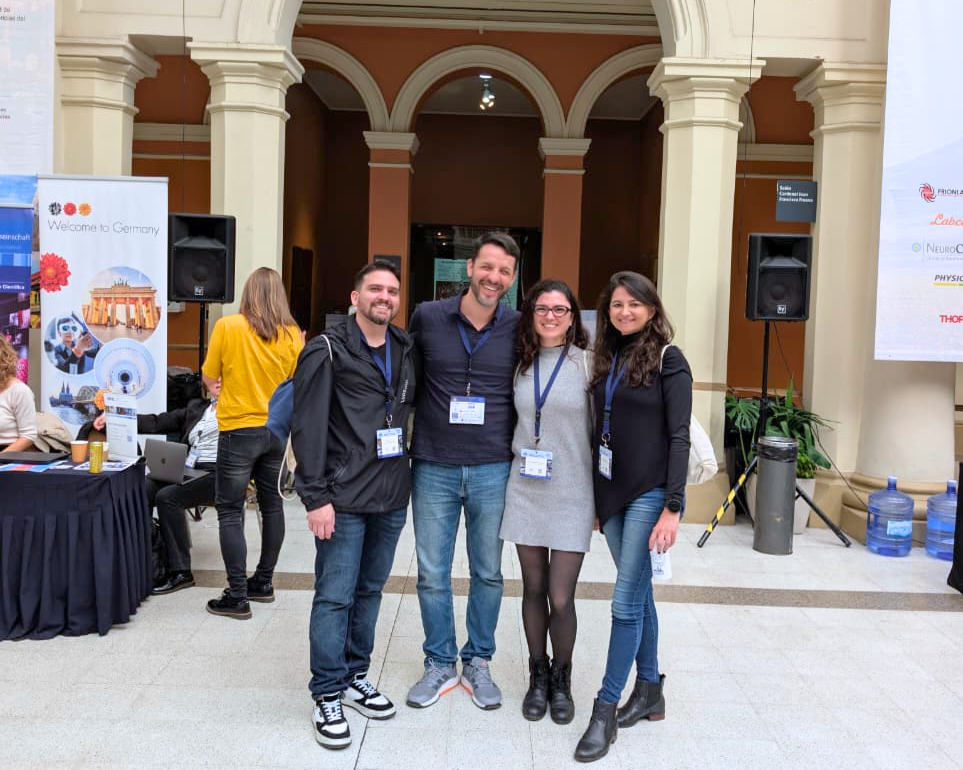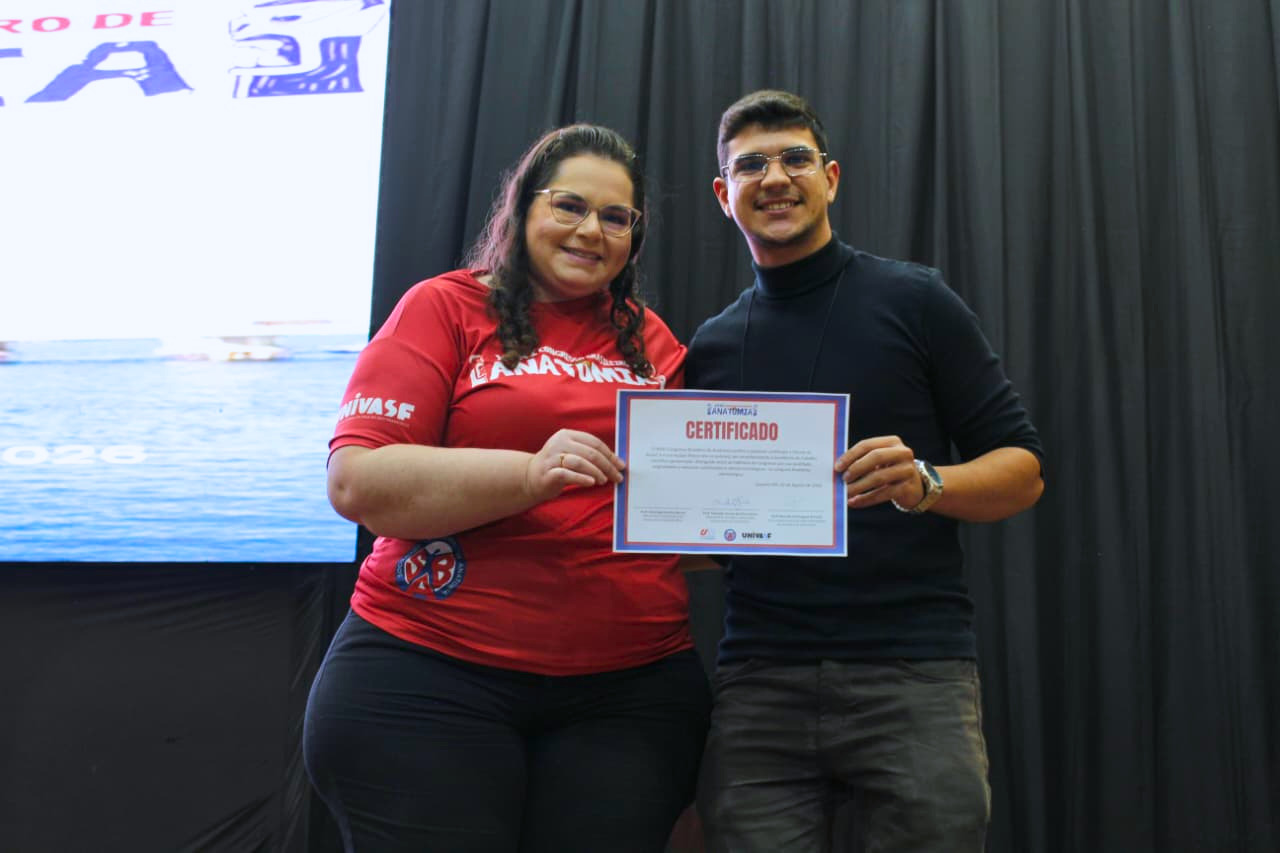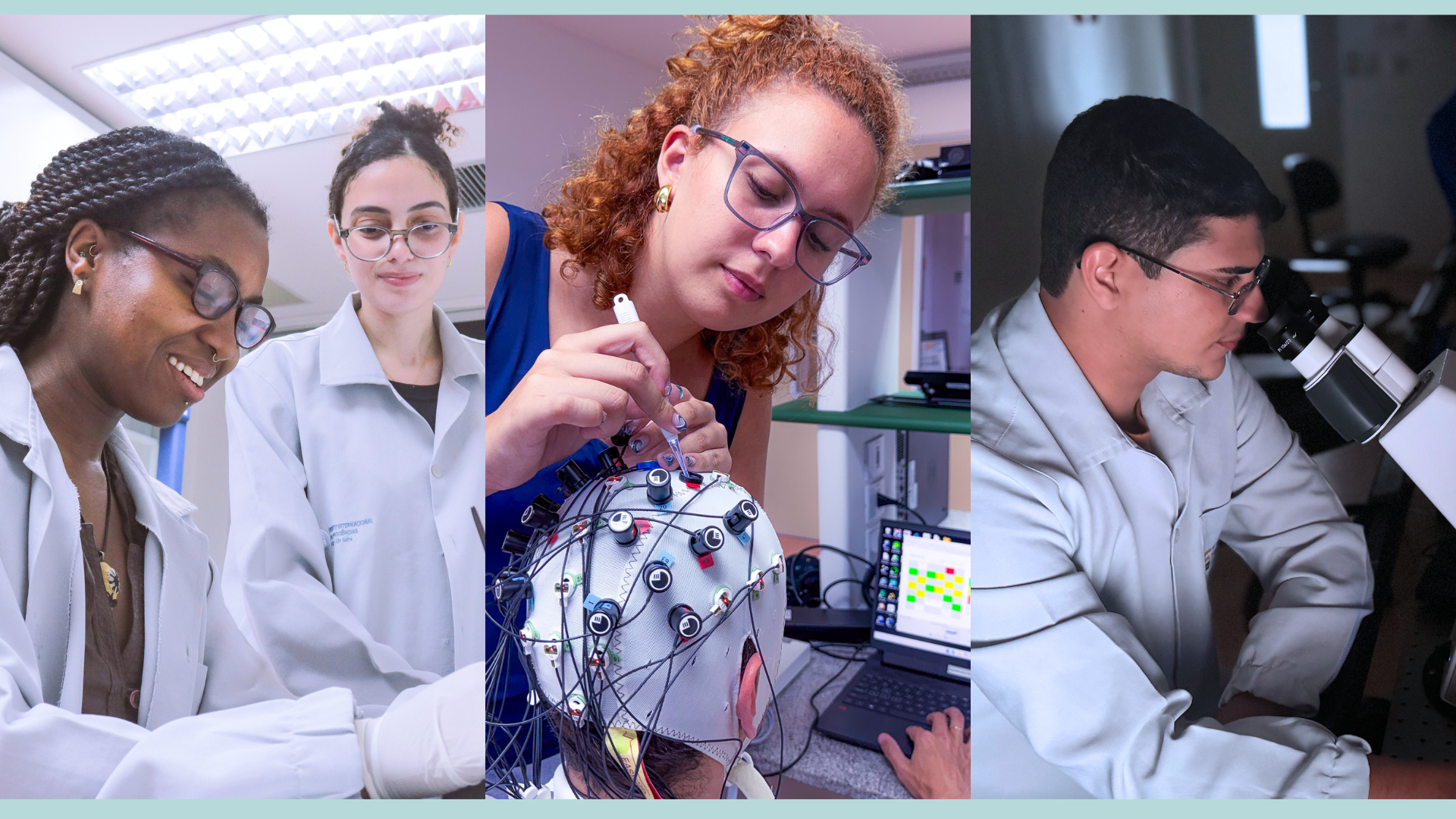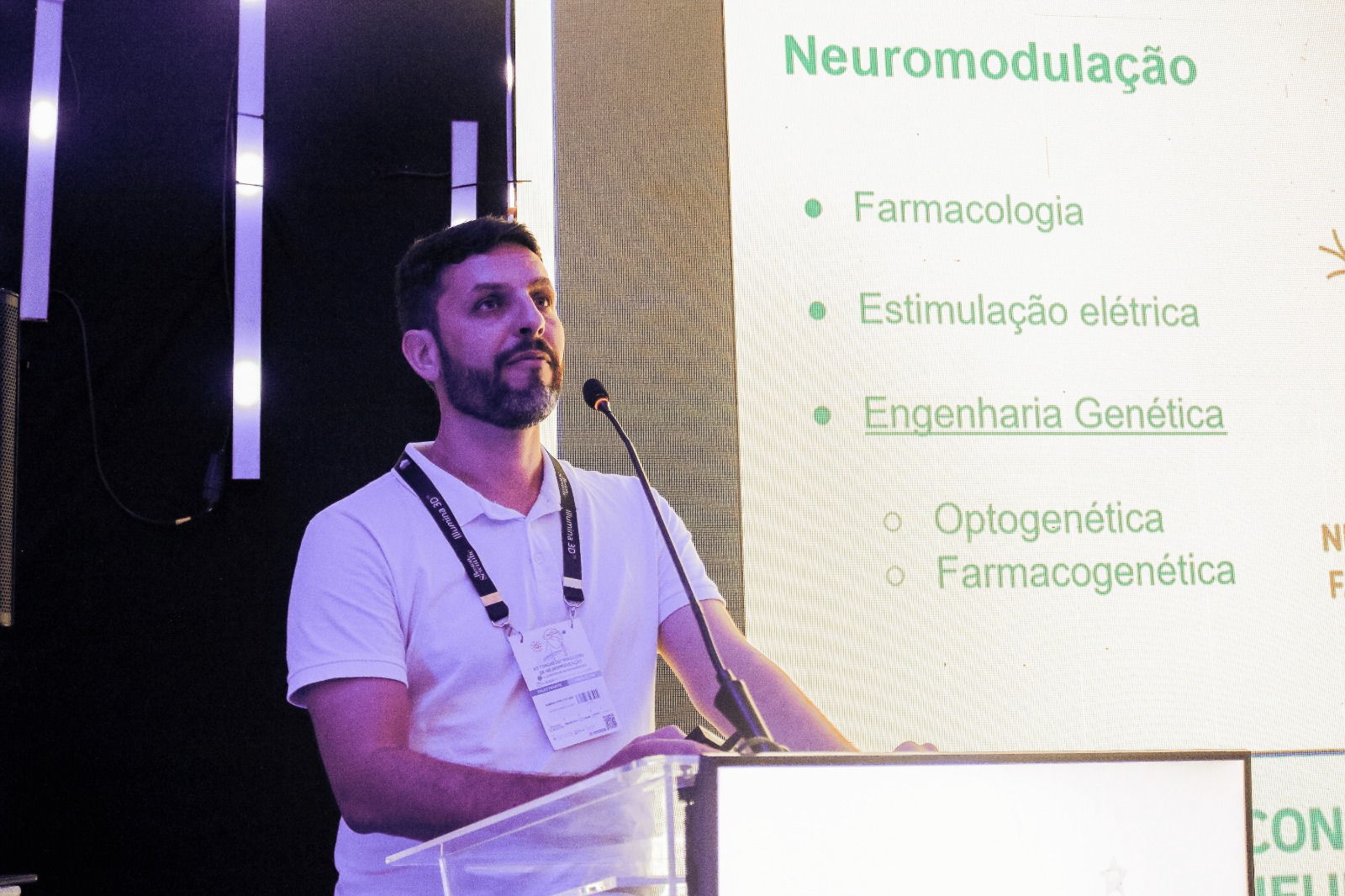


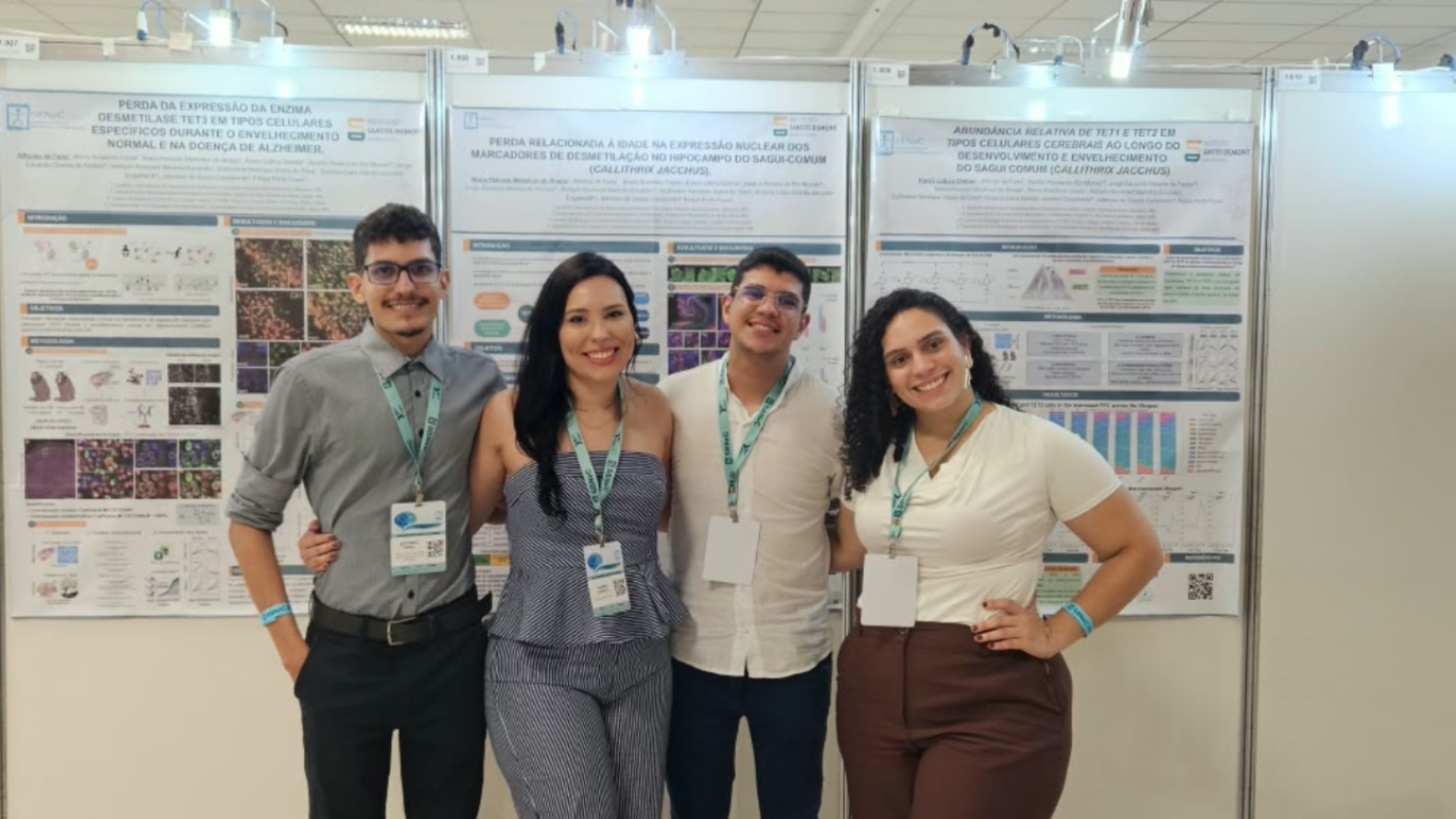
Students from the Postgraduate Program in Neuroengineering (PPGN) at the Santos Dumont Institute (ISD) participated, between September 30 and October 3, in the XLIX Annual Meeting of the Brazilian Society for Neuroscience and Behavior (SBNeC), held at the Convention Center of the Hotel Monte Real, in Águas de Lindóia (SP).
Representing the PPGN were graduate students Affonso de Faria, Karen Dantas, Breno Brasileiro, and Maria Heloyze Medeiros. Participation in the meeting allowed the students to present their research, exchange experiences with researchers from different institutions, and learn about new research perspectives in the areas of Neuroscience and Behavior.
PPGN research highlights
Among the works presented, Affonso de Faria shared research on epigenetic changes in neurons throughout aging. For the master's student, participating in the congress was an important opportunity for his academic career. "The event exceeded my expectations and provided unforgettable experiences, in addition to expanding my network of contacts with other researchers," he stated.
Master's student Maria Heloyze Medeiros presented a study on epigenetic alterations in common marmoset models, investigating markers related to the TET1, TET2, and TET3 enzymes. During the poster presentation, the student highlighted the public's interest in the techniques used and the research possibilities developed at the Institute.
"It was very gratifying to see the curiosity and interest of many people in learning more about immunofluorescence techniques, working with non-human primates, and also about the possibilities of pursuing a master's degree at our institute," he reports.
For Breno Brasileiro, the congress also represented an opportunity to deepen the dialogue with the scientific community. The master's student highlighted the importance of conversations about different works and the exchange of ideas to broaden perspectives on the challenges of research.
“More than just presenting my work, being in an environment with people who share similar interests has allowed me to create connections, discuss ideas, and even find new perspectives on issues that arise during research,” she says.
A master's student Karen Letícia Dantas also highlighted The importance from the participation node congress to enlarge your perspectives in the search scientific. "To hear to the contributions in different works It is experience one environment so rich in knowledge expanded my vision It is me he did to perceive what we can to reach flights yet larger states. To she, The experience reinforced to the possibilities in development It is in-depth of research in the area of Neuroscience.
Interdisciplinary training and scientific exchange
The 49th Annual Meeting of SBNeC brought together researchers, students, and professionals interested in advances and discoveries in the areas of Neuroscience and Behavior. For the graduate students of the PPGN program, participation in the event provided contact with different scientific approaches, opportunities to disseminate the work developed at the Institute, and expansion of their academic network.
This experience aligns with the interdisciplinary approach of the Master's program in Neuroengineering at ISD, which integrates knowledge from Neuroscience, Engineering, and other fields to investigate problems related to the nervous system and develop technological solutions applied to healthcare.
By sharing their research at scientific events, students contribute to increasing the visibility of the academic output of the Santos Dumont Institute, strengthening exchanges between institutions, and building new possibilities for collaboration.
About ISD
The Santos Dumont Institute (ISD) is a Social Organization of the Federal Executive Branch, supervised by the Ministry of Education, with the intervention of the Ministry of Sport. It encompasses the Edmond and Lily Safra International Institute of Neuroscience and the Anita Garibaldi Center for Education and Research in Health, both located in Macaíba. The ISD's mission is to promote education for life, forming citizens through integrated teaching, research, and outreach activities, as well as contributing to a more just and humane transformation of Brazilian social reality.