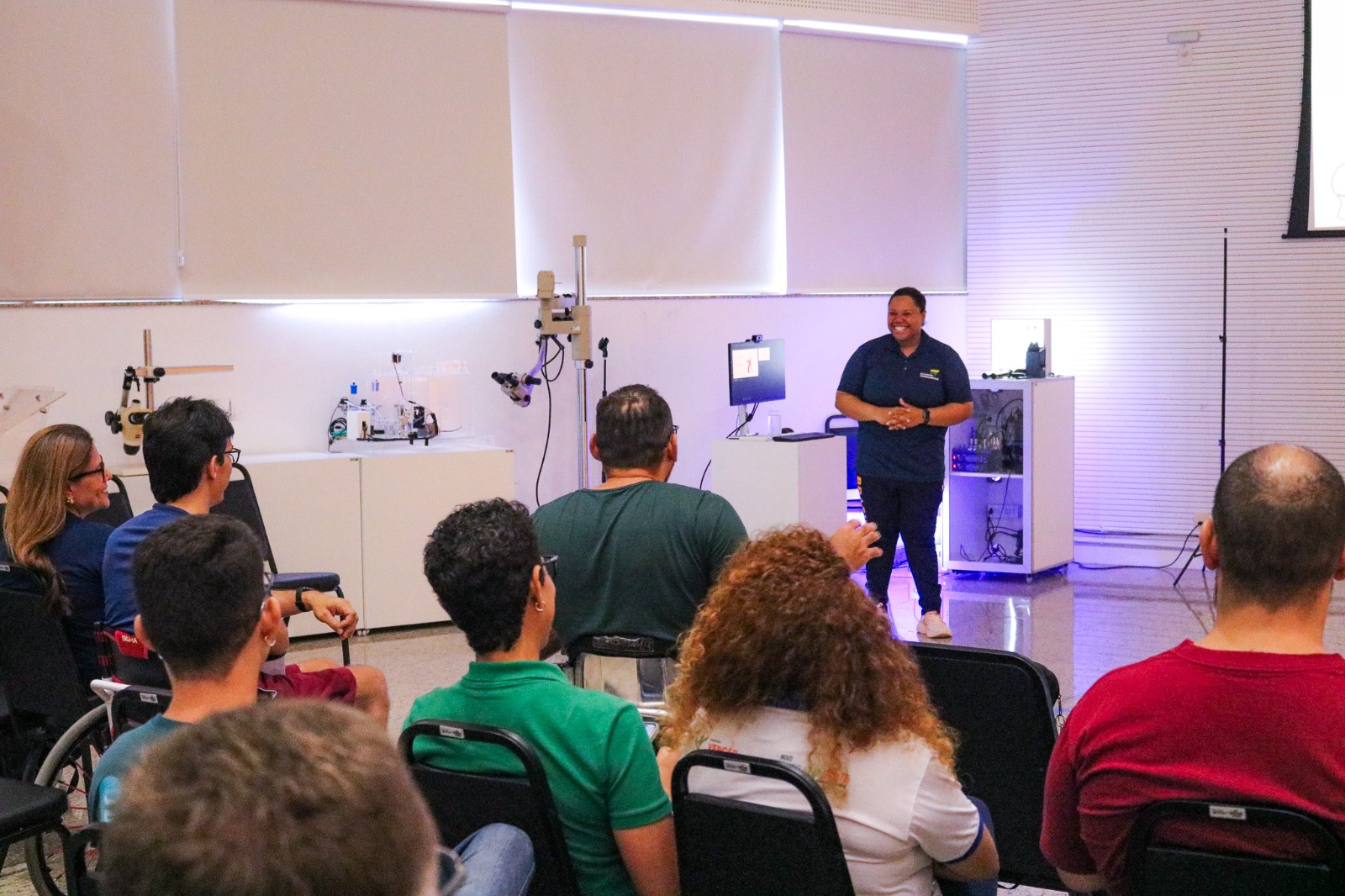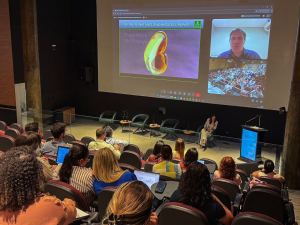


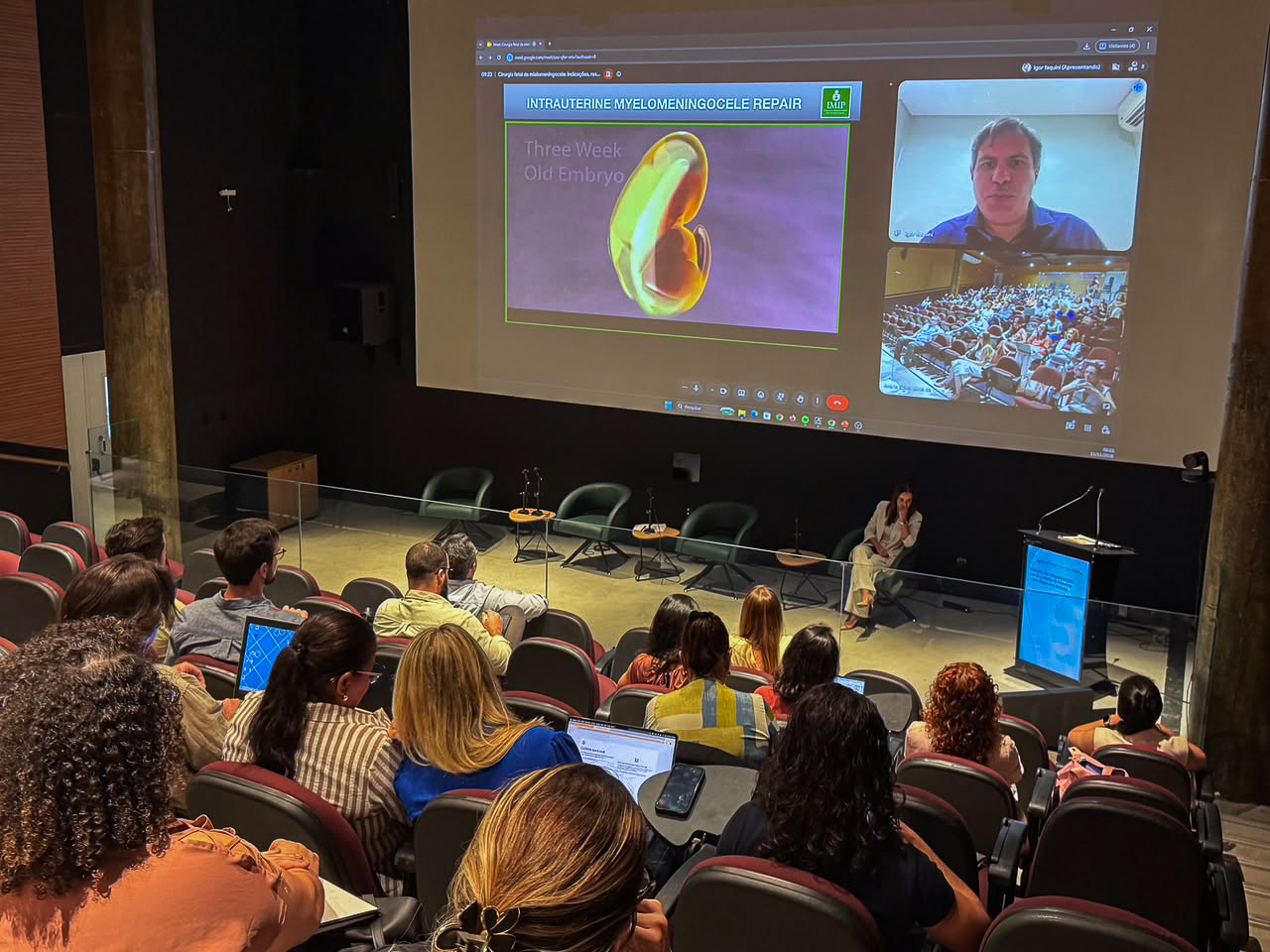
The Santos Dumont Institute (ISD) held, this Wednesday (11), the first Update Forum on Care for People with Spina Bifida, an event aimed at health professionals, students, users of health services and their families. The event took place at the Edmond and Lily Safra International Institute of Neuroscience (IIN-ELS), in Macaíba.
The forum discussed scientific advances and evidence-based practices for the treatment of spina bifida. The official opening was led by the coordinator of the ISD Specialized Rehabilitation Center (CER ISD), Camila Simão, who introduced the central theme of the event: "Spina bifida in 2026: why do we need to think about a lifelong care pathway?".
“Nowadays, spina bifida care is still very much focused on childhood, and we still see difficulties in providing spaces and services geared towards adolescence and the transition to adulthood. When we think about bringing people with spina bifida into social life and participation, we need to think about it in the context of all life cycles,” says Camila.
Based on the central objective of strengthening qualified and multidisciplinary care, the event was structured into four thematic blocks, which addressed topics ranging from prenatal diagnosis and the prevention of childhood complications to the development of independence, socio-family support, and the transition to adulthood and aging.
In the first part of the event, the topics covered included prenatal diagnosis and early interventions. In addition to lectures by specialists on fetal surgery for myelomeningocele, the most severe form of spina bifida, and updates on disease classifications, the event included a testimonial from the mother of a patient about the importance of providing support to pregnant women.
The initial blocks of lectures and dialogues with participants also included discussions on the prevention of childhood complications, the management of neurogenic bladder, orthopedic procedures, and the follow-up of tethered cord syndrome.
In the afternoon, discussions focused on functionality, rehabilitation, and autonomy. The panels highlighted the role of physiotherapy in mobility and deformity prevention, the selection of assistive technologies and orthoses, and the importance of Paralympic sport as a strategic tool for inclusion and health.
The final segment addressed topics related to cognition, family, and social participation, covering themes such as learning and language, education and rights, and sexuality, self-care, and building autonomy. A roundtable discussion with ISD professionals concluded the event, inviting debate on the challenges in the transition process from child health care to the demands of adolescence and adulthood.
What is spina bifida?
Spina bifida is a congenital malformation of the neural tube that primarily affects the spine and central nervous system. It is characterized by the failure of the vertebrae to fuse properly during fetal development, resulting in an opening in the spinal column.
Spina bifida is usually diagnosed prenatally through routine ultrasounds. In some cases, the condition is identified after birth. Surgery is possible, but even after the procedure, lifelong monitoring is necessary.
About ISD
The Santos Dumont Institute (ISD) is a Social Organization of the Federal Executive Branch, supervised by the Ministry of Education, with the intervention of the Ministry of Sport. It encompasses the Edmond and Lily Safra International Institute of Neuroscience and the Anita Garibaldi Center for Education and Research in Health, both located in Macaíba. The ISD's mission is to promote education for life, forming citizens through integrated teaching, research, and outreach activities, as well as contributing to a more just and humane transformation of Brazilian social reality.